Easter is one of those holidays that can feel magical when you actually plan for it — and completely forgettable when you don’t. I learned this the hard way a few years ago when I invited family over for Easter brunch, hid some eggs in the backyard twenty minutes before everyone arrived, put out a store-bought cake, and called it a party.
Nobody had a bad time, but nobody had a memorable time either. The kids found all the eggs in seven minutes and then stood around asking “now what?” The adults sat inside scrolling their phones because there was nothing else going on. We ate, we chatted, and everyone left by 2 PM. It was fine. Just fine.
The next year, I decided fine wasn’t good enough. I spent a few hours actually planning — not spending a fortune, just thinking about what would make the day special for both kids and adults. I set up a real egg hunt with different difficulty levels. I put together a spring-themed brunch table that looked beautiful. I organized a few games. I created a little craft station for the kids.
That Easter was completely different. The kids were engaged for hours. The adults genuinely enjoyed themselves. People stayed until evening. My sister-in-law told me it was the best Easter she’d had in years.
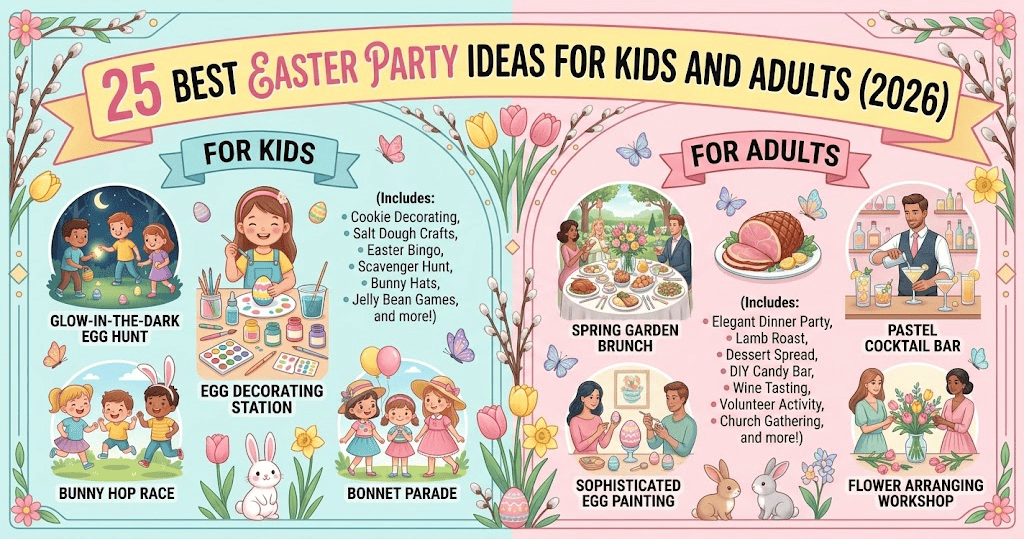
The difference wasn’t money. It was intentionality. And this guide is packed with 25 ideas that bring that same intentionality to your Easter celebration — whether you’re hosting a backyard egg hunt for thirty kids or an intimate brunch for eight adults.
Easter Egg Hunt Ideas
1. Create a Tiered Egg Hunt by Age Group
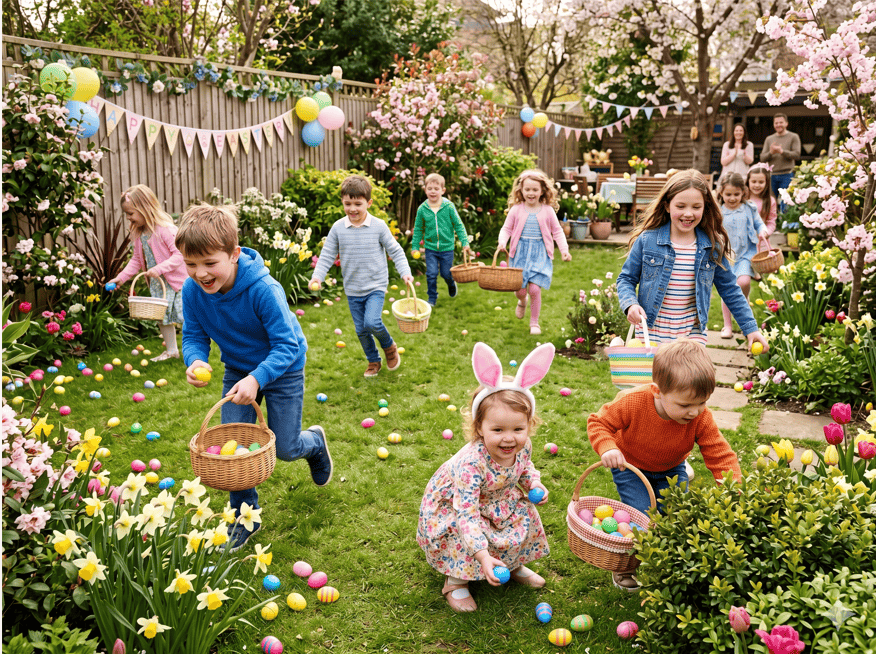
The biggest mistake people make with egg hunts is putting all kids in the same hunt. A six-year-old and a twelve-year-old have very different abilities, and when you mix them together, the older kids grab everything while the little ones are still figuring out where to look.
The fix is simple. Divide your yard or space into zones. Use one area for toddlers and preschoolers with eggs hidden in plain sight — on top of bushes, sitting on chairs, lying in the grass. Use another area for elementary kids with moderately hidden eggs — behind planters, under benches, tucked in garden beds. And create a challenging zone for older kids with eggs that require actual searching — inside rain gutters, behind loose fence boards, up on low branches.
Color-code the eggs by age group so there’s no confusion about which eggs belong to which hunt. Pink eggs for little ones, blue for middle kids, gold for the big kids.
Pro Tip: For toddlers, put the eggs inside a clear defined area (use string or chalk to mark boundaries) and make sure every egg is visible without moving anything. Their fun comes from the collecting, not the finding.
2. Set Up a Glow-in-the-Dark Egg Hunt
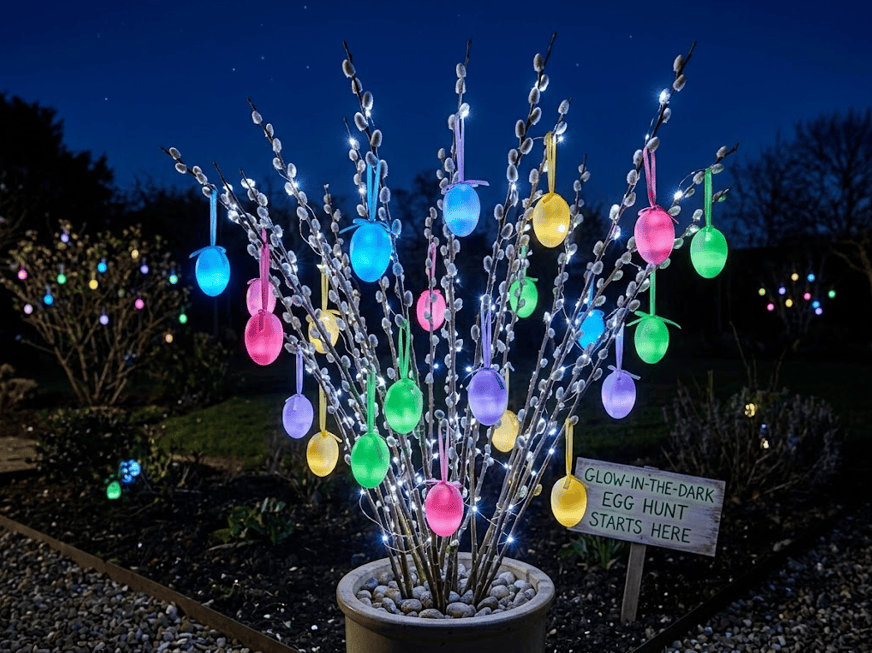
This idea blew my mind when I first heard it, and it has become our family’s favorite Easter tradition. Instead of (or in addition to) a daytime hunt, do one after dark using glow sticks inside plastic eggs.
Crack glow sticks and place one inside each plastic egg. The eggs glow through the translucent plastic, creating a magical light-up scavenger hunt. Hide them around the yard just before sunset, then send the kids out with baskets once it’s dark enough.
The visual effect is genuinely stunning — dozens of softly glowing eggs scattered across the lawn, kids running around with flashlights and baskets, the excitement of finding each glowing treasure. Adults love watching it as much as kids love doing it.
This works especially well if your Easter gathering extends into the evening or if you want a second round of hunting after the daytime eggs are found.
3. Organize a Clue-Based Easter Scavenger Hunt
For older kids (ages 8 and up) and teens who think they’ve outgrown egg hunts, a clue-based scavenger hunt brings back the excitement with an age-appropriate twist.
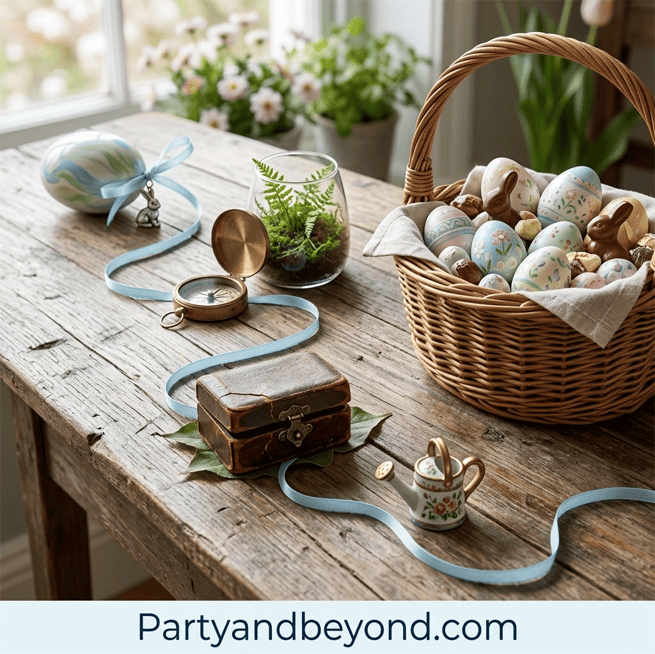
Write a series of clues where each one leads to the next location. The first clue might say “I’m where you wash your hands before eating” (the kitchen sink), and taped under the sink is the next clue: “I’m where Dad parks the car” (the garage), and so on through 8 to 12 locations, with the final clue leading to a big prize basket.
Make the clues progressively harder. Early clues can be straightforward riddles. Later clues can be word puzzles, coded messages, or even math problems where the answer corresponds to a house number on the street.
This works beautifully for family gatherings where older kids would otherwise be bored, and adults can participate too — either helping younger kids decode clues or doing their own adult version with harder riddles and a different prize.
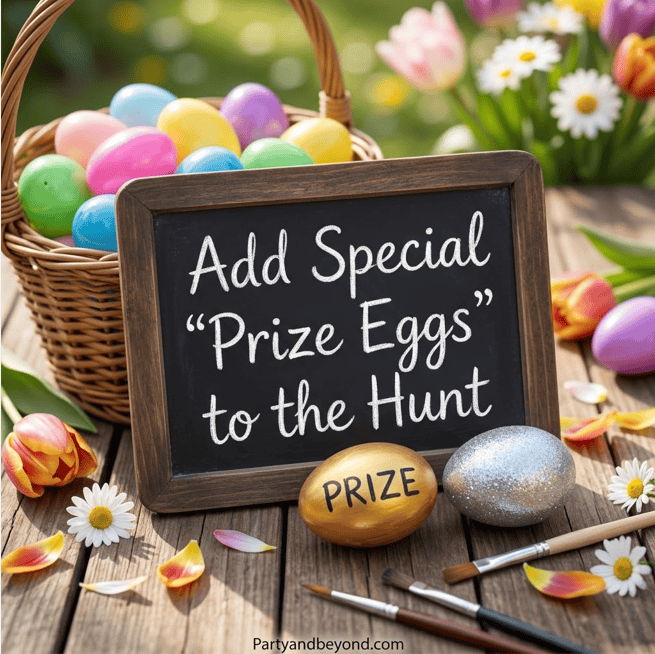
4. Add Special “Prize Eggs” to the Hunt
Mix a few special eggs into the regular hunt that contain tickets or tokens redeemable for bigger prizes. A golden egg might be worth a trip to the ice cream shop. A silver egg might contain a $5 bill. A sparkly egg might earn the finder first pick of dessert.
You can also include “funny” prize eggs — one egg earns the finder a silly hat they have to wear for the rest of the party, another makes the finder the “Easter King” or “Easter Queen” for the afternoon with a construction paper crown.
The possibility of finding a special egg adds an extra layer of excitement to the entire hunt. Even kids who’ve already found plenty of regular eggs keep searching, hoping the golden egg is still out there.
5. Host a “Stuff Your Own Eggs” Station
Before the hunt, set up a table where kids can stuff their own plastic eggs with candy, stickers, temporary tattoos, small toys, and little notes. Then they hide those eggs for someone else to find.
This is brilliant for several reasons. It doubles the activity time — kids spend 20 minutes stuffing and hiding, then another 20 minutes hunting. It teaches generosity because they’re creating surprises for others. And it means you don’t have to spend an hour the night before stuffing 200 eggs yourself.
Set out bowls of different fillings, a big pile of empty plastic eggs, and let kids go to town. Younger kids will need help closing the eggs, but older kids can manage independently.
Easter Brunch and Food Ideas
6. Set Up a Build-Your-Own Waffle Bar
A waffle bar is the perfect Easter brunch centerpiece because it’s interactive, crowd-pleasing, and surprisingly easy to pull off. Make a big batch of waffles (or use a waffle iron set up on the table so guests can make their own), then lay out a spread of toppings.
Great waffle bar toppings include fresh strawberries, blueberries, sliced bananas, whipped cream, Nutella, peanut butter, maple syrup, honey, chopped nuts, chocolate chips, sprinkles, and powdered sugar.
Set everything in small bowls with labels and spoons. Kids go wild customizing their waffles, and adults enjoy the variety too. One waffle iron, a box of mix, and $20 worth of toppings feeds a crowd and creates an experience that feels way more special than plated food.
Pro Tip: Make waffles in advance and keep them warm in a 200°F oven on a wire rack. This lets you have a full stack ready when guests arrive instead of standing at the waffle iron all morning.
7. Create an Easter Candy Charcuterie Board
This is the most Pinterest-worthy food idea on this entire list, and it takes about 15 minutes to put together. Arrange Easter candies on a large board or platter in an artistic layout — Cadbury eggs, Peeps, jelly beans, chocolate bunnies, Robin eggs, candy-coated almonds, pastel M&Ms, and any other spring candy you love.
Fill in gaps with fresh berries, pretzels, graham crackers, and cookies. The result looks like something from a professional party planner but requires zero cooking skills.
Kids and adults both gravitate to a candy board because it’s visually irresistible and feels indulgent. Place it as a centerpiece on the dessert table or bring it out as an afternoon snack.
8. Make Easter Bunny Fruit Kabobs
Thread strawberries, grapes, blueberries, melon chunks, and pineapple onto skewers for a healthy and colorful addition to the food table. For an Easter twist, use a bunny-shaped cookie cutter on watermelon or cantaloupe slices and add those as toppers on each skewer.
These are especially great for kids who might not eat a lot of brunch food — the kabob format makes fruit feel more exciting than a bowl of sliced fruit, and the bunny shapes make them festive.
Arrange the finished kabobs standing upright in a glass vase or mason jar for a beautiful display.
9. Serve “Carrot Patch” Veggie Cups
Fill clear plastic cups with ranch dip, then stick baby carrots, celery sticks, and small broccoli florets upright into the dip so they look like vegetables growing in a garden. These individual veggie cups are adorable, mess-free, and a smart way to get some vegetables into the mix alongside all the candy and sweets.
Kids who normally ignore a veggie tray will eat these because the presentation is fun and they get their own personal cup. Adults appreciate having a lighter option too.
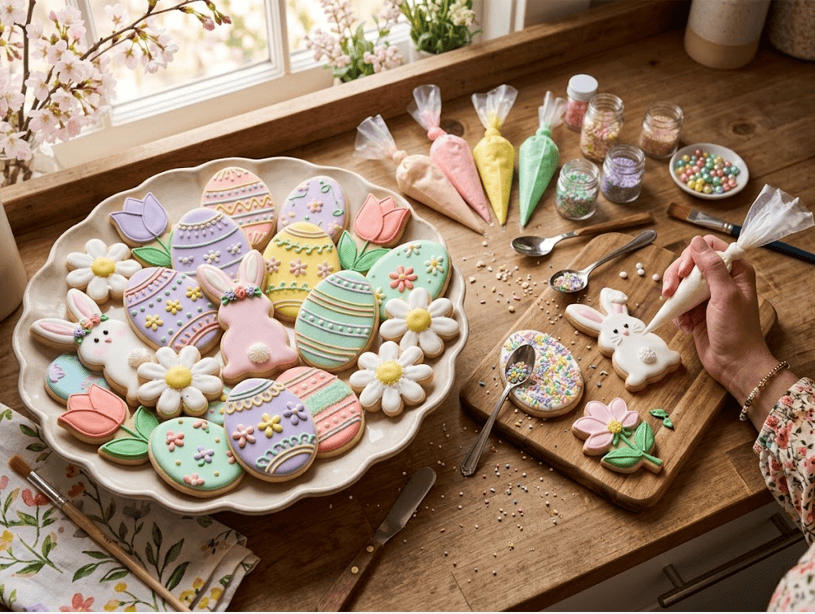
10. Bake Easter Sugar Cookies for Decorating
Bake a batch of sugar cookies in Easter shapes — eggs, bunnies, chicks, flowers, crosses — and set up a decorating station with colored icing, sprinkles, and edible markers. This doubles as both a food item and an activity.
Buy premade cookie dough and Easter cookie cutters to keep it simple. Make the icing by mixing powdered sugar with milk and food coloring. Set out squeeze bottles or small bowls with spreaders at the decorating station.
Kids love this activity because there’s no wrong way to do it, and they get to eat their creation when they’re done. Display the decorated cookies on a platter as edible art for the rest of the party.
Easter Decorations Ideas
11. Create a Pastel Balloon Arch Entrance
Welcome guests through a pastel balloon arch at your front door or in the entrance to your party space. Use a mix of light pink, lavender, mint green, baby blue, and white balloons for a classic spring palette.
Balloon arches sound complicated but are actually simple with a balloon strip (a long plastic strip with holes that hold the balloons in place). Inflate balloons in different sizes, attach them to the strip, and tape or hang the strip in an arch shape. The whole thing takes about 30 minutes and costs under $20 in supplies.
This is the kind of decoration that makes people say “wow” the moment they walk in and immediately sets the tone that this is a real celebration, not just a casual lunch.
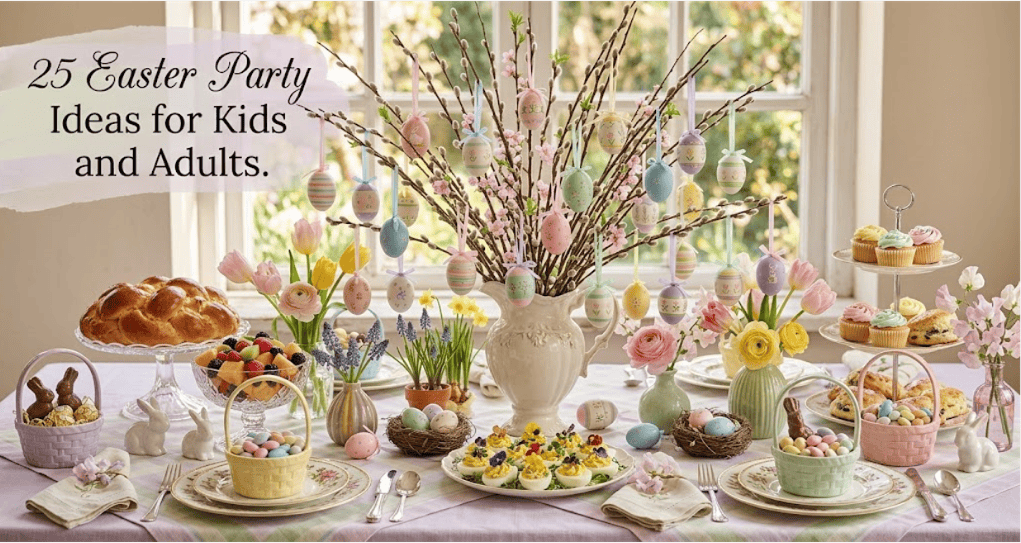
12. Set Up a Spring Flower Centerpiece
Nothing says Easter and spring like fresh flowers. Create simple centerpieces using mason jars, small vases, or even decorated tin cans filled with tulips, daffodils, daisies, or mixed spring bouquets.
For the most budget-friendly approach, buy flowers from Trader Joe’s or your local grocery store ($5 to $10 per bouquet) and split them into multiple small arrangements rather than one big one. Five small jars spread down the center of a table look more impressive than one large vase.
Tie a piece of twine or pastel ribbon around each jar for a rustic-chic finishing touch. Add a few colored eggs nestled around the base of the jars for an Easter-specific detail.
Pro Tip: If you don’t want to deal with fresh flowers, use potted spring plants like mini daffodils or hyacinths. They cost $3 to $5 each at garden centers, they last longer than cut flowers, and guests can take them home as party favors.
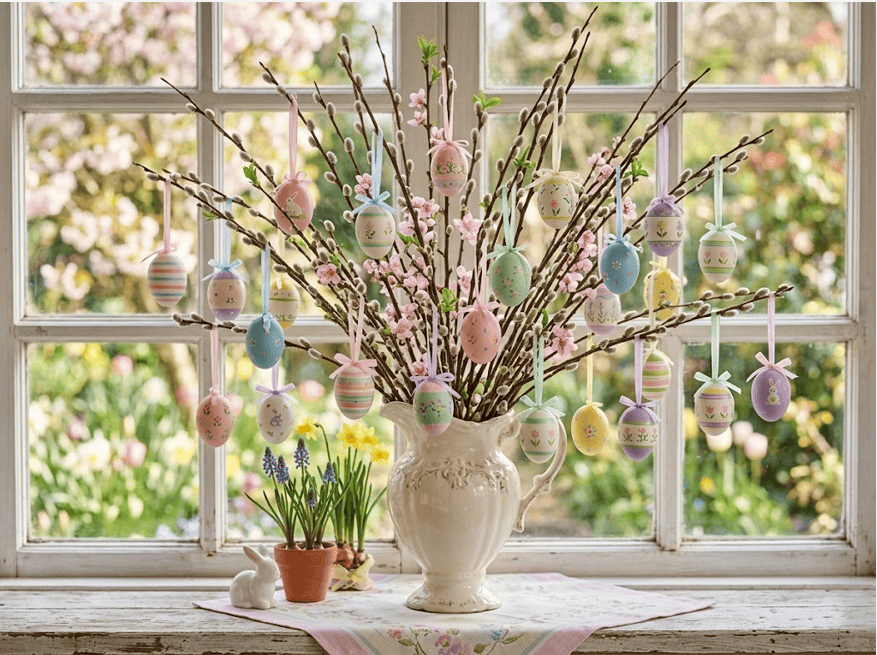
13. Make an Easter Egg Tree
An Easter egg tree is a European tradition that’s becoming popular in the US, and it makes a stunning visual centerpiece. Find a large branch or two (cherry blossom branches are perfect if available), place them in a tall vase with decorative stones for stability, and hang painted or decorated eggs from the branches using ribbon or string.
You can use real blown-out eggs (poke a hole in each end, blow out the contents, then paint or dye the shells) or lightweight craft store eggs. Hang 15 to 25 eggs at varying heights for a full, balanced look.
Place the egg tree on the dining table, buffet table, or entryway console table where everyone can see it. It becomes a conversation piece and a unique alternative to the standard floral centerpiece.
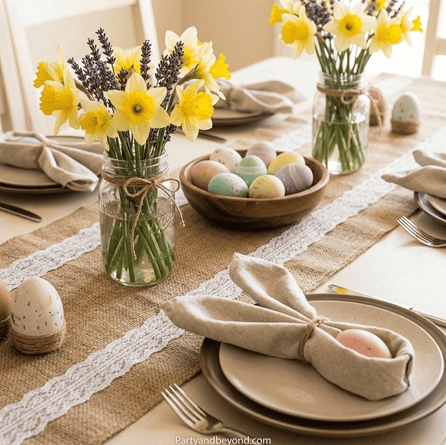
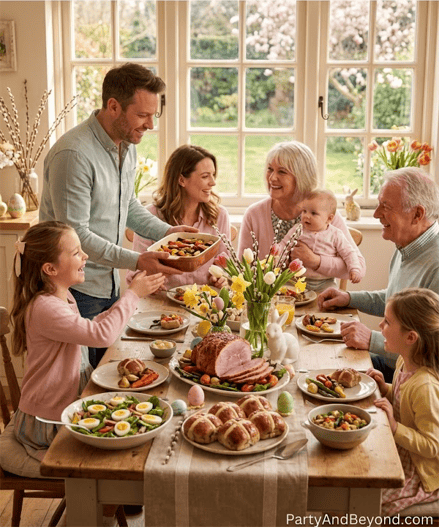
14. Use Pastel Table Settings With Spring Details
Set your table with a spring-inspired palette — pastel tablecloth or table runner, cloth napkins in a coordinating color (tied with twine and a sprig of lavender or rosemary), and small touches like a chocolate bunny at each place setting or a name card written on a painted egg.
You don’t need fancy china. White plates look beautiful against a pastel tablecloth, and dollar store plates in spring colors work perfectly for a casual gathering. The key is the details — the napkin treatment, the small personal touch at each setting, the coordinated color palette.
Even if you’re serving on paper plates, using a fabric tablecloth or table runner and adding a few spring elements elevates the entire look from “backyard lunch” to “Easter celebration.”
15. Decorate With a DIY Easter Bunny Banner
Cut bunny shapes from card stock or scrapbook paper, punch holes in the tops, and string them on twine or ribbon to create a festive Easter banner. Hang it across the fireplace mantel, above the food table, or along the porch railing.
You can find free bunny templates online, or freehand them — bunny shapes are forgiving since even imperfect ones look cute. Use pastel colors, glitter paper, or patterned scrapbook paper for variety.
This is a great activity to do with kids before the party as a pre-Easter craft project. They love seeing their handmade decorations displayed at the actual party.
Easter Activities and Games
16. Set Up an Easter Craft Station
A craft station keeps kids happily occupied for 30 to 60 minutes and gives them something to take home. Set up a table with supplies for one or two simple crafts.
Great Easter crafts for kids include decorating paper plate bunny masks (paper plates, construction paper ears, markers, glue), making popsicle stick chicks (yellow paint, googly eyes, orange paper beak), creating egg-shaped suncatchers (clear contact paper with tissue paper pieces), and painting wooden eggs (wooden eggs from the craft store with acrylic paints).
Cover the table with a plastic tablecloth for easy cleanup, set out the supplies organized by craft, and let kids create freely. Having an adult or teen helper at the station to assist younger children keeps things running smoothly.
Pro Tip: Put each child’s finished crafts in a labeled bag so nothing gets mixed up or lost during the rest of the party.
17. Play “Pin the Tail on the Bunny”
A spring twist on the classic party game. Draw or print a large bunny on poster board (minus the cotton tail), hang it on a wall, and give each blindfolded player a cotton ball with tape to stick where they think the tail goes.
Kids absolutely love this game because it’s silly, everyone gets a turn, and the results are always hilarious — tails end up on ears, feet, and completely off the bunny. It works for all ages, takes minimal setup, and fills a fun 10 to 15 minutes.
Award a small prize to the closest tail placement and a “funniest placement” prize for the most creative miss.
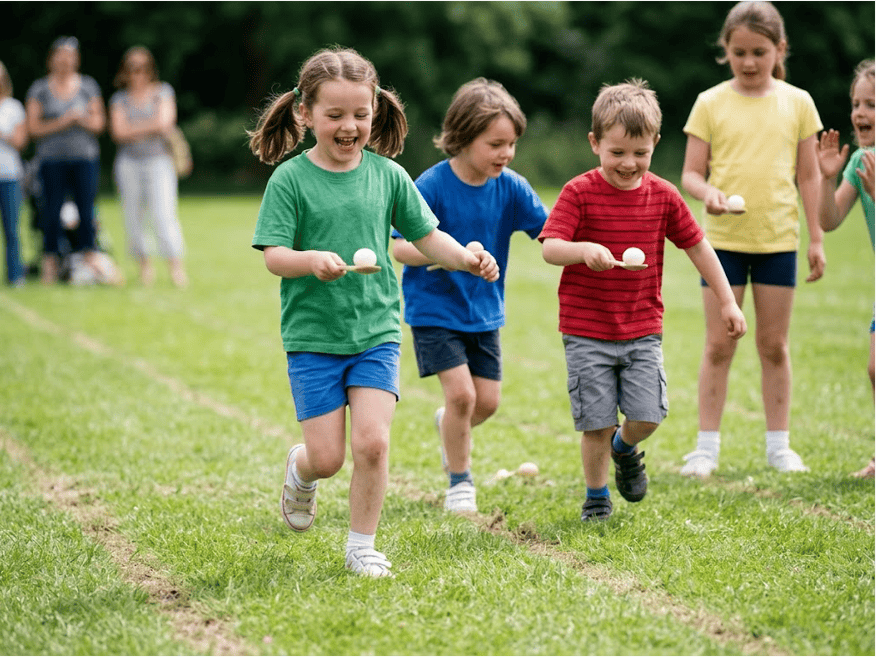
18. Organize an Easter Egg Relay Race
Divide players into teams. Each player must carry an egg on a spoon from the starting line to a turning point and back, then pass the spoon to the next teammate. If the egg falls, the player goes back to the start.
Use hard-boiled eggs for a classic (and messier) version, or plastic eggs for a cleaner game. For extra difficulty, have older kids carry the spoon in their mouth instead of their hand.
This is a fantastic outdoor game that gets everyone moving and laughing. It works for mixed ages — pair younger kids with older teammates for relay teams.
19. Host an Easter Trivia Contest
Create a list of 15 to 20 Easter-themed trivia questions for a fun group game. Mix easy questions for kids (“What animal delivers Easter eggs?”) with harder ones for adults (“In what year did the White House Easter Egg Roll begin?”).
Divide into teams or play individually. Read questions aloud and give 30 seconds for answers. Keep score on a whiteboard or poster paper where everyone can see.
This is a great game for the gap between brunch and dessert when everyone is sitting around the table. It sparks conversation, creates friendly competition, and teaches some genuinely interesting Easter facts.
20. Set Up an Egg Decorating Contest
Provide hard-boiled eggs, dye kits, stickers, markers, glue, glitter, small pompoms, googly eyes, and any other craft supplies. Give each person 15 to 20 minutes to create the most creative, beautiful, or funny decorated egg.
Set up categories for judging — “Most Beautiful,” “Most Creative,” “Funniest,” and “Best Overall” — so multiple people can win. Have an impartial judge (or let everyone vote by placing a jelly bean next to their favorite egg).
Display the finished eggs on an egg carton “gallery” for everyone to admire throughout the party.
Easter Party Ideas for Adults
21. Host an Easter Brunch Cocktail Bar
Set up a self-serve cocktail station with spring-themed drinks. A mimosa bar is the classic choice — provide champagne, orange juice, cranberry juice, peach nectar, and fresh berries for garnish. Guests mix their own.
For a non-alcoholic option (or to complement the mimosa bar), create a spring spritzer station with sparkling water, flavored syrups (lavender, elderflower, raspberry), fresh herbs (mint, rosemary), and sliced citrus.
Beautiful glassware elevates the experience — even inexpensive champagne flutes from the dollar store look elegant. Add a small chalkboard sign listing the drink options for a polished, bistro-style touch.
Pro Tip: Freeze berries and edible flowers in ice cube trays for stunning drink additions. They keep drinks cold without diluting them and look absolutely gorgeous.
22. Plan an Easter Garden Tour and Tea
If your yard has spring flowers blooming, invite guests for a guided garden walk followed by afternoon tea. Set up a tea station on the patio with a selection of teas, finger sandwiches (cucumber, smoked salmon, egg salad), scones with clotted cream, and small pastries.
This is a sophisticated, elegant way to celebrate Easter that appeals to adults who prefer a calm, refined gathering over a loud, kid-centered party. It works especially well for hosting parents, in-laws, or a close group of friends.
Use real teacups if you have them, or mismatched vintage cups from the thrift store for a charming, collected look.
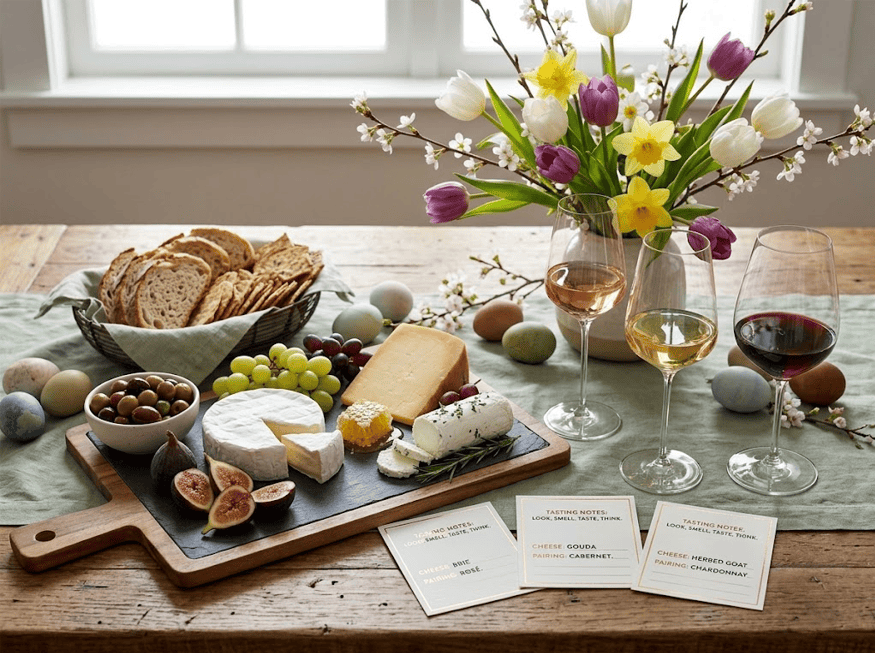
23. Organize an Easter Wine and Cheese Pairing
For adult-only Easter gatherings, set up a wine and cheese pairing experience. Select three to four wines (a crisp white, a rosé, a light red, and a sparkling option) paired with complementary cheeses, crackers, fruit, and charcuterie.
Print small tasting cards that describe each wine and its cheese pairing. This gives the activity structure and makes it feel like a curated experience rather than just “drinks and snacks.”
Spring wines like Sauvignon Blanc, Provence Rosé, and Prosecco pair perfectly with the lightness of the season and complement Easter brunch flavors.
24. Create an Easter Photo Booth
Set up a photo area with spring and Easter-themed props — bunny ears headbands, oversized sunglasses in pastel colors, signs that say “Happy Easter” or “Some Bunny Loves You,” flower crowns, and a basket of props for creative poses.
For the backdrop, hang a pastel balloon garland, a floral fabric, or simply a blank wall with a few oversized paper flowers attached. A ring light ($15 to $25) provides flattering lighting and makes every photo look professional.
A photo booth works for all ages and creates lasting memories. Set up a phone on a tripod with a self-timer, or designate a “photographer” to snap pictures. Share a link to a shared album after the party so everyone can access the photos.
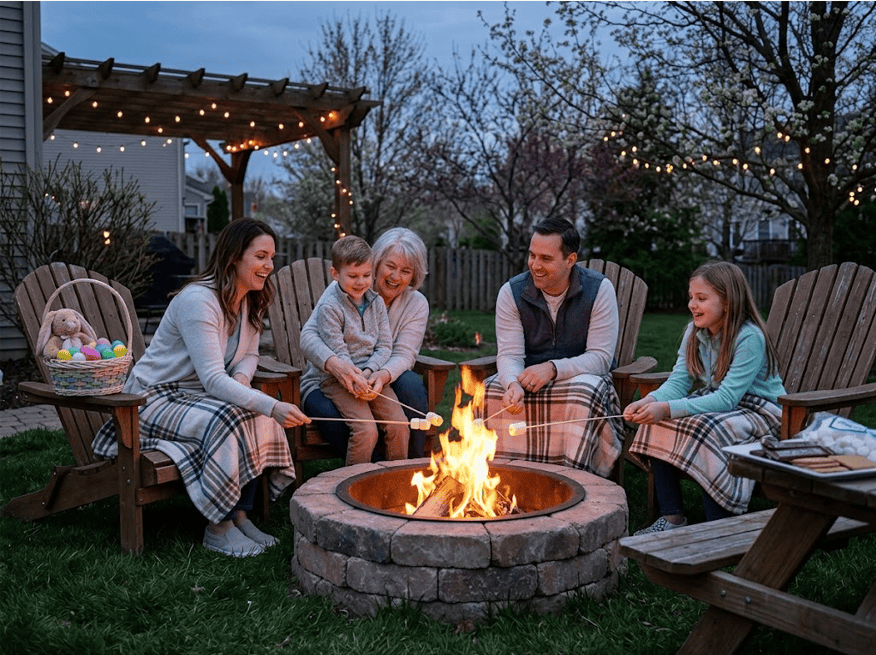
25. End With a Bonfire and S’mores
If your Easter celebration extends into the evening, end the day with a backyard bonfire and s’mores. The combination of a crackling fire, melted chocolate, toasted marshmallows, and cool spring evening air is the perfect ending to a festive day.
Set up a s’mores station near the fire with graham crackers, marshmallows, chocolate bars, and roasting sticks. For a gourmet twist, add Reese’s cups, Nutella, sliced strawberries, and caramel sauce as alternative fillings.
Kids can roast marshmallows (with supervision) while adults relax with a warm drink. It’s a natural way to wind down the party without a formal “ending” — people drift toward the fire, settle in, and the celebration slowly, pleasantly fades as the evening cools.
How to Plan Your Easter Party Timeline
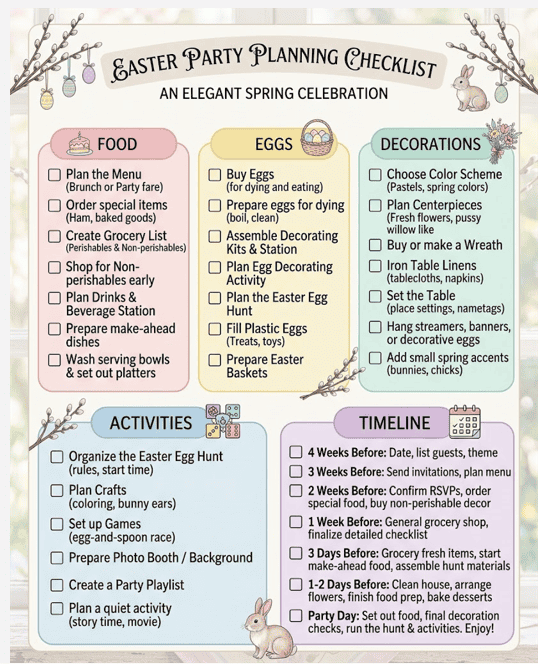
Having a rough timeline keeps the party flowing without awkward lulls. Here’s a suggested schedule for a full Easter celebration that includes brunch and an egg hunt.
10:00 AM — Guests arrive. Welcome, drinks available (mimosa bar or spring spritzers), casual mingling.
10:30 AM — Brunch served. Waffle bar, fruit, veggie cups, and other food items set out buffet-style.
11:15 AM — Easter egg hunt. Age-grouped hunts, starting with the youngest group. Allow 15 minutes per age group.
12:00 PM — Craft station and games. Egg decorating contest, Pin the Tail on the Bunny, relay races. Kids rotate through activities while adults chat and enjoy coffee.
1:00 PM — Prize announcements and dessert. Award egg hunt special prizes, egg decorating contest winners, and trivia winners. Bring out the candy board, cookies, and cake.
2:00 PM — Wind down. Photo booth, free play, final snacking. Guests depart at their leisure.
Evening option: Glow-in-the-dark egg hunt at dusk, followed by bonfire and s’mores.
Adjust this timeline based on your specific gathering — a smaller, adult-focused brunch might only need two hours, while a full family celebration with lots of kids could run all afternoon.
Easter Party on a Budget: What $50 Gets You
You don’t need a huge budget for a memorable Easter party. Here’s a complete party for under $50.
Plastic eggs for the hunt (100 count): $8
Candy to fill eggs: $10
Waffle mix + toppings (feeding 10-12): $12
Spring flowers (2 grocery store bouquets): $10
Paper plates, napkins, cups in pastel colors: $5
Balloon arch supplies: $5
Total: $50
Add in items you already have at home — eggs for hard-boiling, craft supplies for kids, board games for indoor activities — and your party is fully stocked without breaking the bank.
Frequently Asked Questions
How many eggs do I need for an Easter egg hunt?
Plan for 10 to 12 eggs per child. For a group of 15 kids, that’s about 150 to 180 eggs. This sounds like a lot, but the hunt goes fast, and having plenty of eggs ensures every child finds a satisfying number. Buy plastic eggs in bulk — they’re reusable year after year.
What age is appropriate for an Easter egg hunt?
Kids as young as 18 months can participate in a simplified hunt with eggs placed in plain sight. The classic hidden egg hunt works best for ages 3 to 10. For kids 11 and older, a clue-based scavenger hunt or glow-in-the-dark hunt keeps it exciting and age-appropriate.
What should I put inside Easter eggs besides candy?
Great non-candy fillers include stickers, temporary tattoos, small erasers, coins, tiny figurines, hair clips, bouncy balls, silly putty, and slips of paper with jokes or activity coupons (“one extra bedtime story” or “choose tonight’s dinner”). This works especially well for younger kids whose parents prefer to limit sugar.
How do I keep adults entertained at an Easter party?
Adults enjoy a mimosa or cocktail bar, trivia games, wine and cheese pairings, photo booth fun, and simply good conversation in a comfortable setting. Make sure there’s comfortable seating, background music, and plenty of food. The best adult Easter parties feel relaxed and social, not overly structured.
Can I host Easter on a small budget?
Absolutely. Focus on a few high-impact elements — an egg hunt (plastic eggs are cheap and reusable), a simple brunch (waffle bar or a potluck where guests bring dishes), and one or two decorations (flowers from the grocery store and a DIY banner). A memorable party is about the experience, not the expense.
What’s the best time to start an Easter party?
Mid-morning (10:00 to 10:30 AM) works best for a brunch-centered celebration. This gives time for brunch, the egg hunt, activities, and dessert before mid-afternoon. If your Easter is more casual, an afternoon start (1:00 to 2:00 PM) with snacks and games works well too.
Make This Easter the One They Remember
Easter doesn’t need to be complicated to be special. A few colorful eggs hidden with care, a table set with spring flowers, one game that gets everyone laughing, and food that brings people together around a table — that’s all it takes.
Pick five or six ideas from this list that excite you. Don’t try to do all 25 — that’s a recipe for stress, not celebration. Choose the egg hunt style that fits your group, set up one food station, plan two activities, and add one or two decorations. That’s a complete party.
The goal isn’t a perfect Instagram-worthy event. The goal is a day where your family and friends leave saying “that was so fun” and your kids fall asleep that night still talking about the golden egg they found or the bunny cookie they decorated.
That’s the kind of Easter worth celebrating. And it starts with you deciding to make it happen.
Happy Easter!
Related articles:
Leah Meyer is a passionate event planner and creative writer behind Party & Beyond, where she helps hosts throw stunning celebrations on a real-world budget. From birthday parties and baby showers to backyard weddings and holiday gatherings, Leah personally tests every DIY idea she shares , proving that the wow factor lives in the details, not the price tag. When she's not planning the next party, you'll find her hunting for hidden treasures at dollar stores, inflating balloons (she owns three pumps!), or brainstorming with her dog, the official Chief Inspiration Officer of Party & Beyond.

 Related articles: