This post contains affiliate links. If you buy through them, I may earn a small commission at no extra cost to you.outdoor movie night ideas
Spring Garden Party Ideas
There is a very specific moment each spring when you step outside in the morning, and the air smells different. Not cold anymore. Not hot yet. Just this perfect, clean, alive kind of air that carries the smell of soil warming up and flowers just starting to open and grass that has finally decided to be green again after months of being brown and sleeping. That moment — that first real spring morning — is when the thought hits me every year without fail: I need to have people over.
Not a formal dinner. Not a backyard barbecue. Something in between. Something that takes advantage of the fact that the weather is kind and the garden is waking up and everything outside looks like it is trying to impress you. A garden party. The kind where people show up in sundresses and linen shirts and immediately say “oh my God, this is so pretty” before they have even seen the food. The kind where nobody wants to go inside because outside is simply better right now. The kind where you realize, halfway through the afternoon, that this is the reason people own backyards.
I have thrown spring garden parties that cost $400 and spring garden parties that cost $35. And here is what I can tell you with absolute certainty: the ones people remember — the ones where someone calls you a week later and says “that party was perfect” — had nothing to do with how much I spent. They had everything to do with three things. How the space looked. How the food tasted. And whether there was a moment — even one single moment — where everyone stopped talking and just sort of existed together in a beautiful place on a beautiful day.
That is the feeling this guide is designed to create. Eighteen ideas that cover every element of a spring garden party — the setup, the food, the drinks, the atmosphere, the details that nobody notices consciously but everyone feels. Some ideas cost nothing. Some cost a little. All of them work together to produce a celebration that feels like spring itself threw the party.
Setting the Scene
1. Let the Garden Be the Decoration
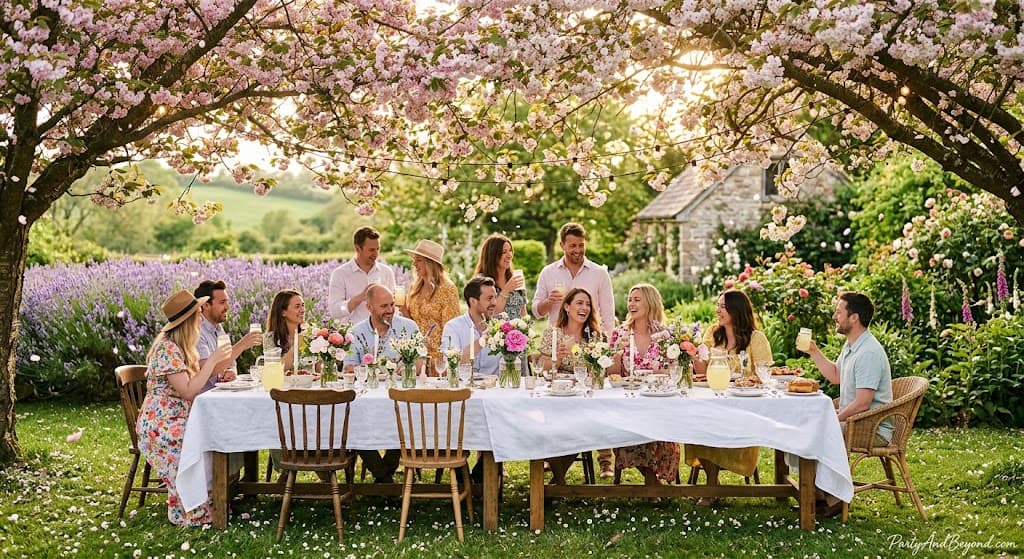
The single most important piece of advice I can give you about decorating for a spring garden party is this: do less. Your garden — even if it is a modest one, even if it is just a patch of grass with a few bushes and whatever the previous homeowner planted — is already decorated. Nature spent months preparing for this moment. The blossoms are open. The leaves are fresh and impossibly green. The light is soft and golden. Everything you add should enhance what is already there, not compete with it.
This means resisting the urge to drape every surface in fabric, hang things from every branch, and fill every corner with decorations. A garden party is not a wedding reception and it is not a themed birthday. The theme is spring. The decoration is the outdoors. Your job as the host is to guide people’s eyes toward what is already beautiful and provide a comfortable place for them to sit and enjoy it.
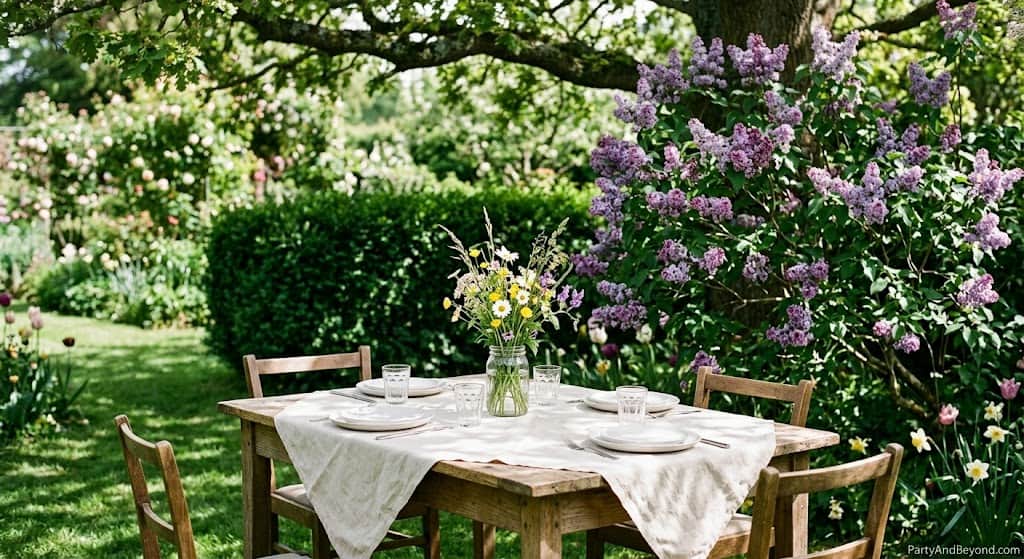
Position the dining table or seating area near the most visually appealing part of your garden — under a flowering tree, beside a blooming hedge, next to a bed of tulips or daffodils. If your garden does not have a naturally beautiful focal point, create one by moving three to five potted flowering plants from around the yard into a cluster near the party space. Grocery store potted plants — hydrangeas, azaleas, tulips, ranunculus — cost $5 to $12 each and create an instant garden bed that looks like it has been growing there for years.
Let the grass be the floor. Let the sky be the ceiling. Let the flowers be the art. Everything else you add — the table, the food, the lights — is just furniture in nature’s living room.
2. A Mismatched Vintage Table Setting
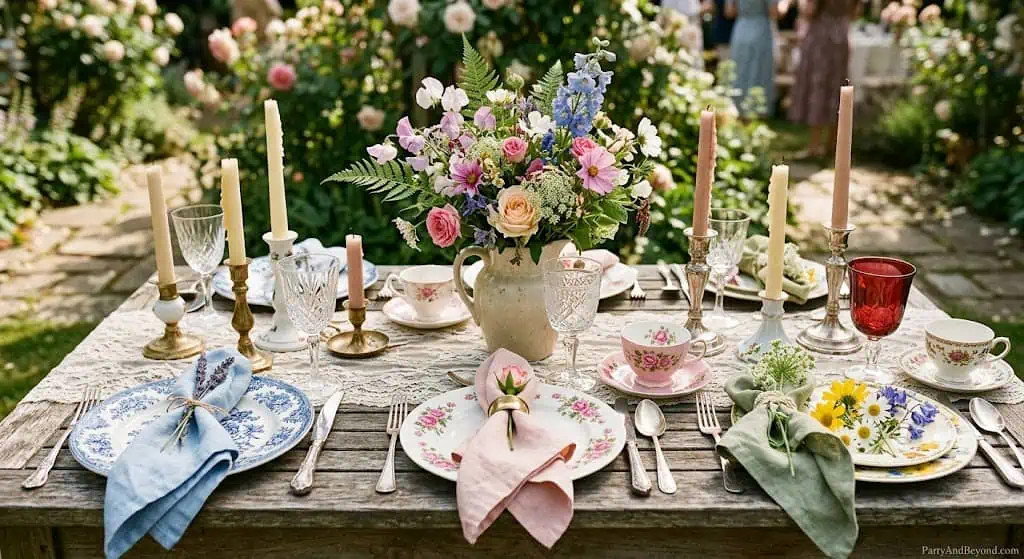
There is a particular style of table setting that looks effortlessly elegant at a garden party, and it is built entirely from things that do not match. Mismatched plates. Mismatched glasses. Mismatched chairs. Different napkin colors tied with the same ribbon. Various candlesticks at different heights holding different colored candles. The deliberate imperfection creates a collected, curated, European-grandmother aesthetic that feels warmly personal rather than rigidly planned.
Thrift stores are the source material for this look. Over two or three weekend trips, collect six to eight plates in different floral patterns and colors ($0.50 to $2 each at Goodwill or Salvation Army). Find mismatched wine glasses, water glasses, and teacups in various shapes. Grab a handful of cloth napkins in different soft colors — sage, blush, butter yellow, lavender — that share the same gentle pastel family without being identical. Total investment: $10 to $25 for a complete table setting that looks like it was assembled by someone who has been collecting beautiful things for decades.
The beauty of this approach is that perfection would actually look worse. A table set with twelve identical white plates and twelve identical glasses looks like a restaurant. A table set with twelve different plates that all happen to be floral, or pastel, or vintage-feeling, looks like someone who cares about beauty more than uniformity — and that person is a much more interesting host.
Fold each napkin differently — one in a triangle, one rolled and tied with twine, one fanned in a glass, one simply placed on the plate. These small variations make each place setting feel individually considered, as if the host thought about the specific person sitting in that specific spot. Nobody will consciously notice this detail, but everyone will subconsciously feel it.
3. Wildflower Arrangements in Mason Jars
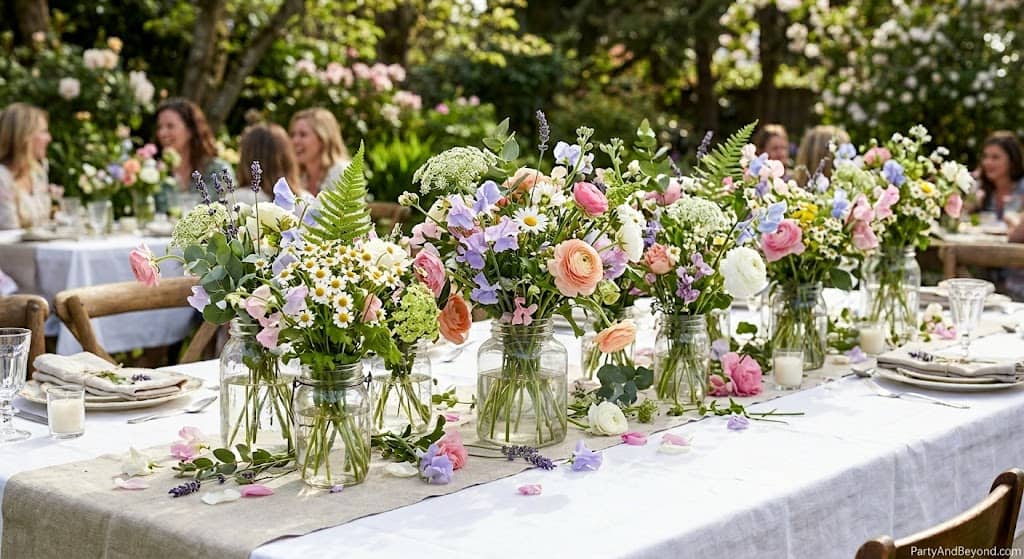
Wildflower arrangements are the spring garden party’s signature centerpiece because they look like the garden itself climbed onto the table. Unlike formal florist arrangements with their tight, symmetrical compositions, wildflower arrangements are loose, messy, overflowing, and perfectly imperfect — which is exactly the energy you want at a party that celebrates the casual beauty of spring.
You have three sourcing options, each at a different price point. The free option: walk through your yard, your neighborhood, or a local meadow and cut whatever is blooming — dandelions, clover, wildflowers, flowering branches, interesting greenery, even pretty weeds. The cheap option: buy two to three mixed bouquets from the grocery store ($5 to $8 each) and deconstruct them, mixing the flowers loosely into several smaller arrangements. The mid-range option: visit a farmers market and buy directly from a flower grower — $10 to $15 gets you an armful of seasonal stems that look and smell incredible.
Put the flowers into mason jars, vintage bottles, small pitchers, teacups, or any container that holds water and looks charming. The containers should be simple and low — no more than six to eight inches tall — so guests can see each other across the table without leaning around a floral obstacle. Place one arrangement at every three to four feet of table length, supplemented with a few individual stems lying flat on the tablecloth between arrangements.
The trick to making wildflower arrangements look intentional rather than random is using odd numbers (three stems, five stems, seven stems) and varying the heights within each jar so some flowers stand tall while others droop gently over the rim. Tuck in a few sprigs of greenery — eucalyptus, fern fronds, or even herb sprigs like rosemary or lavender — to fill the gaps and add fragrance.
4. String Lights and Paper Lanterns for Magic Hour
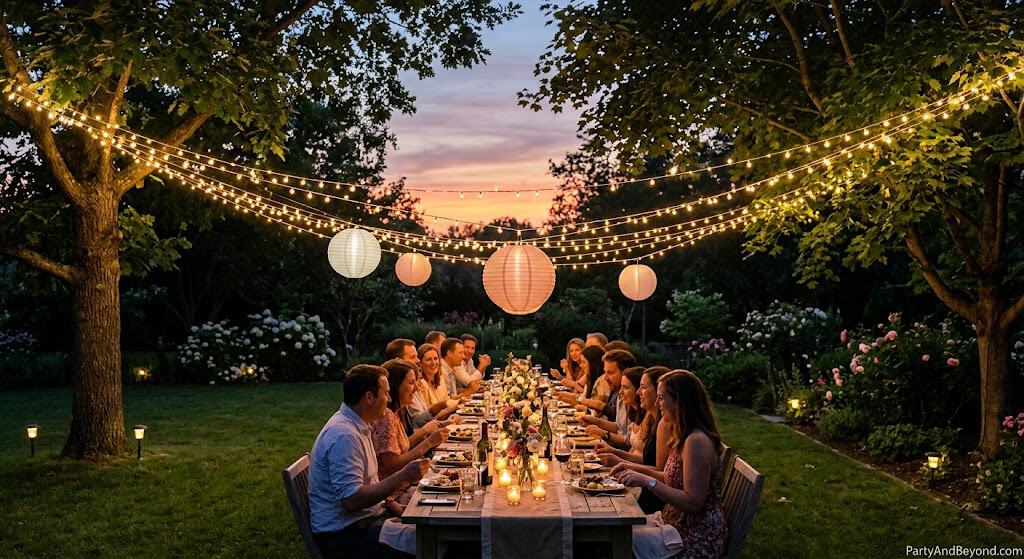
The best spring garden parties begin in the late afternoon and stretch into the early evening, which means you get to experience the most beautiful transition in outdoor entertaining: the shift from golden afternoon sunlight to the warm glow of string lights at dusk. This transition — when the sun drops below the trees and your carefully hung lights take over — is the moment your garden party goes from lovely to magical.
Hang warm-white string lights in one of three configurations: parallel lines across the party space (creating a “ceiling”), a single swooping line from the house to a tree or post (creating a simple but dramatic arc), or wrapped loosely around the branches of the nearest tree (creating a glowing canopy overhead). Any configuration works — the goal is warm, ambient light above the table at a height of eight to ten feet.
Add three to five paper lanterns in soft colors — white, blush pink, pale yellow, or soft green — hung at different heights among the string lights. Paper lanterns catch even the slightest breeze and sway gently, adding movement to the overhead display that static string lights alone cannot provide. They also diffuse light beautifully, creating soft pools of color that shift as the lanterns move.
For table-level lighting, scatter small votive candles in clear glass holders along the table. The combination of overhead string lights, floating paper lanterns, and flickering votives at table level creates three layers of light that make the entire space feel enveloped in warmth. Guests will not consciously analyze the lighting layers, but they will feel it — they will say “there is something about this place tonight” without being able to explain why. The answer is always the light.
The Food
5. A Spring Grazing Table (The Centerpiece of the Meal)
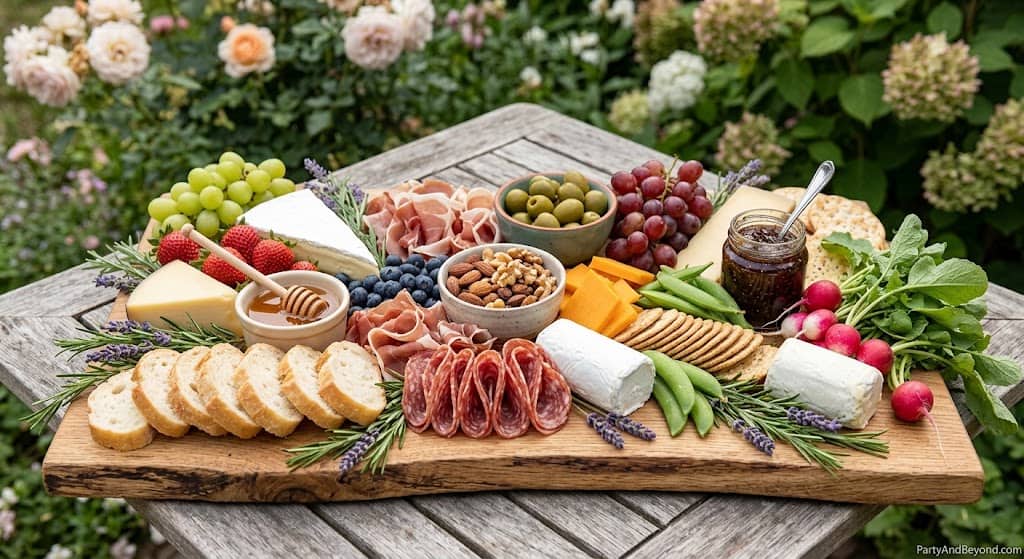
A grazing table — an abundant, overflowing spread of foods arranged directly on a large board, table, or covered surface — is the ideal food format for a spring garden party because it eliminates the formality of plated meals while creating a visual centerpiece that is as beautiful as any decoration. The grazing table says “help yourself, stay as long as you want, and come back as many times as you like.” It removes the pressure of courses and timing and lets people eat the way they actually want to eat at a casual outdoor gathering — a little bit at a time, throughout the afternoon, while standing or sitting or wandering the garden.
Start with a large wooden board, a clean table, or a section of the dining table covered with parchment paper or a pretty cloth. Build the spread in layers, starting with the anchor items and filling gaps with smaller bites.
Anchor items: Two to three cheeses in different textures — a soft brie or camembert, a semi-hard cheddar or gouda, a crumbly goat cheese or feta. Fan crackers in overlapping rows beside each cheese. Add a small bowl of honey with a dipper, a ramekin of fig jam, and a cluster of grapes still on the vine.
Meat and protein: Fold thin slices of prosciutto and salami into ribbons or rosettes and tuck them between the cheese sections. Add a small dish of mixed olives with a tiny spoon, and a bowl of marcona almonds or roasted nuts.
Produce: Fill every remaining gap with color — strawberries sliced in half showing their bright red interior, blueberries in small clusters, sugar snap peas standing upright, radishes with their green tops still attached, cherry tomatoes on the vine, cucumber rounds, dried apricots, and cornichon pickles.
Bread: Slice a baguette on an angle and fan the pieces along one edge of the board. Add a small stack of pita triangles or flatbread crackers.
Finishing touches: Tuck sprigs of fresh rosemary, thyme, or edible flowers between sections for color and fragrance. Drizzle honey across the brie. Scatter a few pomegranate seeds for pops of jewel-toned color.
The entire grazing table costs $30 to $60 depending on the quality of cheese and charcuterie you choose, and feeds fifteen to twenty people for several hours of grazing. The visual impact — the abundance, the color, the variety — makes it the most photographed element of any garden party, and guests return to it again and again throughout the afternoon.
6. Tea Sandwiches With the Crusts Cut Off
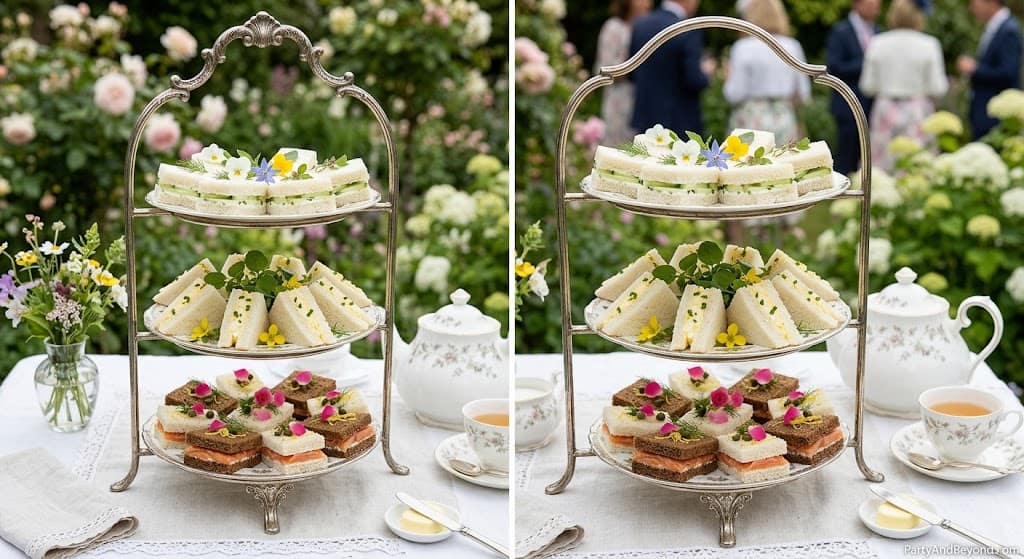
Tea sandwiches are the spring garden party food that makes every guest feel like they have been invited to a celebration at an English country estate. There is something about receiving a small, crustless, perfectly cut sandwich on a tiered stand that communicates elegance and care in a way that no other finger food can replicate. They are also dead simple to make, absurdly cheap, and can be prepared entirely the night before.
Cucumber and cream cheese: Spread a thin layer of cream cheese on white bread, layer with thin cucumber slices, season with a tiny pinch of salt and dill. Cut into rectangles.
Egg salad: Mash hard-boiled eggs with mayonnaise, a touch of mustard, salt, pepper, and minced chives. Spread generously on soft wheat bread. Cut into triangles.
Smoked salmon: Spread cream cheese on pumpernickel or rye bread, layer with thin-sliced smoked salmon, a squeeze of lemon juice, and a few capers. Cut into squares.
Chicken salad with grapes: Mix shredded rotisserie chicken with mayonnaise, halved grapes, chopped celery, and a pinch of curry powder. Spread on croissants sliced in half. Cut in half again.
Make each type the night before, wrap tightly in plastic wrap with a damp paper towel underneath (the moisture prevents the bread from drying out overnight), and refrigerate. In the morning, unwrap and arrange on a tiered serving stand or a large platter, grouping each type together so guests can identify what they are choosing. Garnish the platter with small sprigs of fresh herbs and edible flowers.
Eight loaves of bread and basic fillings produce 48 to 60 tea sandwiches for approximately $15 to $20 — enough for fifteen people to eat four sandwiches each. The cost per sandwich is roughly $0.30, which is remarkable considering how sophisticated they look and taste on a properly styled serving display.
7. A Fresh Lemonade Bar With Seasonal Flavors
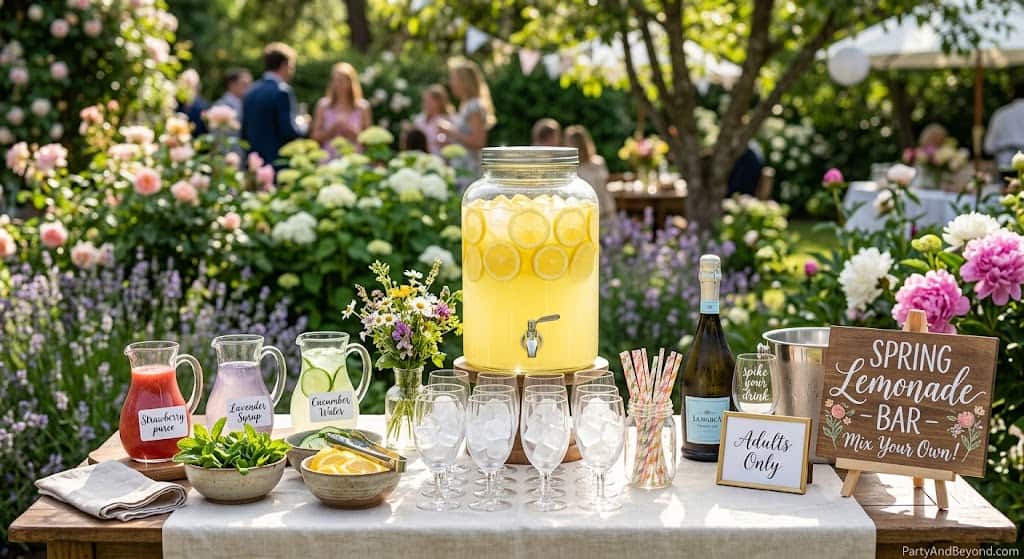
A self-serve lemonade bar is the spring garden party equivalent of a cocktail bar — visually stunning, endlessly customizable, and the spot where guests gather, mix, taste, and come back for refills all afternoon. The base recipe is simple: fresh-squeezed lemon juice, sugar, and water. But the flavor additions you offer alongside it are what transform a pitcher of lemonade into a bar experience.
Make a large batch of classic lemonade as the base: one cup of fresh lemon juice (about eight to ten lemons), one cup of sugar dissolved in one cup of hot water (simple syrup), and six cups of cold water. Stir, taste, adjust sweetness. This single batch fills a large glass dispenser and serves fifteen to twenty glasses.
Set out four to five flavor additions in small pitchers or bowls beside the lemonade dispenser: strawberry puree (blend fresh strawberries with a tablespoon of sugar), lavender syrup (steep dried culinary lavender in simple syrup for 20 minutes, strain), fresh mint leaves, sliced cucumber, and elderflower cordial. Each guest pours their base lemonade into a glass and adds whatever flavor combination appeals to them — strawberry mint, lavender cucumber, plain with extra lemon, or a wild mix of everything.
For adults, add a bottle of vodka and a bottle of sparkling wine to the bar with a small sign that says “adults only.” A splash of vodka turns any flavored lemonade into a cocktail; a splash of sparkling wine turns it into a French 75 variant. These additions cost $10 to $15 and give the bar genuine versatility without requiring a bartender.
The visual effect of the lemonade bar — the bright yellow lemonade in a glass dispenser catching sunlight, the colorful flavor additions in clear containers, the garnish bowls of berries and herb sprigs, the stack of glasses waiting to be filled — makes it one of the most photographed and pinned elements of any spring party.
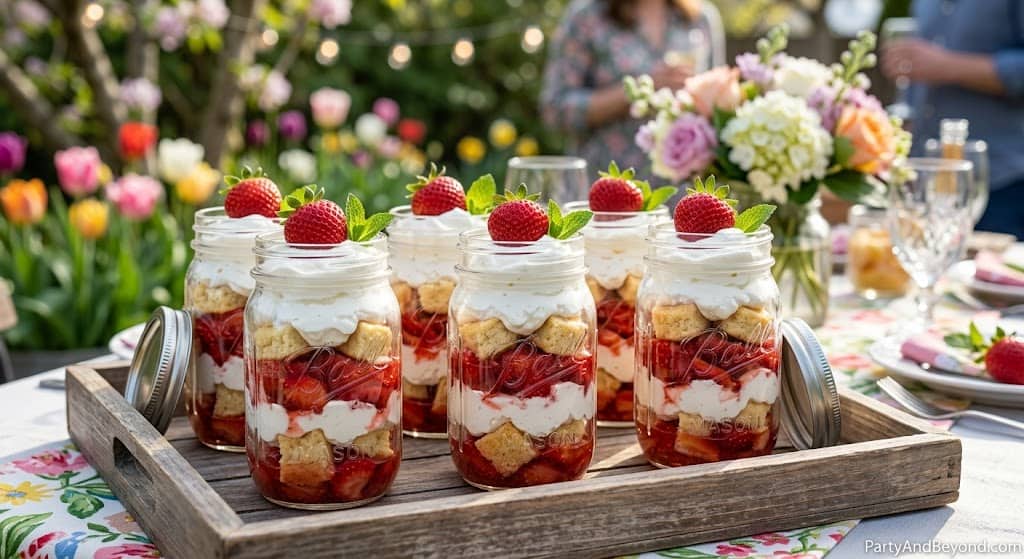
Strawberry shortcake is the dessert that tastes like spring itself — light, fresh, not too sweet, and built around the season’s most anticipated fruit. Serving them as individual portions in small mason jars or clear cups makes them both elegant and practical for an outdoor party where plates and forks are inconvenient.
Bake a batch of simple shortcake biscuits (or use store-bought pound cake cut into cubes if time is short). Slice fresh strawberries and toss them with a tablespoon of sugar — the sugar draws out the juices and creates a natural syrup in about thirty minutes. Whip heavy cream with a touch of vanilla and powdered sugar until soft peaks form.
In each jar or cup, layer a piece of shortcake, a spoonful of macerated strawberries with their juices, and a dollop of whipped cream. Repeat the layers once more. Top with a single perfect strawberry and a tiny sprig of fresh mint. The layered cross-section visible through the clear glass — golden cake, red berries, white cream — looks like a tiny work of art in each person’s hand.
Make the biscuits and macerate the strawberries the morning of the party. Whip the cream an hour before guests arrive. Assemble the jars thirty minutes before serving so the biscuits absorb just enough strawberry juice to soften without becoming soggy. Each shortcake jar costs approximately $0.75 to $1 in ingredients and looks like a $7 restaurant dessert.
9. A Brunch Quiche Served Garden-Style
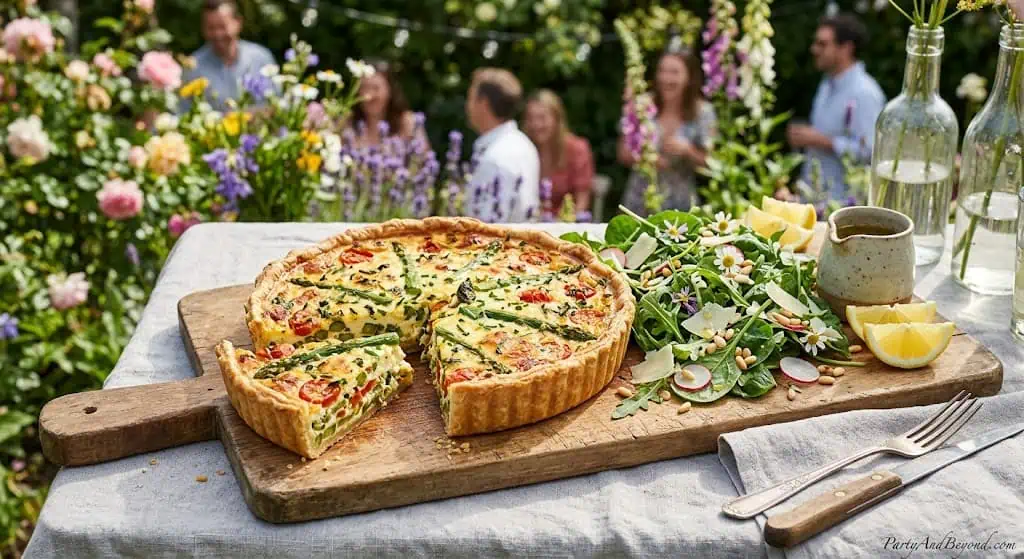
A quiche served at room temperature on a cutting board surrounded by a simple green salad is the most elegant main dish you can offer at a spring garden party, and it requires almost no day-of cooking because you bake it the night before and serve it cold or at room temperature — which is actually how quiche tastes best.
Make a classic quiche Lorraine (bacon, Gruyère, custard) or a spring vegetable quiche (asparagus, peas, goat cheese, fresh herbs) in a standard pie dish. Bake at 375 degrees for 35 to 40 minutes until set and golden. Cool completely, refrigerate overnight, and bring to room temperature 30 minutes before serving.
Transfer the whole quiche to a wooden cutting board or a pretty ceramic plate. Cut one slice and pull it slightly away from the whole to show the creamy interior and invite guests to serve themselves. Surround the quiche with a simple green salad — mixed greens, shaved Parmesan, toasted pine nuts, and a light lemon vinaigrette — arranged directly on the board around the quiche.
The visual of a golden quiche on a rustic board surrounded by fresh greens, sitting on a garden table next to wildflowers, is peak spring entertaining. It looks like a scene from a French countryside lunch — and it cost you approximately $8 to $10 in ingredients and fifteen minutes of morning prep.
Activities and Atmosphere
10. A Flower Crown Making Station
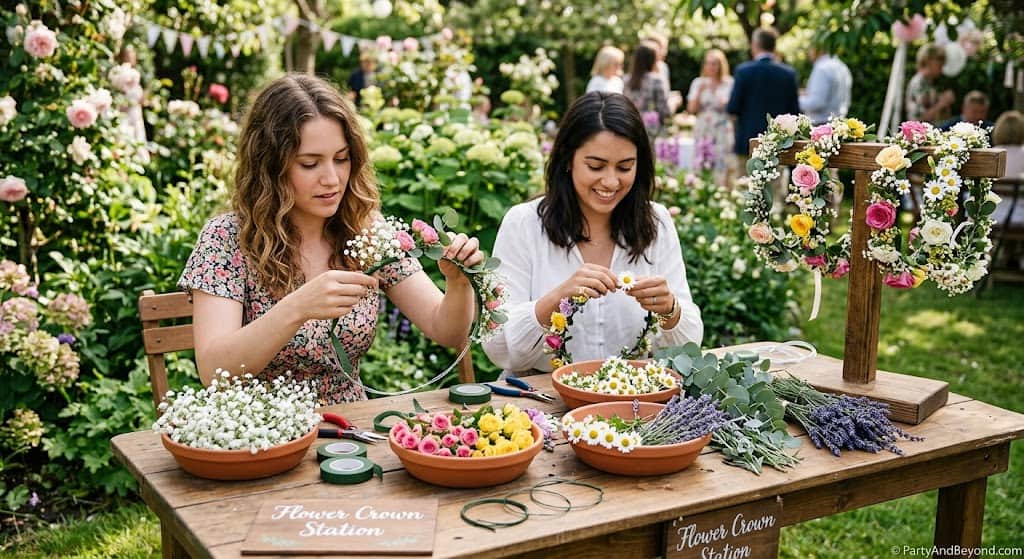
A flower crown making station is the activity that every guest — regardless of age, gender, or self-described craftiness level — ends up sitting at for twenty minutes with a look of intense concentration and childlike delight. There is something about weaving flowers into a crown that taps into a deep, universal joy that transcends any self-consciousness about arts and crafts.
Set up a table with the supplies: flexible wire (floral wire or thin craft wire cut into 24-inch lengths, formed into circles sized to fit a head), floral tape (to wrap stems and secure flowers to the wire), and an assortment of small flowers and greenery — baby’s breath, small spray roses, daisies, mini carnations, lavender sprigs, eucalyptus leaves, and any small-headed flowers from the garden or a grocery store bouquet.
Provide a simple printed instruction card with three steps: wrap the wire circle with floral tape for a non-slip surface, arrange small flower bunches against the wire, and secure each bunch by wrapping floral tape tightly around the stems and wire. Each crown takes about fifteen to twenty minutes to make and uses $2 to $3 in flowers per crown.
The station creates three layers of party magic simultaneously. First, it is a genuine activity that keeps hands busy and conversations flowing — people talk more freely when they are working on something together. Second, it produces a wearable accessory that transforms every guest’s appearance and creates a unifying visual theme as more and more guests put on their finished crowns. Third, it generates incredible photos — a garden party where half the guests are wearing fresh flower crowns looks like a scene from a fairy tale.
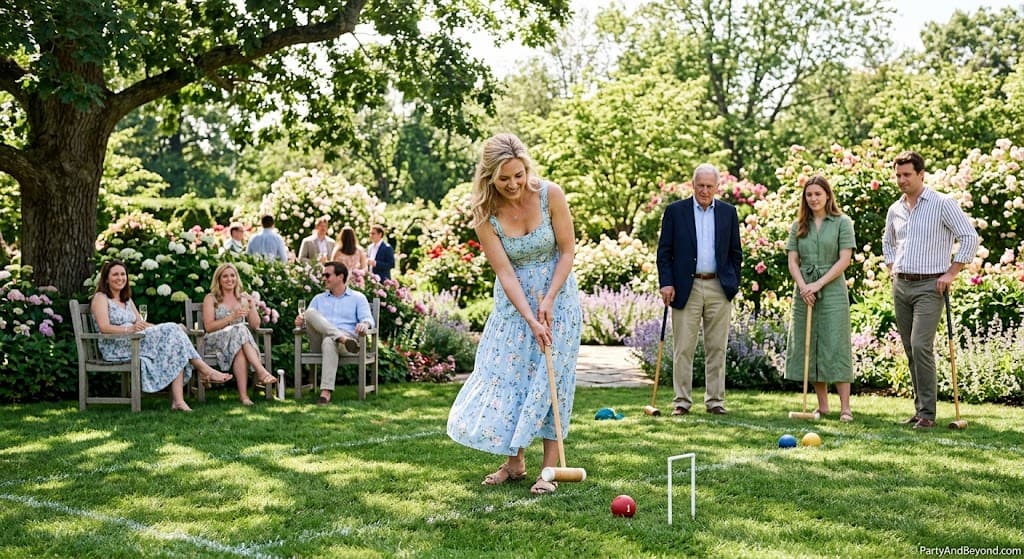
11. Croquet on the Lawn (The Classic Garden Game)
Croquet is the game that was invented for garden parties. The gentle pace, the strategic thinking, the satisfying clack of mallet hitting ball, and the excuse to stand on a beautiful lawn with a drink in one hand and a mallet in the other — it is the perfect activity for an afternoon where nobody wants to exert real athletic effort but everyone wants something to do besides sit.
A basic croquet set costs $25 to $40 and lasts for years. Set up the wickets in a standard layout across the flattest section of your lawn. The game accommodates two to six players per round, and rounds take about twenty to thirty minutes. Non-players spectate from nearby chairs, offering unsolicited strategic advice and gentle heckling — which is half the social entertainment.
Croquet does not require athleticism, speed, or youth. A seventy-year-old grandmother can beat a twenty-five-year-old athlete because the game rewards precision and strategy over physical power. This age-equalizing quality makes it the ideal garden party game for mixed-generation gatherings where competitive running games would exclude half the guests.
If you do not own a croquet set and do not want to buy one, improvise with a DIY version: use pool noodles bent into arches as wickets, rubber balls or bocce balls as the playing balls, and broom handles or sticks as mallets. The homemade version lacks the refined elegance of a real set, but it is equally fun and adds a charming resourcefulness to the party’s character.
12. A Curated Spring Playlist (The Invisible Decoration)
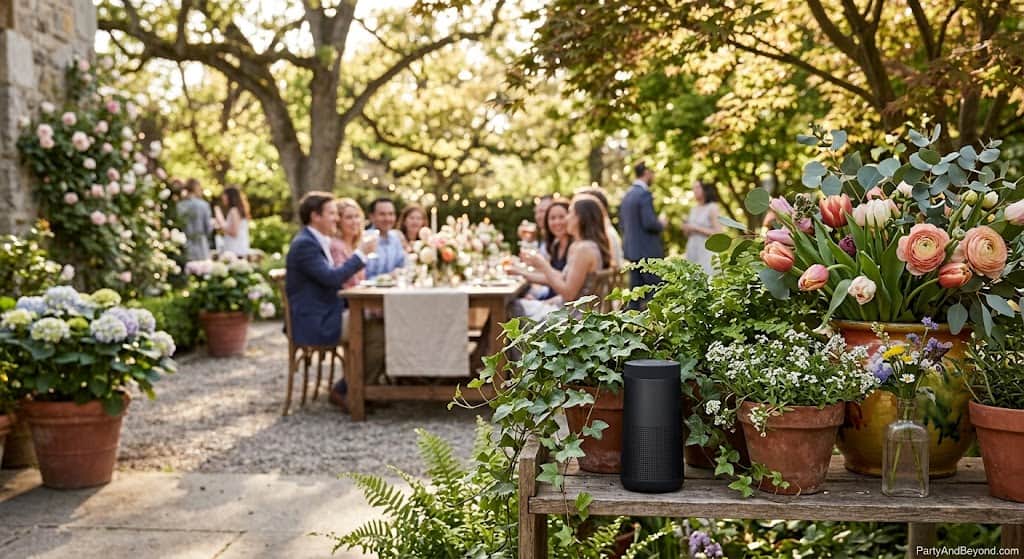
Music at a garden party should feel like another layer of the natural environment — present, pleasant, and never competing with conversation or birdsong. The playlist you choose determines whether the atmosphere feels relaxed and curated or hectic and random. Get this right and nobody will mention the music. Get it wrong and it is the only thing anyone notices.
Build a playlist of acoustic, folk, jazz, and soft pop songs that match the energy arc of the afternoon. Start with gentle acoustic tracks as guests arrive — artists like Jack Johnson, Norah Jones, Vance Joy, and Iron and Wine set a warm, unhurried tone. As the afternoon builds and energy rises, shift to upbeat but still soft artists — Fleetwood Mac, The Lumineers, Kacey Musgraves, and early Coldplay. As the evening approaches and lights come on, transition to jazz and bossa nova — Ella Fitzgerald, Stan Getz, Diana Krall — for a sophisticated wind-down.
Play the music from a single Bluetooth speaker positioned centrally but not next to any seating area. The volume should be set at “if I focus, I can identify the song” level — never “I have to raise my voice to be heard.” The music fills the silence without filling the space. It prevents awkward quiet moments without preventing conversation. It is the invisible decoration that nobody sees and everyone feels.
Create the playlist the day before and set it to play straight through without shuffling, so the energy arc is intentional rather than random. A three to four hour playlist eliminates the need for anyone to DJ or change songs, which means you — the host — can actually enjoy your own party instead of managing the music.
Personal Touches
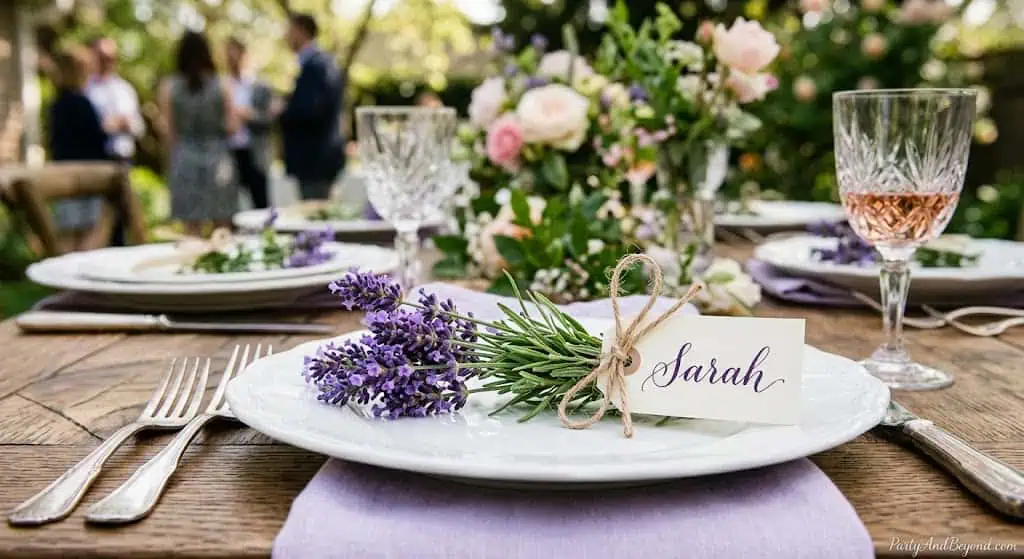
13. Herb Sprig Place Cards (Fragrant and Functional)
Write each guest’s name on a small cardstock tag and tie it with thin twine to a fresh sprig of rosemary, lavender, or thyme. Place the herb sprig across each plate as a combination place card, napkin decoration, and fragrant favor. When guests sit down, they pick up their herb sprig, smell it instinctively, and immediately feel individually considered — someone wrote their name on a card, chose a herb, and thought about where they should sit. That two-minute investment of effort per guest produces a disproportionate emotional return.
The herbs cost almost nothing if you grow them (even a small patio pot of rosemary provides enough sprigs for twenty guests) or $2 to $3 for a grocery store bunch that provides fifteen to twenty sprigs. The cardstock tags cost $1 to $2 for a pack of fifty. The total investment is under $5 for a detail that makes every guest feel personally welcomed and that photographs beautifully from every angle.
At the end of the party, guests take their herb sprigs home — some will tuck them into a vase, some will use them in cooking that evening, and some will press them flat in a book as a memento of the afternoon. A place card that becomes a keepsake is the kind of small, thoughtful detail that guests mention when they tell other people about your party.
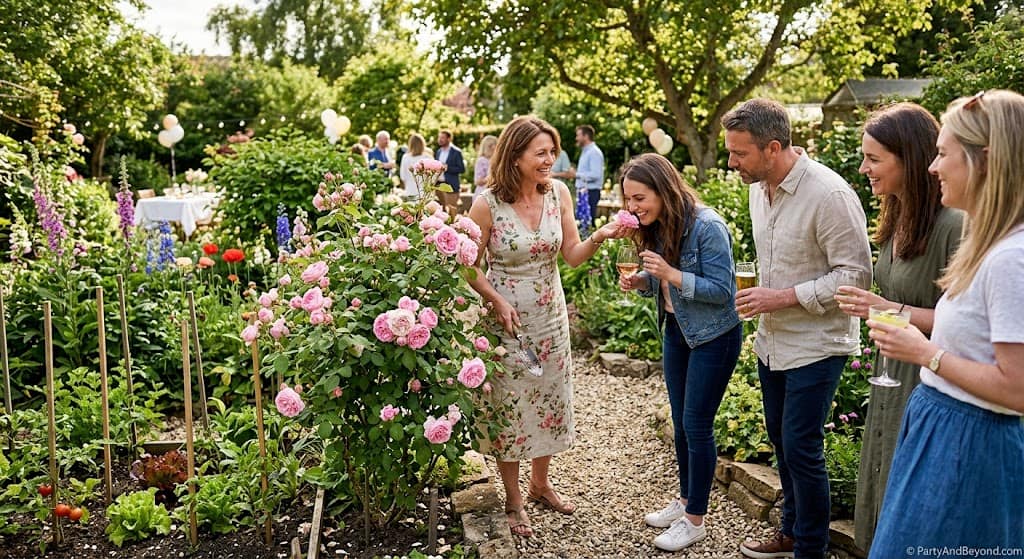
14. A Garden Tour for Your Guests
If you have a garden — even a small one — offer a casual walking tour as part of the party. Sounds formal. It is not. It is you walking four or five guests around the yard saying “this is the rosemary that absolutely refuses to die” and “that hydrangea was a stick when I planted it three years ago and now it is taller than me” and “I have no idea what this flower is called but it shows up every April and I love it.”
A garden tour is not about having an impressive garden. It is about sharing something personal. Your garden is a living autobiography — every plant represents a decision you made, a season you survived, a hope you had about what might grow. Sharing that story while standing next to the actual plants creates an intimate moment that no amount of beautiful food or decoration can replicate.
The tour takes five to ten minutes, gives guests a reason to stand up from the table and move (which is welcome at any long meal), and provides a conversation foundation that lasts the rest of the afternoon. People will ask follow-up questions about plants they saw, request cuttings of things they liked, and remember your garden long after they have forgotten what they ate.
Even if your garden is modest — a few pots on a patio, a herb box on the railing, a single tree you planted when you moved in — the tour works. People are not evaluating your horticulture skills. They are connecting with you through a medium that has nothing to do with careers, obligations, or the usual social small talk. The garden strips all of that away and replaces it with something real.
15. A Signature Cocktail Named After the Season
Instead of offering a full bar — which is expensive and overwhelming for an afternoon party — create one signature cocktail, give it a charming spring name, and serve it to every guest as they arrive. A single welcome drink eliminates bar setup, reduces cost, removes decision fatigue, and creates a shared experience where everyone is drinking the same thing and can bond over how much they love it.
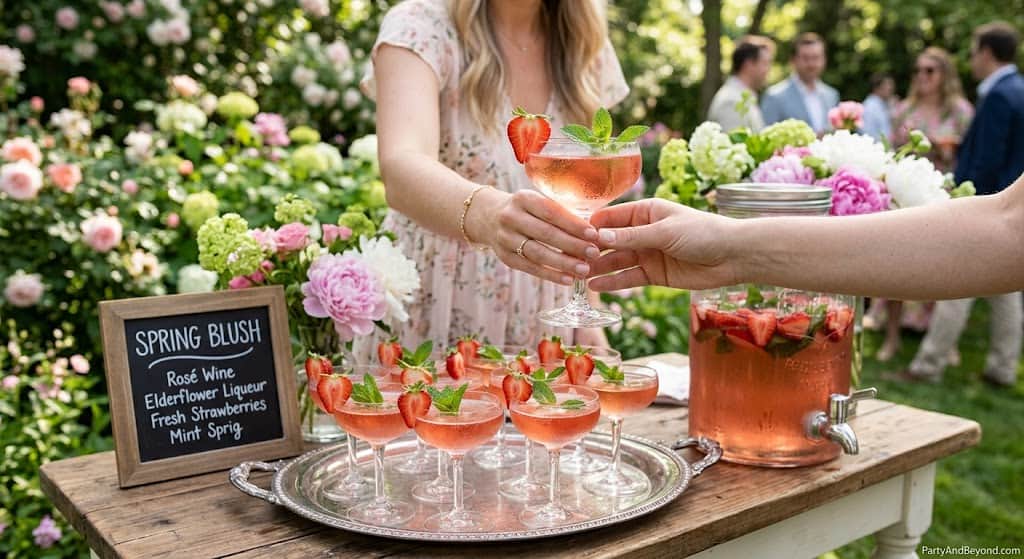
The Spring Blush: Mix rosé wine with elderflower cordial and a splash of sparkling water. Garnish with a strawberry slice and a sprig of fresh mint. Serve in a wine glass or a small mason jar. Cost per drink: approximately $1.50.
The Garden Gimlet: Combine gin with fresh cucumber juice, lime juice, and simple syrup. Shake with ice, strain into a glass, and garnish with a thin cucumber ribbon and a small edible flower. Cost per drink: approximately $2.
The Lavender Lemonade Fizz: Add a tablespoon of lavender simple syrup and a splash of prosecco to a glass of fresh lemonade. Garnish with a sprig of dried lavender. Cost per drink: approximately $1.75.
Prepare a large batch of your chosen cocktail before guests arrive and keep it in a glass dispenser or pitcher on the drink table. Set out a tray of pre-poured glasses so guests can grab one immediately upon arrival — no waiting, no mixing, no small talk while someone searches for the bottle opener. The drink is in their hand within thirty seconds of walking through the gate, and the party has begun.
16. A Polaroid Photo Station With a Garden Backdrop
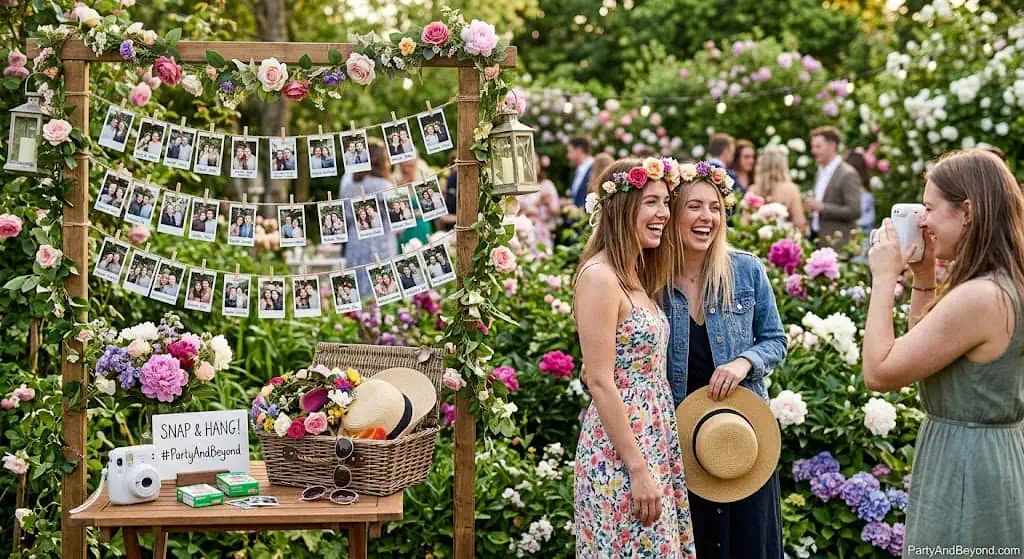
Set up an instant camera (Fuji Instax cameras cost $60 to $80 and produce charming retro prints) or a phone with a portable printer at a designated photo spot in the garden — beside a blooming bush, in front of a flower-covered wall, or under the string-light canopy. Provide a basket of simple props: sun hats, flower crowns from the making station, vintage sunglasses, and small chalkboards for writing messages.
Each guest or group takes a photo, and the instant print goes into a guest book or hangs on a clothesline display with mini wooden clothespins. By the end of the party, the display shows twenty to thirty candid photos from the afternoon — a visual record of the celebration that the host keeps as a memento and guests return to admire before leaving.
The physical print is what makes this different from phone photos. A tangible photograph that develops in your hand has a novelty and permanence that a digital image does not. Guests hold their print, wait for it to develop, watch their faces appear, and feel a small rush of delight that recaptures the magic of analog photography in a digital world.
17. Send Guests Home With a Living Favor
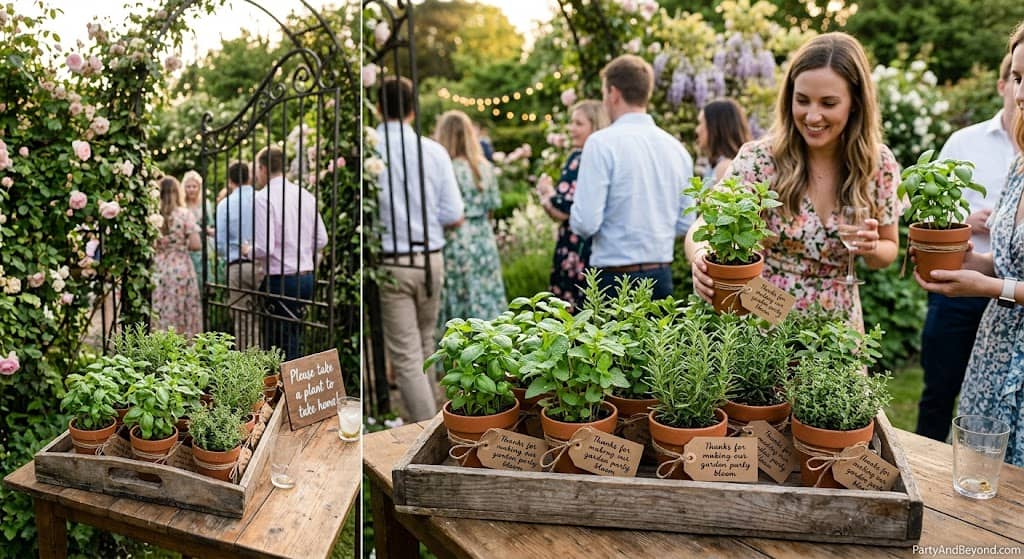
Instead of a goody bag or a wrapped trinket, send each guest home with a small potted herb, a seedling in a tiny pot, or a packet of flower seeds tucked into a small envelope with a handwritten tag that reads “Thanks for making our garden party bloom.” The living favor continues growing long after the party ends — guests plant the seeds or nurture the seedling, and every time they see it grow, they remember the afternoon.
Small herb plants (basil, mint, thyme) cost $1 to $3 each at any garden center. Seed packets cost $0.50 to $1 each. Tiny terracotta pots cost $0.50 to $1 each at dollar stores. A tray of twelve living favors — potted herbs in painted pots with handwritten tags — costs under $20 and serves as both party decoration (displayed on a table during the event) and take-home gift.
The living favor aligns perfectly with the spring garden party theme in a way that a candle or a cookie never could. It says “this party was about growth, beauty, and things that are alive” — and here is a small piece of that to take home with you.
18. End the Evening With a Sunset Toast
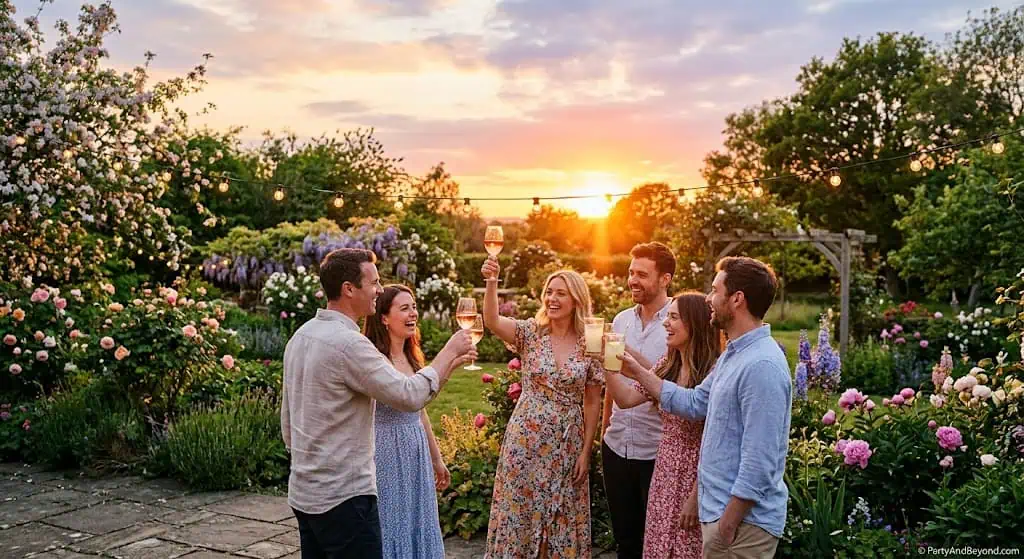
As the sun begins to set — and at a spring garden party, you will know when this happens because the light turns gold and every surface in the garden suddenly looks like it is glowing from the inside — gather everyone for a simple toast. It does not need to be a speech. It does not need to be long. Three sentences are perfect.
Stand where the sunset is visible. Raise your glass. Say something like: “Thank you for being here. This is my favorite kind of day — good food, good people, and a garden that decided to show off. Here’s to spring.”
That is it. Glasses clink. People smile. The sunset continues. And for one quiet, unhurried moment, every person at your party is standing in the same warm light, holding the same drink, feeling the same gratitude for a perfect afternoon — and that shared feeling is the entire point of a garden party.
You do not need more than this moment. You do not need a bigger garden, a bigger budget, or a bigger guest list. You need a spring evening, people you enjoy, and the willingness to say “come over, the garden looks beautiful right now.”
The rest takes care of itself.
Frequently Asked Questions
How much does a spring garden party cost?
A simple garden party with lemonade, a small grazing board, and minimal decorations costs $25 to $50 for ten to fifteen guests. A mid-range party with a full grazing table, signature cocktails, tea sandwiches, dessert, and thoughtful decor runs $75 to $150. A premium celebration with extensive food, specialty drinks, flower crown station, photo station, and curated details costs $150 to $300. Every budget level produces a beautiful result because the garden itself provides the foundation for free.
What time should a spring garden party start?
The ideal start time is 2:00 to 3:00 PM, which positions the main meal during the comfortable mid-afternoon hours and allows the party to extend naturally into the golden hour and early evening. Starting before noon makes the party feel like brunch. Starting after 5:00 PM misses the afternoon light entirely. The 2:00 to 3:00 PM window captures the full arc of spring’s best hours.
What if it rains on garden party day?
Have a contingency plan that moves the party indoors or under a covered patio without losing its garden party feeling. Bring the outdoor elements inside — the flower arrangements, the grazing table, the string lights, the mason jar lemonade bar. Open all the windows and doors so the smell of rain-soaked garden fills the indoor space. Some of the most memorable garden parties I have attended were the ones where a spring shower drove everyone inside, and the cozy, unexpected togetherness of sheltering from rain with good food and warm drinks created a closeness that sunshine never could.
What should guests wear to a garden party?
Include a dress code suggestion on the invitation — “garden party attire” or “spring casual” signals sundresses, linen pants, light blouses, and comfortable shoes that can handle grass. Mention that the party is outdoors so guests can plan for sun and bring a light layer for the evening. Avoid saying “formal” — garden parties should feel relaxed, and overdressed guests feel as uncomfortable as underdressed ones.
Can I throw a garden party without a big garden?
Absolutely. A patio, a balcony, a small courtyard, a front porch, or even a park with a picnic permit can host a beautiful garden party. The “garden” in garden party refers to the aesthetic and the atmosphere more than the literal space. Potted plants, a tablecloth, flowers, and outdoor seating create the garden party feeling in any outdoor space — and even in some indoor spaces with enough natural light and greenery.
What flowers are best for a spring garden party?
Peonies, ranunculus, tulips, daffodils, sweet peas, hyacinths, and lilacs are the quintessential spring flowers. For budget-friendly options, grocery store mixed bouquets deconstructed into smaller arrangements provide variety and color at low cost. Wildflowers picked from your own garden or a roadside meadow are free and perfectly on-theme. Baby’s breath and greenery fillers like eucalyptus stretch any arrangement to look fuller without adding cost.
Leah Meyer is a passionate event planner and creative writer behind Party & Beyond, where she helps hosts throw stunning celebrations on a real-world budget. From birthday parties and baby showers to backyard weddings and holiday gatherings, Leah personally tests every DIY idea she shares , proving that the wow factor lives in the details, not the price tag. When she's not planning the next party, you'll find her hunting for hidden treasures at dollar stores, inflating balloons (she owns three pumps!), or brainstorming with her dog, the official Chief Inspiration Officer of Party & Beyond.