
This post may contain affiliate links. If you buy through them, I may earn a small commission at no extra cost to you.
Here’s my honest take after years of planning parties for every age: teenagers are the easiest guests to disappoint and the easiest to thrill, and the line between the two is exactly one orange “Happy Halloween!” banner from the kids’ aisle. Anything that smells like a little-kid party — scheduled games every ten minutes, bright overhead lights, a craft table — and you’ve lost them to their phones by 7:40.
But give them a dark room that photographs well, food that keeps coming, and one genuinely good activity they can opt into? They’ll stay until you flash the porch lights. These 21 Halloween party ideas for teens are built on that formula — atmosphere first, autonomy always — with real costs, setup times, and a parent’s cheat sheet at the end, all inside a $100–$200 budget for 12–15 teens.
What Do Teens Actually Want at a Halloween Party?
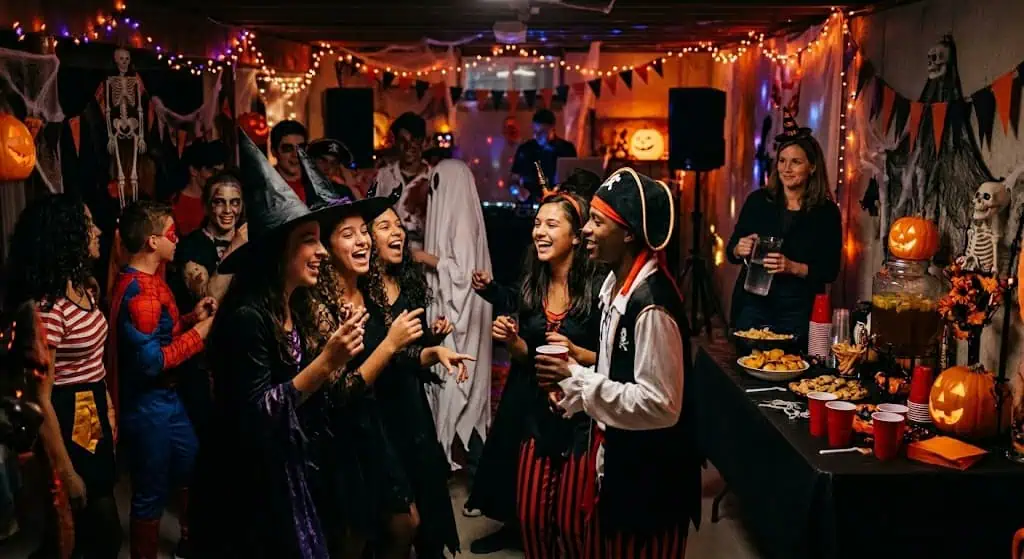
Four things: a space that looks good in photos, food they don’t have to ask for, one activity with real stakes (a prize, a scare, a win), and zero adult-orchestrated icebreakers. Teens don’t want a schedule — they want a setting. Your job as host is closer to set designer than activities director: build three or four great zones (photo corner, snack bar, movie or game space, a hangout spot), stock them, and let the party assemble itself. Trust me on this: the less programmed it feels, the longer they stay off their phones.
Halloween Party Ideas for Teens
The Photo and Atmosphere Layer
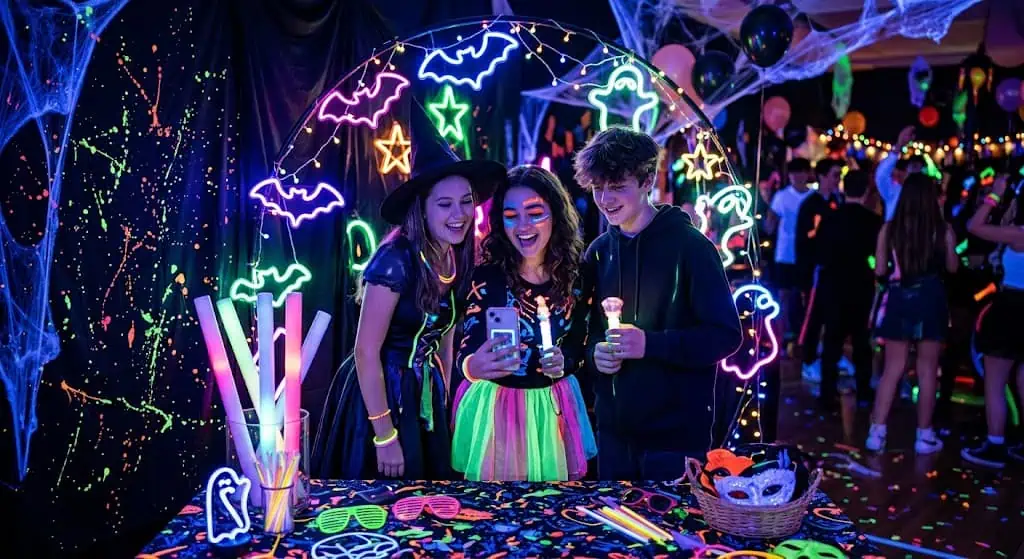
1. Neon Glow Photo Corner
A black backdrop ($6 fringe curtain), one strand of purple or orange LED neon-style lights ($15), and a prop bin. 20 minutes to build. Best for: big groups — it’s the first place everyone goes and the reason the party shows up online looking incredible.
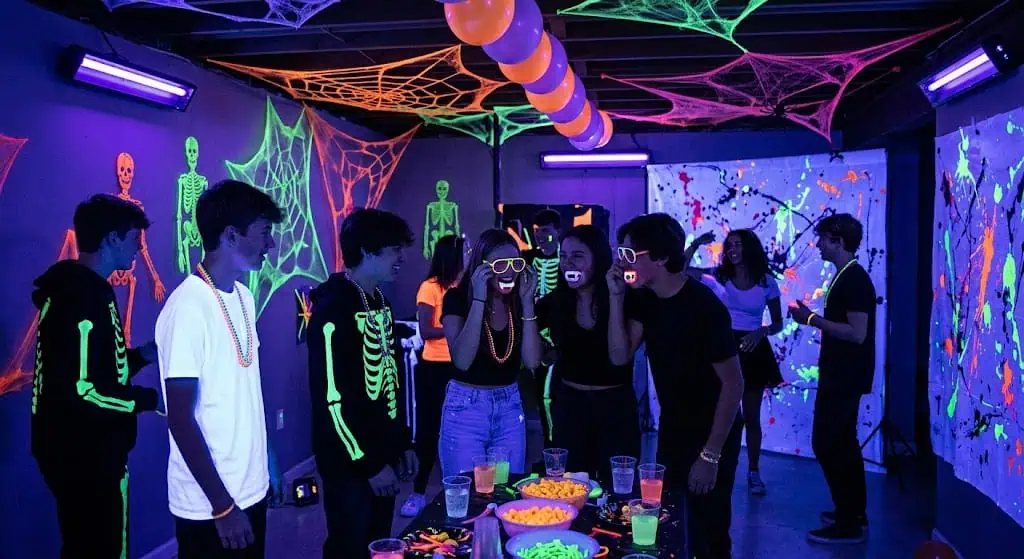
2. Blacklight Room Conversion
Two blacklight bulbs or bars ($15–$20 each) in one room, plus white and neon anything — posters, tape lines on walls, highlighter-drawn cups. 30 minutes. Best for: the dance/hangout room; it makes a basement look like a venue.
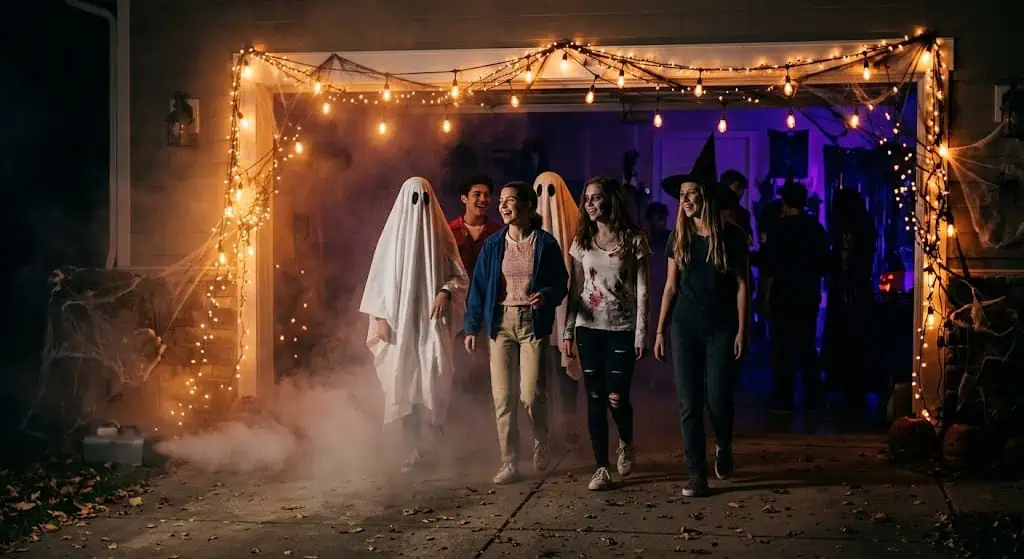
3. Fog and String Light Entrance
A $30 mini fog machine at the front walk with low amber string lights — guests arrive through the fog and the tone is set before the door opens. 15 minutes. Best for: first impressions; run it in bursts so the fog reads spooky, not smoky.
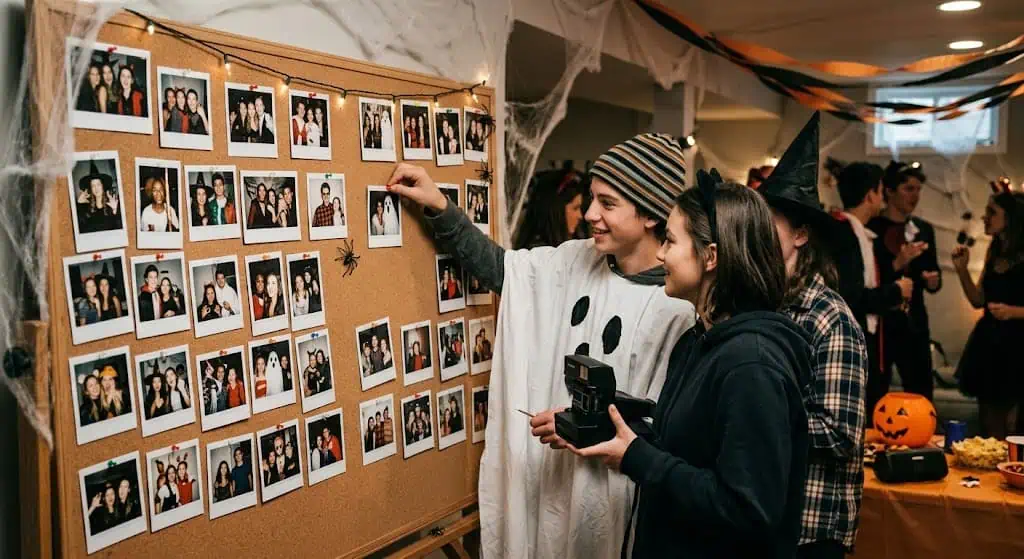
4. Polaroid Guest Wall
An instant camera (borrowed if possible; film $15–$20), clothespins on twine, and a “leave one photo” rule. Best for: sleepovers and smaller groups — the wall becomes the party’s keepsake and tomorrow’s group-chat content.
5. Dark Lounge Corner
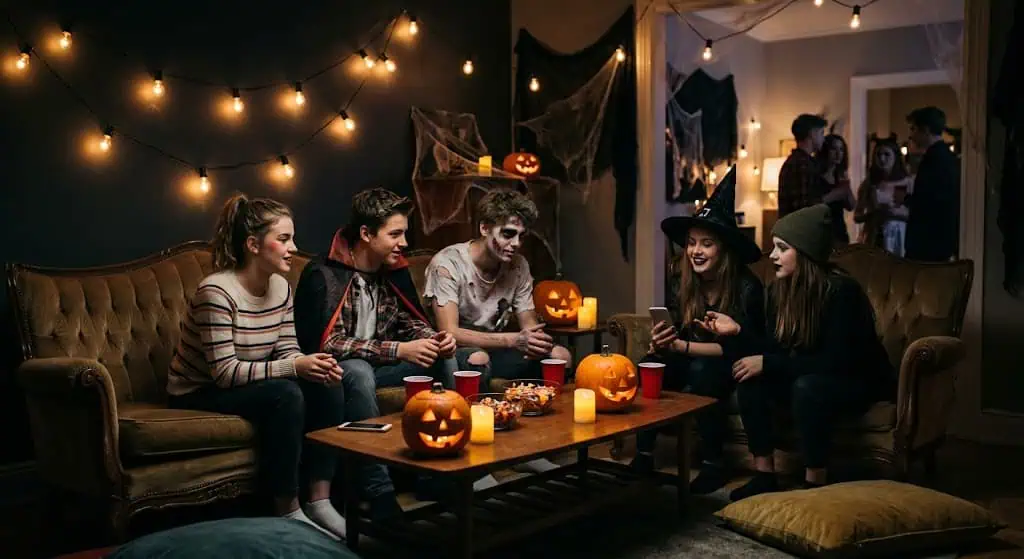
Floor cushions, blankets, candles (LED), and a low lamp with an amber bulb — a deliberately quiet zone away from the music. About $10 if you own the cushions. Best for: the introverts on the guest list; every teen party needs an exit ramp that isn’t “going home.”
Pro tip: Lighting is the entire difference between “mom decorated” and “this is cool.” Kill every overhead light, run lamps and string lights at knee-to-eye level, and keep one room genuinely dark for the glow setup. Total lighting spend: under $40.
Activities That Don’t Feel Cringey
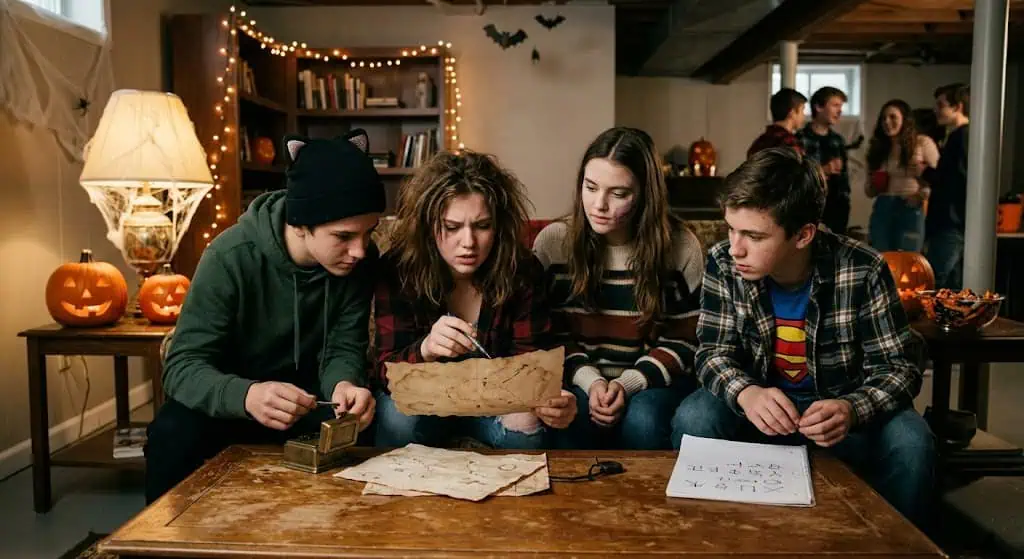
6. The Home Escape Room Challenge
One room, one storyline (“the lab is locked — find the antidote in 30 minutes”), five puzzles: a combination lock on a box ($8), a hidden key, a UV-pen clue read under the blacklight ($6), a riddle taped under a chair, and a final code. Build time: 45–60 minutes; run teams of 4–5 against the clock. Total cost: $15–$25. Best for: small and medium groups — the activity teens talk about for weeks.
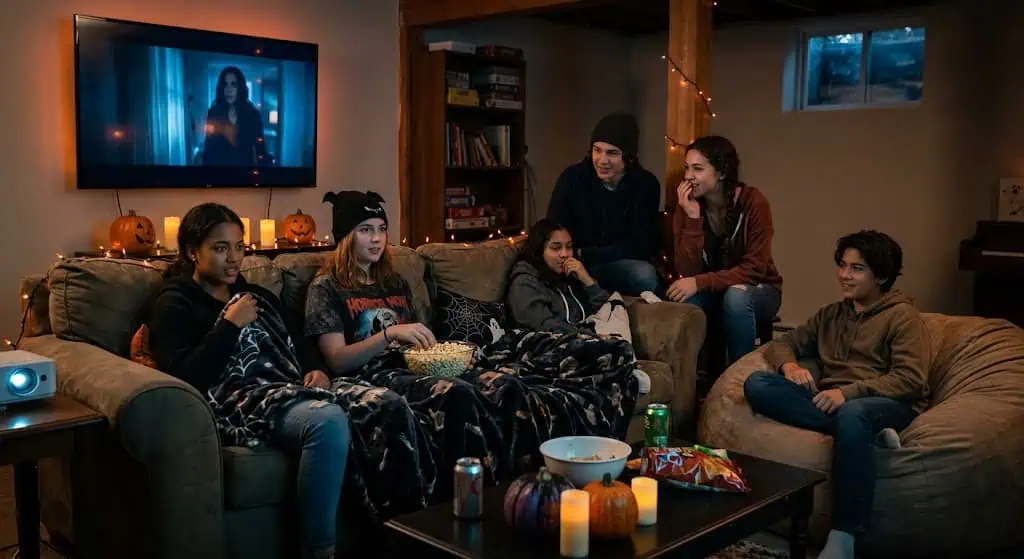
7. Scary Movie Marathon Framework
Print a ballot of 6–8 classic scary movies across intensity levels, vote at 8 p.m., run a double feature with an intermission snack drop. Cost: about $10 in printed ballots and popcorn. Best for: sleepovers; the voting is half the fun and saves you from picking something half the room has banned at home.
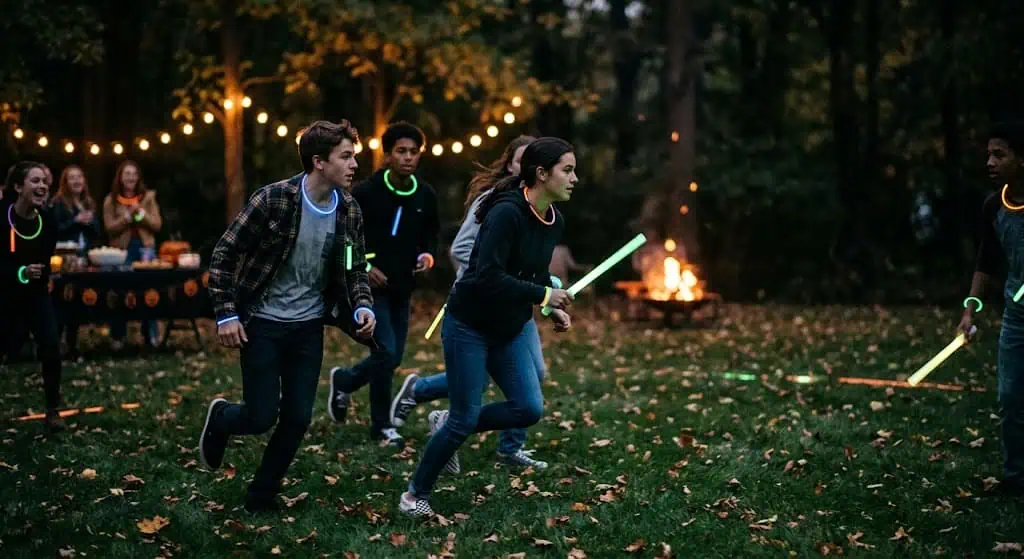
8. Glow Capture the Flag
Backyard, two teams in different glow-necklace colors ($8 per 50 sticks), glow-tape boundaries, flags that light up. 15-minute setup. Best for: big groups with a yard — the one “organized game” teens will actually beg to replay.
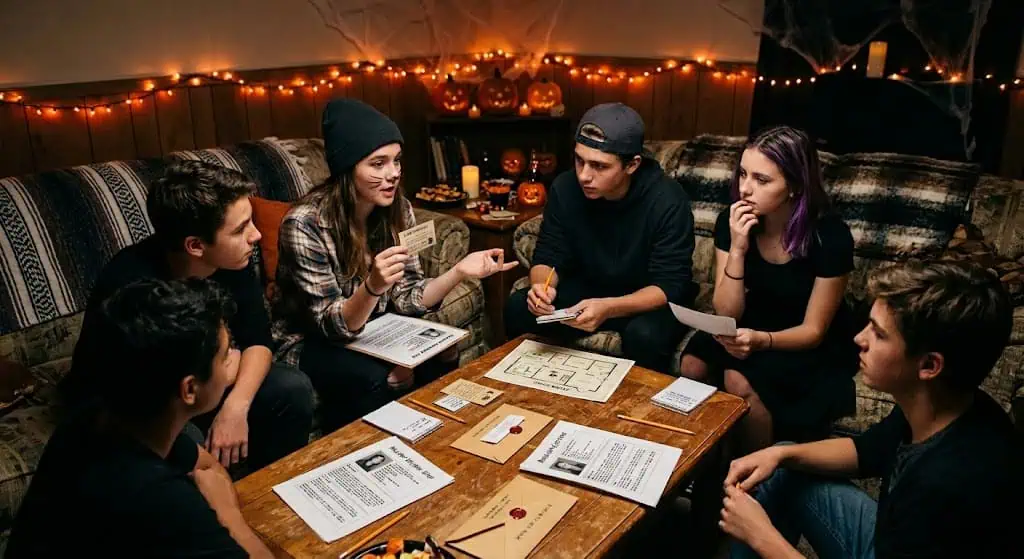
9. Murder Mystery Lite
A printable whodunit kit ($10–$15) run as a one-hour version, characters handed out at the door. Best for: theater-kid friend groups of 8–12; skip it for crowds that would rather die than read aloud.
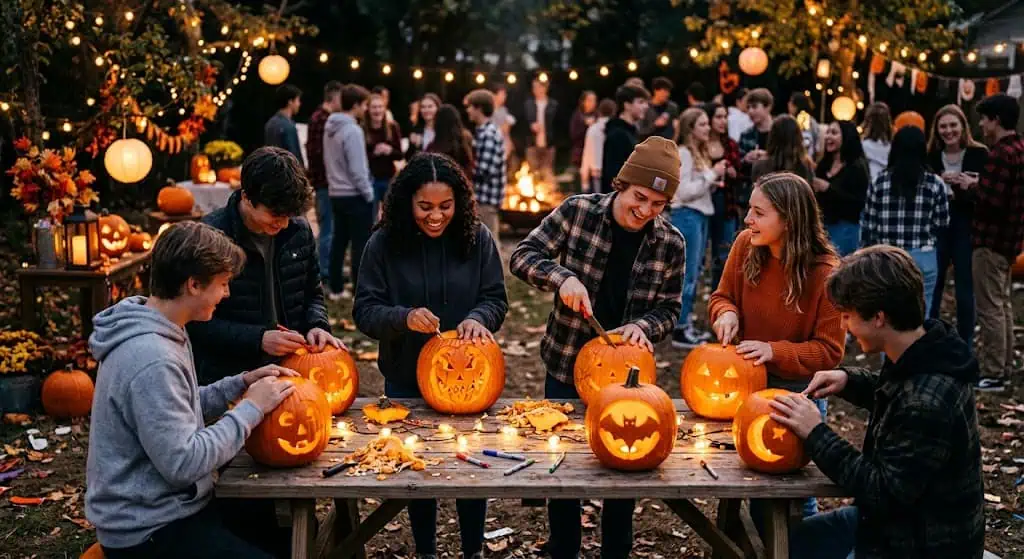
10. Pumpkin Carving Contest
One pumpkin per pair ($4–$6 each), 30-minute timer, three prize categories voted by phone poll (“scariest,” “weirdest,” “most ambitious failure”). About $35 for 6 pumpkins plus $10 prizes. Best for: early-evening energy before the movie or bonfire.
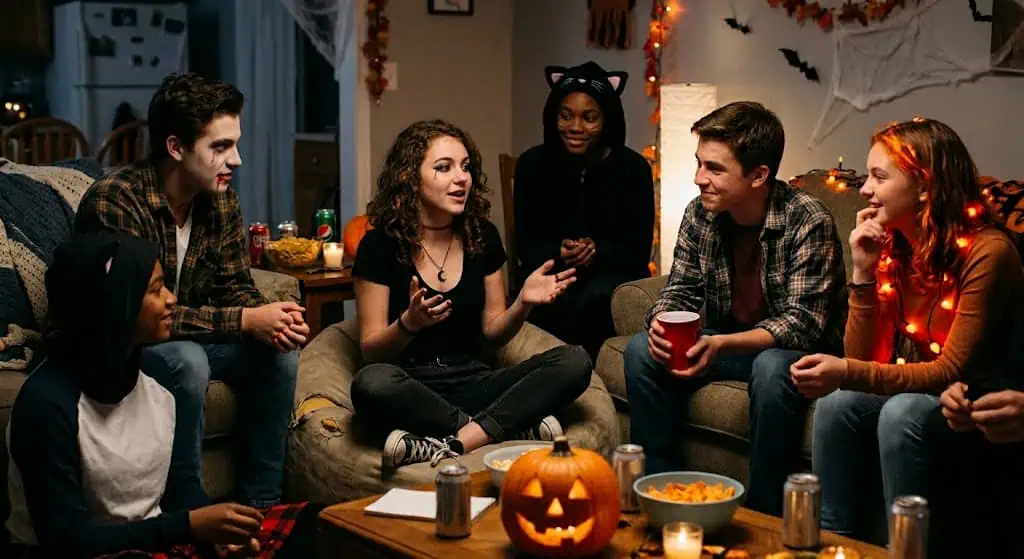
11. Two Truths and a Scare
Lights low, flashlight passed in a circle: everyone tells two true creepy stories and one invented, the room votes which was fake. Free. Best for: the bonfire or the lounge corner — zero setup, surprisingly long legs.
Food Without a Sit-Down
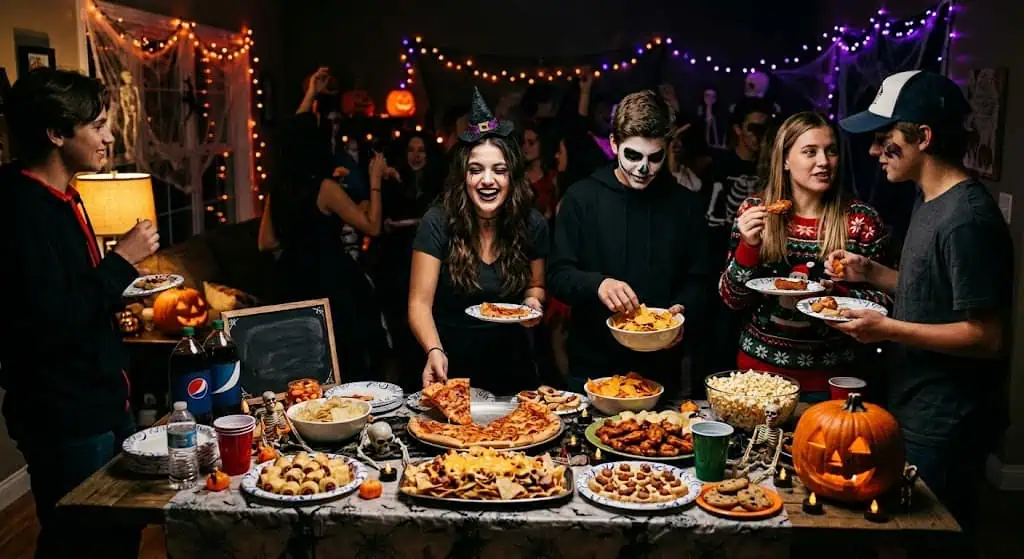
12. The Midnight Snack Bar
A self-serve spread that refreshes at 10 p.m.: chips and dips, popcorn tins, candy bowls, cookies, fruit that nobody admits to wanting but finishes anyway. About $40 for 15 teens. Best for: every format — teens graze, they don’t dine.
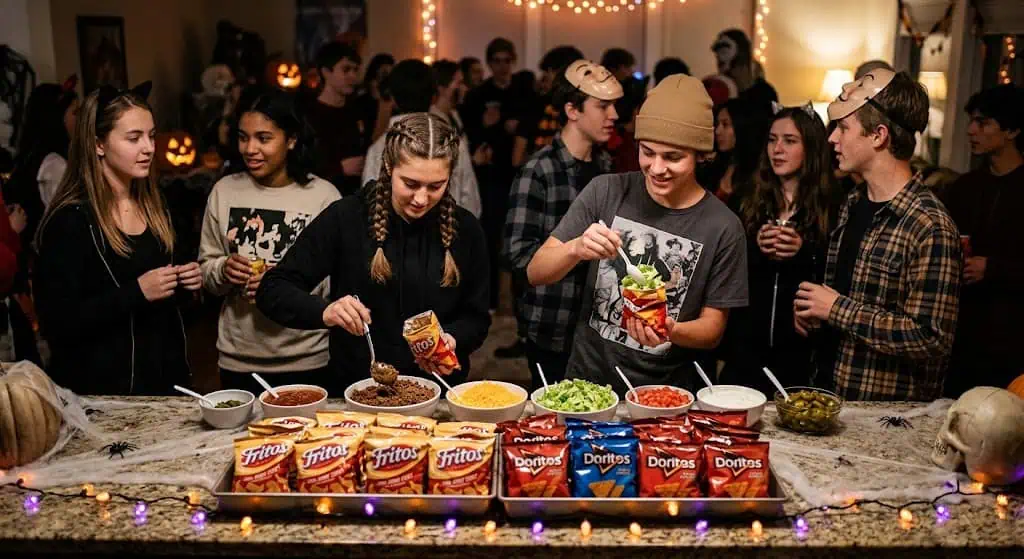
13. Walking Taco Station
Individual chip bags, a crockpot of seasoned beef or beans, and toppings — everything eaten out of the bag, zero plates harmed. About $30. Best for: big groups; it’s the highest food-satisfaction-per-dollar move in teen hosting.
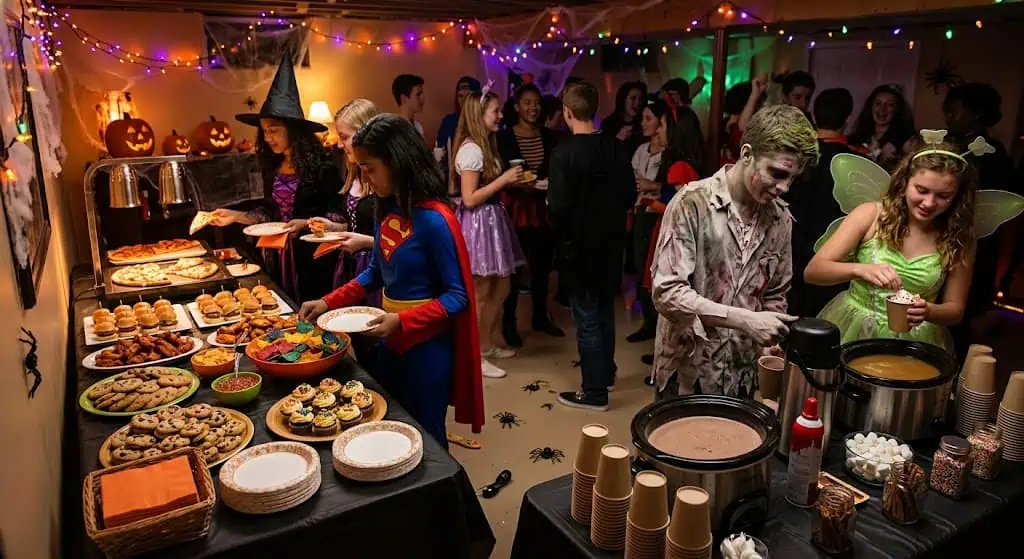
14. Hot Drink Bar
Hot chocolate and cider in two carafes with a toppings tray (whipped cream, caramel, cinnamon). About $15. Best for: bonfire nights and cold-weather states — a mug keeps hands busy and conversations going.
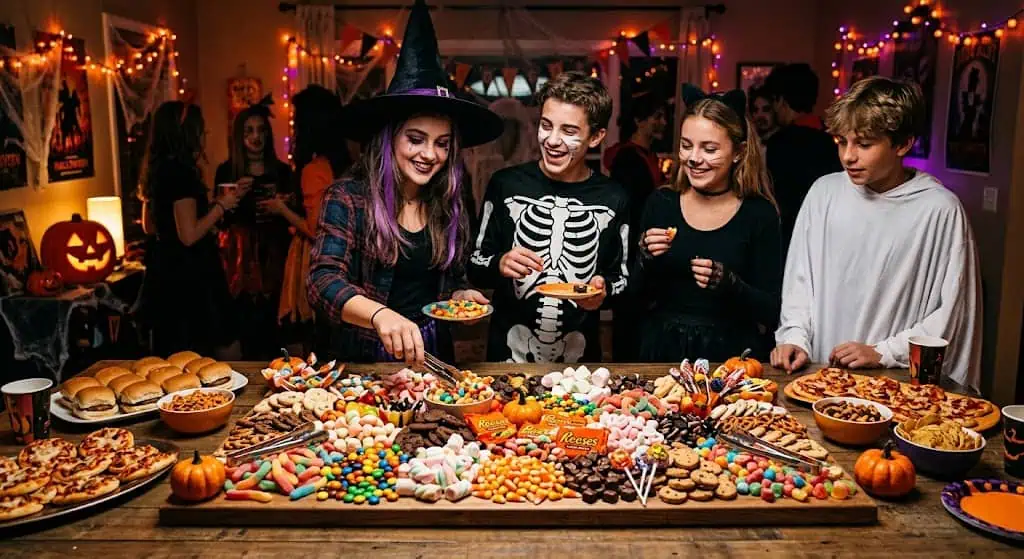
15. Candy Charcuterie Board
One big tray of mixed candy, chocolate pretzels, and sour everything arranged like a cheese board. About $20. Best for: the photo it generates before it’s demolished.
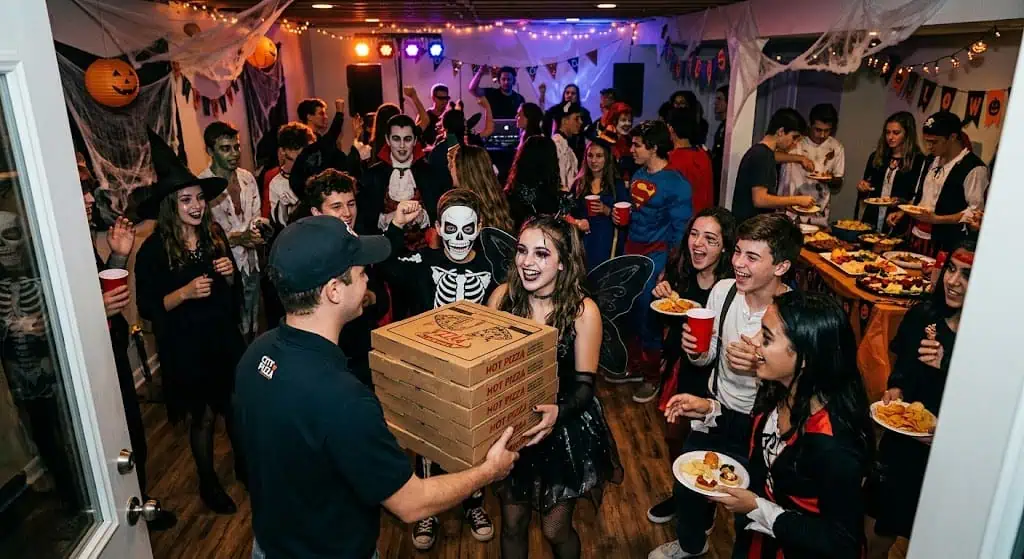
16. The 10 p.m. Pizza Drop
Three or four pizzas arriving two hours in — announced in advance so it lands like an event. $35–$50. Best for: all formats; the second wind of every teen party is shaped like a pizza box.
Backyard and Big-Group Plans
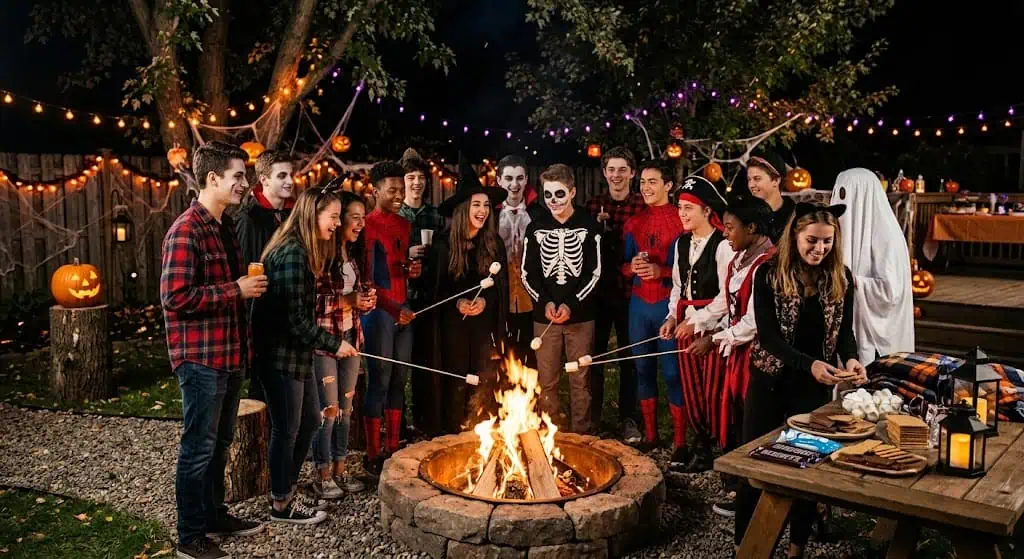
17. Bonfire and S’mores Plan
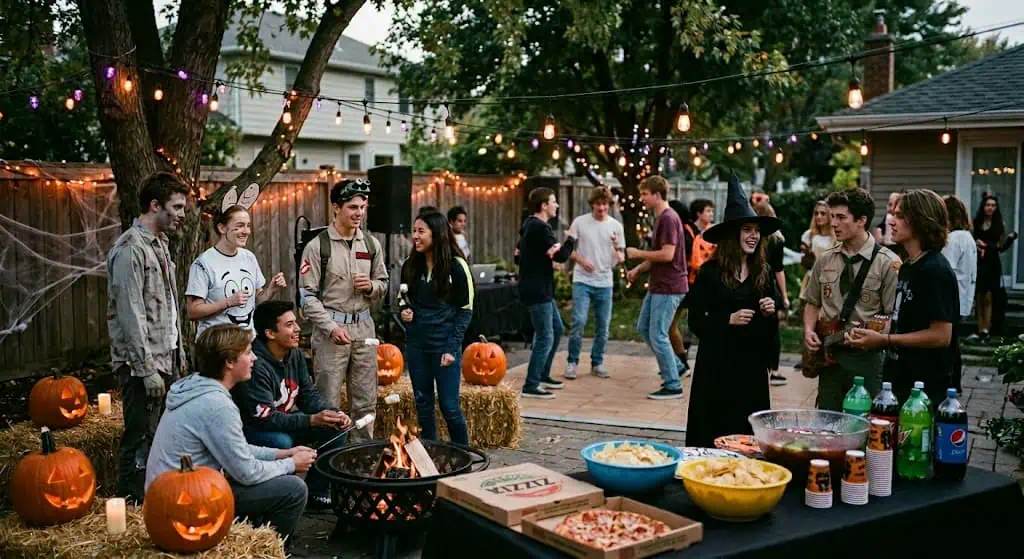
Fire pit, a s’mores board with upgrade options (cookies instead of grahams, peanut butter cups instead of plain chocolate, $20), blankets, and the storytelling circle. Best for: big groups — an adult tends the fire from a respectful distance, which conveniently solves supervision too.
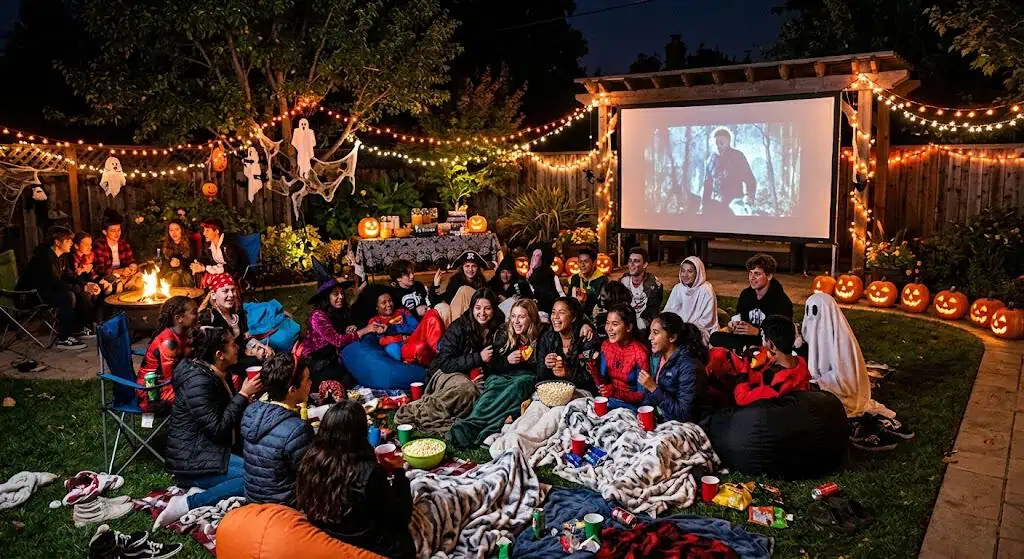
18. Outdoor Movie Projection
A borrowed or budget projector against a white sheet ($8) on the fence, blankets and camp chairs, the snack bar relocated outside. Best for: mild-weather states in October; pure atmosphere for almost no money if the projector is borrowed.
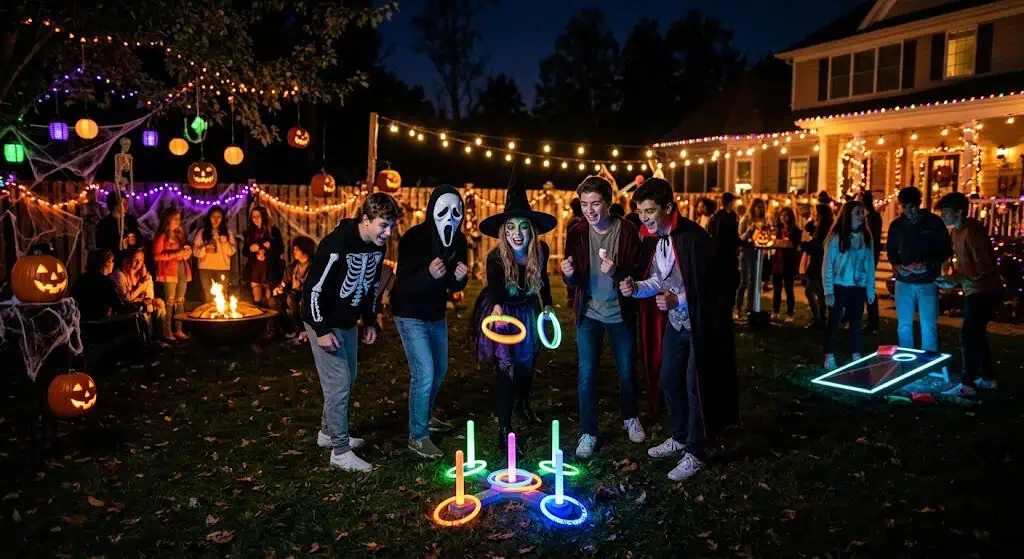
19. Glow Yard Games
Glow-ring toss, glow bowling (water bottles + glow sticks inside), and glow frisbee — about $15 total. Best for: filling the yard between bonfire and movie without announcing “now we’re playing games.”
The Parent’s Cheat Sheet
20. The Supervision Plan: Present but Invisible
Stay home, stay reachable, and stay out of the party zone — restock food, keep the fire safe, and do a casual pass-through about once an hour with a purpose in hand (more pizza counts). Teens behave better with a lightly visible adult than a hovering one, and dramatically better than with none. Best for: every party on this list; this is the deal you make for hosting.
21. Guest List and End Time Rules
Cap the list at the number you can actually feed and see (12–15 is the sweet spot), require RSVPs by name — no “can I bring people” plus-threes — set a firm 11 p.m. end communicated to guests AND their parents, and collect pickup arrangements in advance. Best for: avoiding the only two things that go genuinely wrong at teen parties: crowd creep and the pickup scramble.
How Do You Host a Teen Party Without It Being Awkward?
Engineer the first 30 minutes, because that’s where awkward lives: music already playing when the first guest arrives, the photo corner lit and obvious (it gives early arrivals something to do), food already out, and the host teen greeting at the door while you stay in the kitchen. No name tags, no icebreakers, no announcements — the activities are stations people drift into, not events you call them to. By 8 p.m. the party runs itself; your only remaining jobs are the pizza drop and the porch-light flash at 10:45.
How Much Does a Teen Halloween Party Cost?
$100–$200 for 12–15 teens, and the split matters more than the total: atmosphere and lighting $30–$45, the headline activity $15–$35, food $60–$90 (the one category never to shortchange — teens forgive plain decor, never an empty snack table), and prizes or extras $10–$20. The budget version lands near $100 by borrowing the projector, skipping the fog machine, and letting glow sticks carry the decor.
Party Style Comparison
| Party Style | Cost (12–15 teens) | Setup Time | Supervision Level |
|---|---|---|---|
| Movie marathon night | $100–$130 | 1 hour | Low — one pass-through per movie |
| Glow party | $130–$170 | 1.5 hours | Medium — hourly visibility |
| Backyard bonfire | $110–$150 | 1 hour | High — adult near the fire, always |
| Escape room night | $120–$160 | 2 hours (the build) | Low — the game runs itself |
My honest take: the escape room is the most work and the most legend; the movie marathon is the least work and never misses. First-time teen-party hosts should start with the marathon.
Common Teen Party Mistakes
- Little-kid decor. Smiling cartoon pumpkins read age 7. Go dark, glow, or minimal — teens want a vibe, not a theme party.
- Scheduled fun. Announcing activities every 20 minutes is how you empty a room. Build stations, let them drift.
- Hovering. A parent in the party room changes the chemistry instantly. Present but invisible, hourly pass-throughs only.
- Under-catering. Fifteen teens eat like twenty-five adults. When in doubt, more chips and a fourth pizza.
- Soft end time. “Whenever” turns into a 12:30 a.m. pickup scramble. Firm 11 p.m., told to guests and parents in the invite.
People Also Ask
What can teenagers do at a Halloween party at home?
The strongest lineup: a glow or photo corner for arrival, one headline activity (home escape room, scary movie vote, or glow capture the flag), a self-serve snack bar, a 10 p.m. pizza drop, and a bonfire or lounge corner to land in. Stations over schedules, always.
How long should a teen Halloween party last?
Four hours — 7 to 11 p.m. is the standard. Shorter than three hours feels like a meeting; later than 11 invites the pickup chaos and the neighbor texts. Sleepover versions simply convert the last hour into the movie marathon.
What’s a good Halloween party idea for a small group of teens?
The escape room challenge or the movie marathon with the snack bar — both peak at 6–10 guests. Add the polaroid wall and the candy charcuterie board and a “small” party out-delivers most big ones for about $110.
Do teens still want Halloween parties?
Completely — they’ve just outgrown the kid format. Ages 13–17 want the atmosphere, the food, the scare, and the photos without the games-and-goody-bags scaffolding. Rebuild the party around autonomy and it’s the most requested night of their October.
🎃 Quick Summary
✅ Best for: ages 13–17, 12–15 guests, 7–11 p.m.
💰 Budget: $100–$200; never shortchange the food line
⏱ Time: 1–2 hours setup (escape room: add the 1-hour build)
🌟 Top picks: home escape room, glow photo corner, 10 p.m. pizza drop
📌 Don’t skip: low lighting everywhere, the firm 11 p.m. end, present-but-invisible supervision
Teen Halloween Party FAQ
How much does a Halloween party for teens cost?
$100–$200 for 12–15 guests: $30–$45 on lighting and atmosphere, $15–$35 on the headline activity, $60–$90 on food, and $10–$20 on prizes. The budget floor is about $100 with a borrowed projector, glow sticks as decor, and the walking taco station as the main meal.
How do I build the home escape room step by step?
Pick one room and one story, then chain five puzzles: a locked box with a 3-digit combination, a hidden key, a UV-pen message readable under blacklight, a riddle leading to a location, and a final code that “unlocks” the room. Write the solution path backward from the ending, test it on a sibling, and cap teams at five with a 30-minute timer.
What music should play, and how loud?
Let the host teen build the playlist a week early (this is non-negotiable for credibility), keep it at conversation-plus volume indoors, and drop it lower after 10 p.m. for the neighbors. A backup playlist of broadly liked party songs saves the night if the aux gets chaotic.
How many adults should be around?
One or two — home, reachable, and out of the party zone. Add a dedicated fire-tender for bonfire nights and a second adult for guest lists over 15. The hourly pass-through with a refill in hand covers visibility without surveillance.
What do I do about phones?
Nothing — work with them instead. The photo corner, the phone-poll pumpkin voting, and the polaroid wall make phones part of the party rather than the escape from it. A party worth photographing is the only phone policy that works on teenagers.
How do I handle the guest list getting out of hand?
RSVP by name with a hard cap, the host teen owns the list, and the invite says “invite-only — no plus-ones” in plain words. If word spreads anyway, the porch light off and an adult answering the door settles it in thirty seconds.
What’s the best format for a Halloween sleepover?
Front-load the active stuff (glow games, escape room, pumpkin contest) before 10 p.m., pizza drop, then the movie marathon with the voted double feature, lounge corner bedding, and the snack bar restocked at midnight. Cap the sleepover list at 6–8 — bigger groups don’t sleep and neither will you.
How scary should the movies and decor be?
Poll the group beforehand — one genuinely scared guest changes the whole night. The ballot system solves it naturally: include a range from creepy-fun to actually-scary and let the vote find the room’s level. Same with decor: atmospheric beats gory for mixed groups.
What about teens who don’t know anyone?
Stations are the fix: a newcomer can join the pumpkin contest, the snack bar, or the escape-room team without needing an introduction. Brief the host teen to anchor any solo guest into the first activity — one good first 15 minutes and the party does the rest.
How do I end the party cleanly at 11?
Announce “last movie / last round” at 10:30, flip the playlist to wind-down songs, flash the porch lights at 10:50, and have pickup arrangements collected in advance. Handing out the polaroids from the guest wall at the door turns the ending into a moment instead of an eviction.
What should the invite include?
Date, the 7–11 p.m. window, the format (“glow party + bonfire”), food plans (so nobody eats first), the no-plus-ones line, and a parent contact for pickup coordination. Send it two weeks out — teen calendars fill faster in October than any other month.
Can this work in a small apartment?
Yes — run the movie marathon format: blacklight one room, lounge-corner the other, snack bar in the kitchen, and cap the list at 8–10. Skip the fog machine (smoke detectors disagree with it indoors) and lean on the candy board and pizza drop for the wow.
Build the Setting, Then Step Back
That’s the entire playbook: kill the overhead lights, stock the snack bar like you’re feeding twice the list, set up one activity with real stakes, and supervise from the kitchen. Teens don’t need you to run their party — they need you to make one worth staying at, and $150 plus a fog machine does exactly that.
Don’t stress about making everything perfect. The night they’ll remember is the escape room they beat with ninety seconds left and the pizza that showed up exactly when they were starving — and both of those are completely plannable. Happy haunting, friend.