Disclosure: This post contains affiliate links. If you buy through them, I may earn a small commission at no extra cost to you. All recommendations come from personal use and research.
This article is for informational purposes only and is not a substitute for professional veterinary advice. Always consult your vet before starting any new supplement, medication, or training protocol — especially for severe anxiety.
If you’re hosting on the 4th, your dog’s comfort is part of the plan too. These simple strategies can help you keep your dog calm during fireworks while ensuring everyone enjoys the celebration. Pair these tips with our 4th of July safety tips for party hosts so the whole household stays calm and safe.
Why Fireworks Are So Hard on Dogs
Fireworks hit dogs with three simultaneous stressors: sudden loud noise, unpredictable timing, and low-frequency vibrations that travel through floors and walls. Dogs’ hearing range extends far beyond ours (up to 65,000 Hz vs our 20,000 Hz), which means the crack of a firework is significantly more intense for them than it is for you. And unlike a thunderstorm — which builds gradually — fireworks start without warning and repeat unpredictably.
The result: roughly 45% of dogs in the U.S. show significant fear responses to fireworks, according to veterinary behavioral research. Running away is the most dangerous outcome — more dogs go missing on July 4th than any other day of the year. Here’s what actually works.
12 Tips to Keep Your Dog Calm During Fireworks
| Tip | Cost | Effectiveness | When to Start |
|---|---|---|---|
| Create a safe room | $0 | ⭐⭐⭐⭐⭐ | Day of |
| Anxiety wrap/ThunderShirt | $40–50 | ⭐⭐⭐⭐ | 30 min before |
| White noise machine | $20–50 | ⭐⭐⭐⭐ | Day of |
| Exercise before dark | $0 | ⭐⭐⭐⭐ | 3–4 hrs before |
| Calming chews (vet-approved) | $20–40 | ⭐⭐⭐ | 1–2 hrs before |
| Pheromone diffuser/spray | $25–50 | ⭐⭐⭐ | Start 2 weeks early |
| Long-lasting chew/frozen Kong | $5–15 | ⭐⭐⭐ | Day of |
| Desensitization training | $0 | ⭐⭐⭐⭐⭐ | Weeks before |
| Stay home with dog | $0 | ⭐⭐⭐⭐ | Day of |
| Check ID tags + microchip | $0–50 | Safety essential | Before July 4th |
| Prescription medication (vet) | Varies | ⭐⭐⭐⭐⭐ | Talk to vet 2+ weeks early |
| Mutt Muffs (ear protection) | $30–40 | ⭐⭐⭐ | Day of |
1. Create a Safe Room
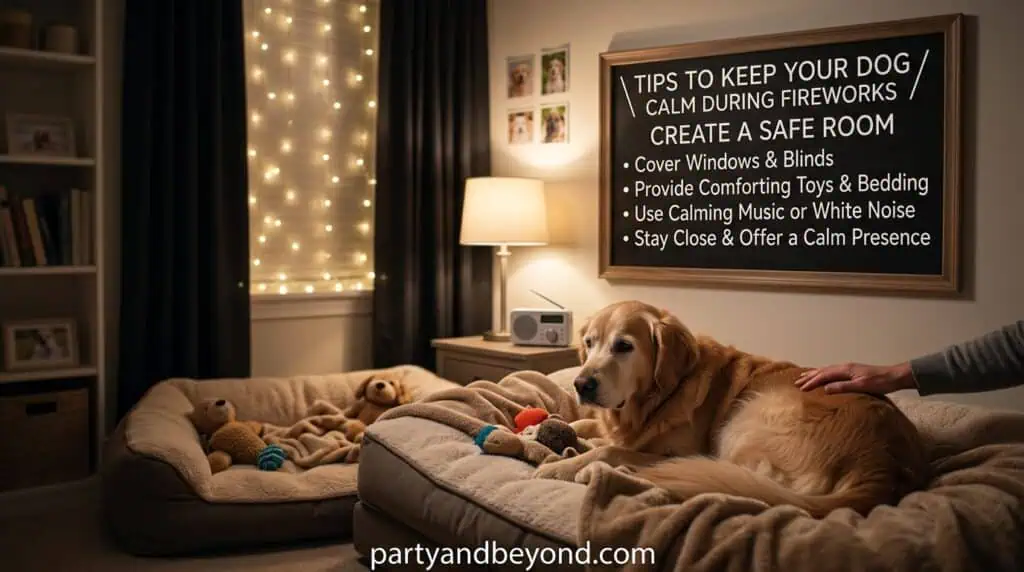
The single most important thing you can do. Choose a room that is interior (fewer windows means less noise and flash), holds your dog’s bed, water, and favorite toys, can be closed off so they can’t bolt, and has a white noise machine or TV playing. Set this up before fireworks start — dogs who have a familiar safe space cope significantly better than dogs left to pace the house.
2. Anxiety Wrap / ThunderShirt
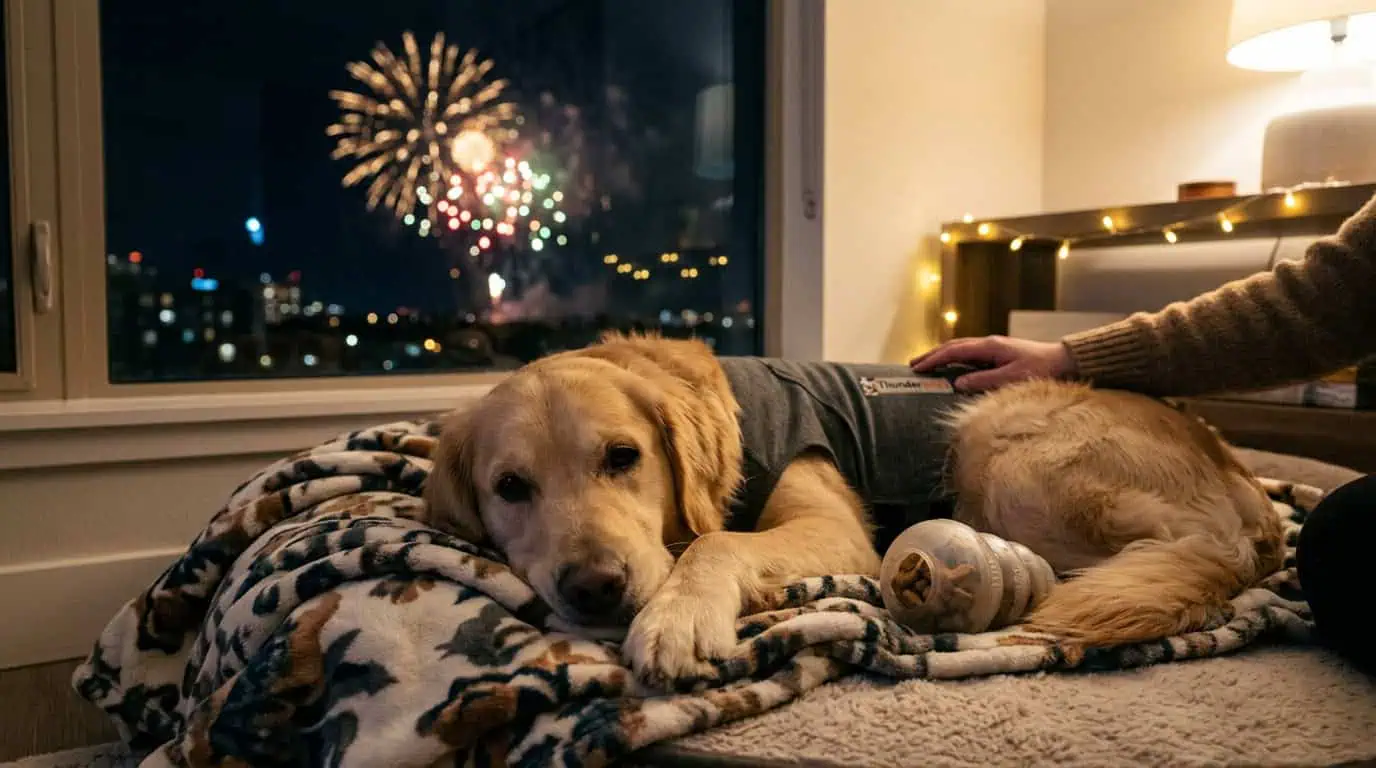
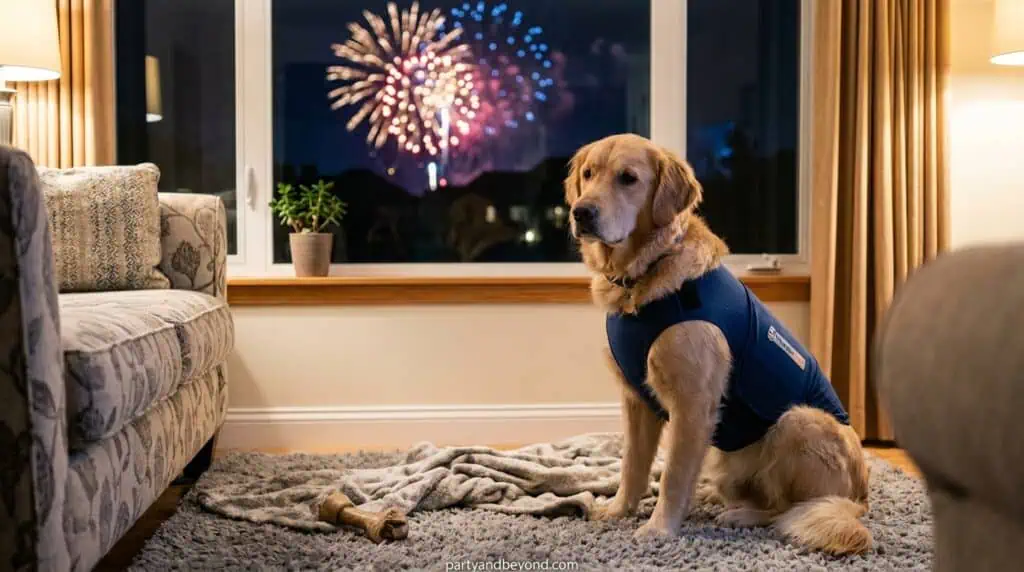
An Anxiety Wrap or ThunderShirt is a snug garment that applies gentle, constant pressure — similar to swaddling. Studies show these wraps reduce anxiety signs in about 80% of dogs. Put it on 30 minutes before fireworks begin. Don’t wait until the dog is already panicking — it’s much less effective when applied mid-anxiety episode. If you don’t have one, a snug-fitting t-shirt knotted at the back can mimic the effect in a pinch.
3. White Noise Machine
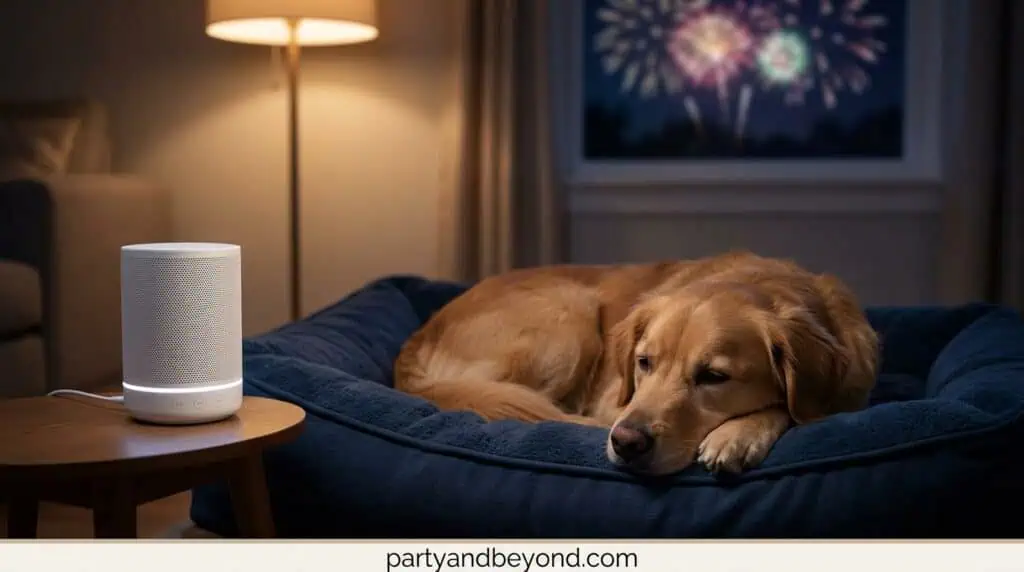
A white noise machine (or a box fan, or TV turned up) won’t eliminate the sound of fireworks, but it muffles the sharp crack and the unexpected bursts. The goal isn’t silence — it’s reducing the startle response. Place it outside the door of the safe room, not inside, so it muffles incoming sound. Calming dog-specific playlists and “Through a Dog’s Ear” tracks work well layered underneath.
4. Exercise Before Dark
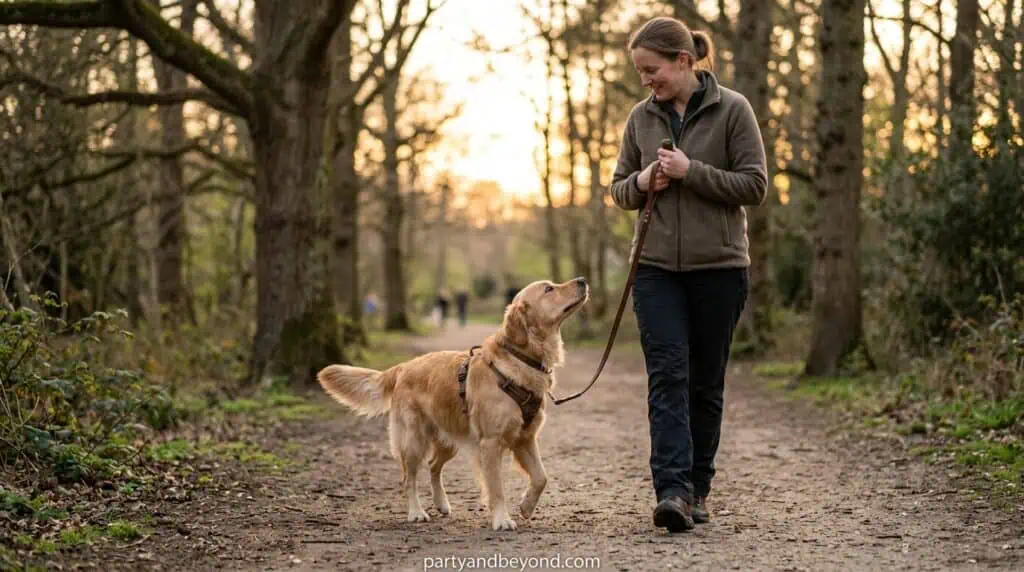
A tired dog has more physical and mental resources to cope with stress. Take your dog on a longer-than-usual walk or play session 3–4 hours before fireworks typically begin in your area. Not right before — you want time for their heart rate and cortisol to normalize, plus a chance to go to the bathroom before they’re too anxious to go outside.
5. Calming Chews (Vet-Approved)
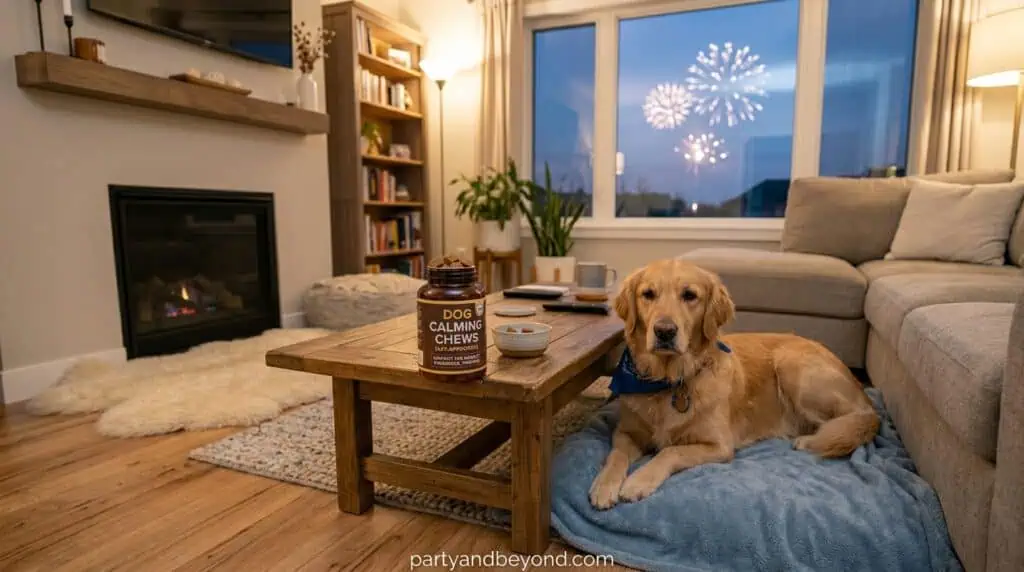
When it comes to vet-approved calming chews, results vary, but ingredients like L-theanine, melatonin, and hemp extract show some evidence of mild calming effects. They work best for mild anxiety and should be given 1–2 hours before fireworks so they’ve taken effect by the time the noise starts. They’re not a substitute for environmental management or medication in severe cases — think of them as one layer in a stack, not a standalone fix. Always check with your vet before giving any supplement, especially alongside other medication.
6. Pheromone Diffuser or Spray
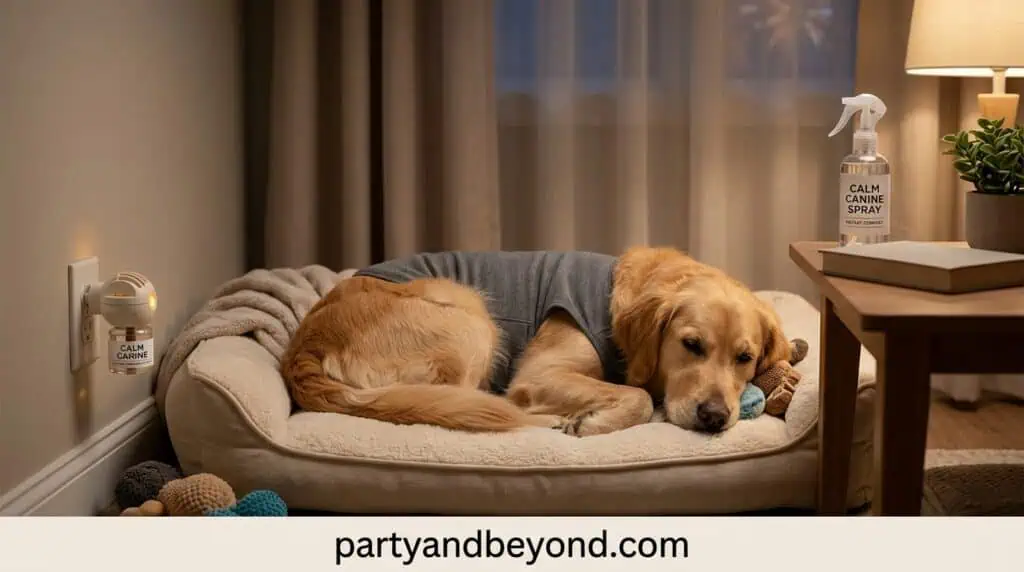
Dog-appeasing pheromone products (like Adaptil) mimic the calming signal a mother dog gives nursing puppies. Plug a diffuser into the safe room or spray a bandana, bed, or crate. These work subtly and build up over time, so start using them about two weeks before July 4th rather than the day of. They pair well with a safe room and white noise.
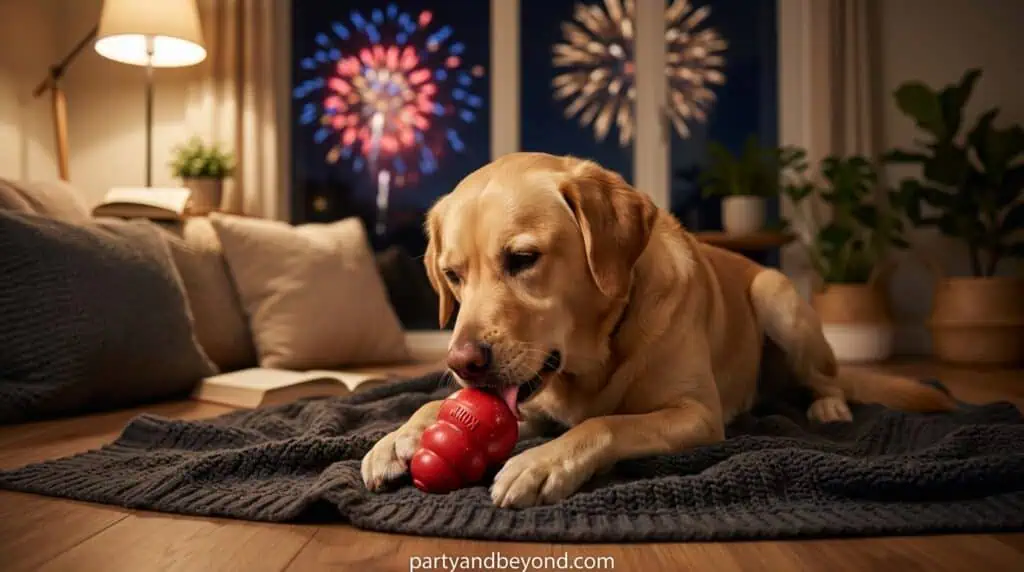
7. Long-Lasting Chew or Frozen Kong
Giving a dog something to focus on shifts their attention. Freeze a Kong stuffed with peanut butter (xylitol-free) and banana the night before. Offer it when fireworks start. The act of licking and working for food activates calm, focused brain states that compete with the anxiety response. A long-lasting chew or a snuffle mat works the same way.
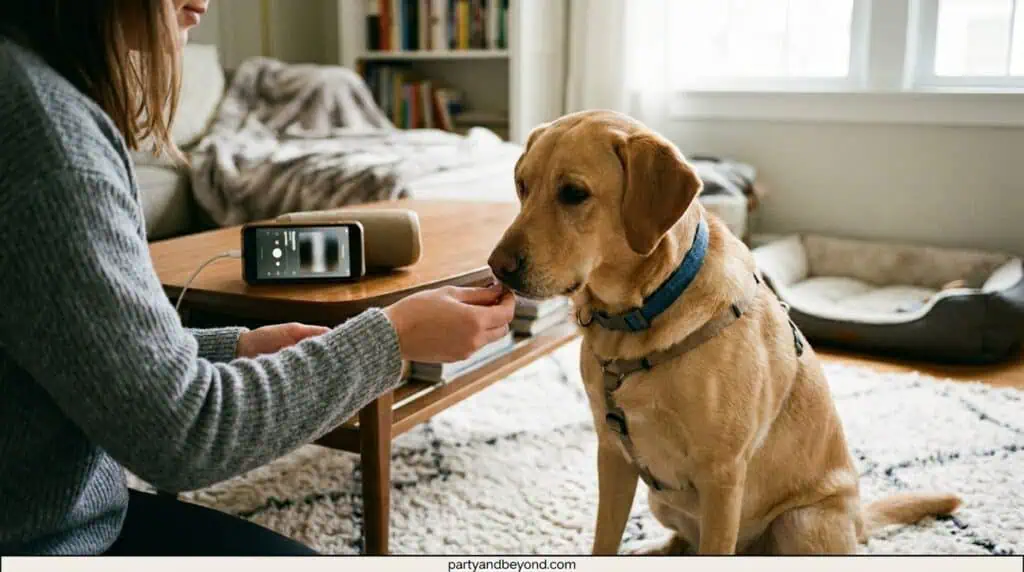
8. Desensitization Training (Best Long-Term Solution)
If you have weeks before July 4th: play fireworks sounds at very low volume while giving high-value treats. Gradually increase volume over multiple sessions, never pushing past the point where your dog reacts. Dogs who’ve been desensitized show dramatically lower fear responses. This is the only approach that actually changes the dog’s emotional association with the sound — everything else is management. It’s free and genuinely effective, just slow.
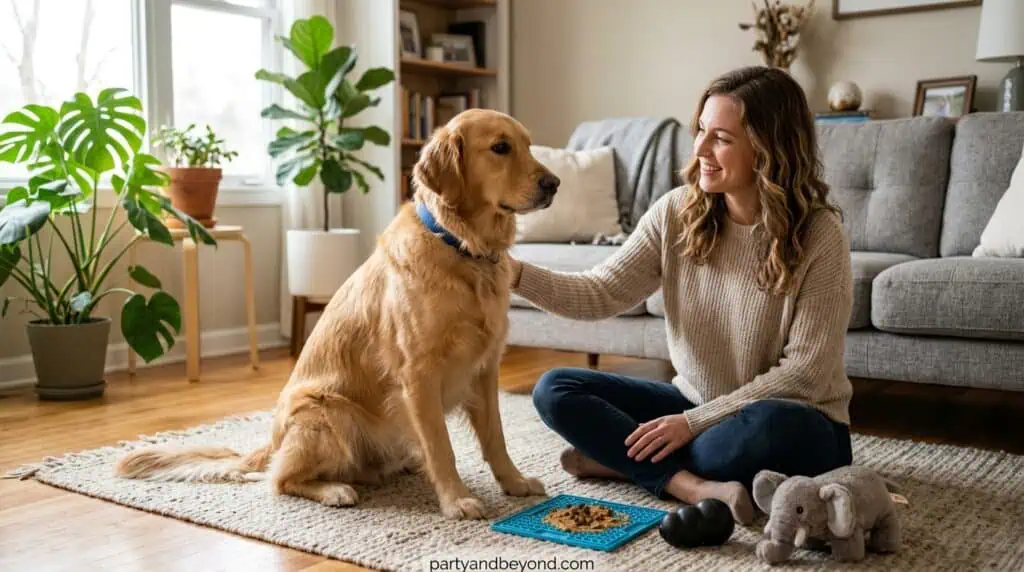
9. Stay Home With Your Dog
For dogs with significant fireworks anxiety, your calm presence is a genuine help. You don’t need to fuss over them — just being a relaxed, normal anchor in the room reassures them more than an empty house does. If you must go out, set up the safe room, leave white noise running, and consider a pet camera so you can check in. A panicked dog left fully alone is far more likely to injure itself trying to escape.
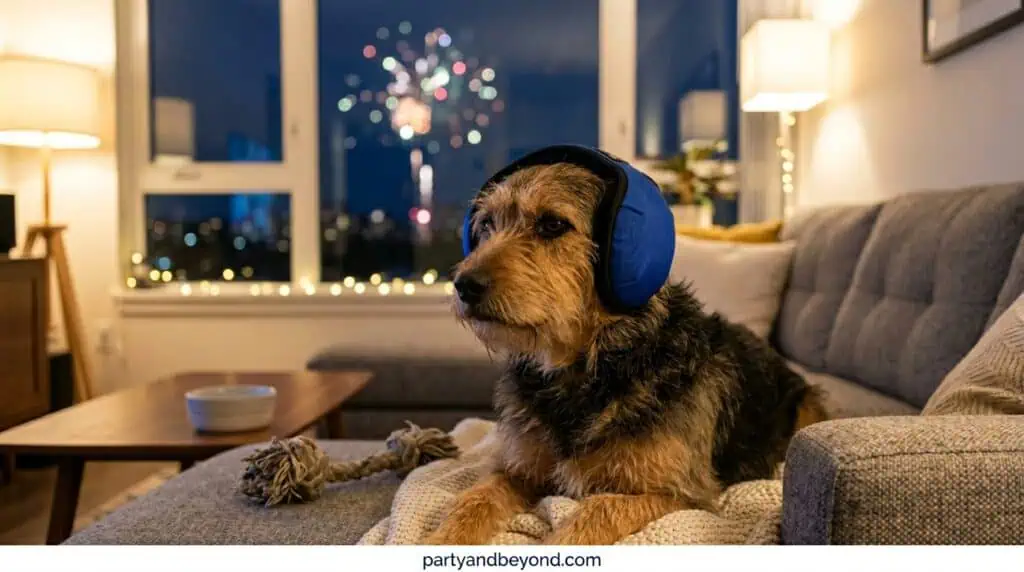
10. Mutt Muffs / Ear Protection
For some dogs, dog-specific ear muffs (like Mutt Muffs) or a snug snood that covers the ears can take the sharp edge off the bangs. Introduce them on a calm day first with treats, so the gear itself doesn’t become a new stressor. They won’t suit every dog, but for noise-sensitive dogs that tolerate wearing them, they’re a useful add-on alongside a safe room and sound masking.
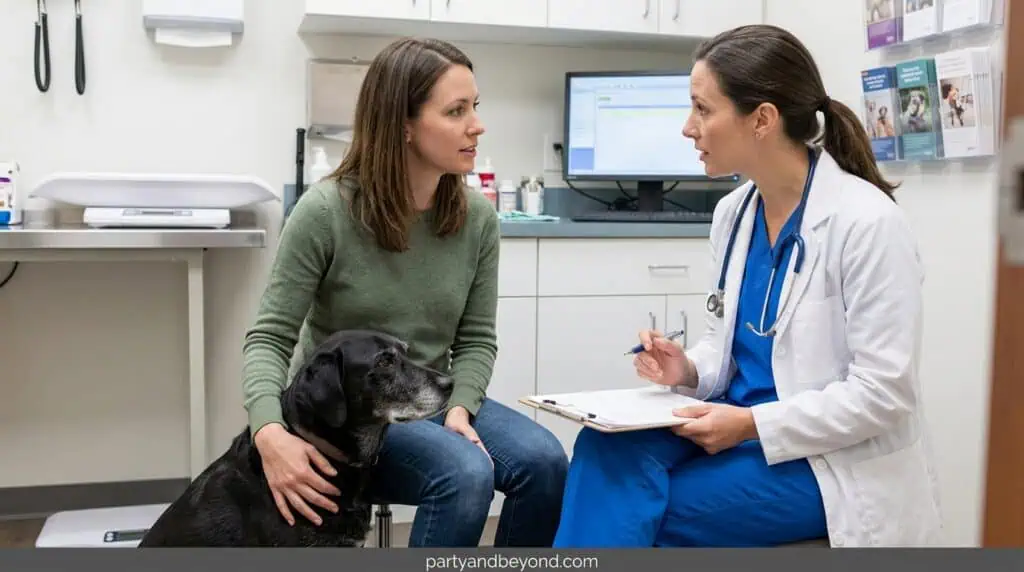
11. Talk to Your Vet Early About Medication
For dogs with severe anxiety, prescription medication (such as trazodone, gabapentin, or Sileo) can make a significant difference. But these need to be prescribed in advance — your vet needs to know what’s appropriate for your dog’s size, age, and health status, and some are worth a trial run before the holiday. Don’t wait until July 3rd. Call 2–3 weeks before the holiday so there’s time to get it right.
12. Check ID Tags and Microchip
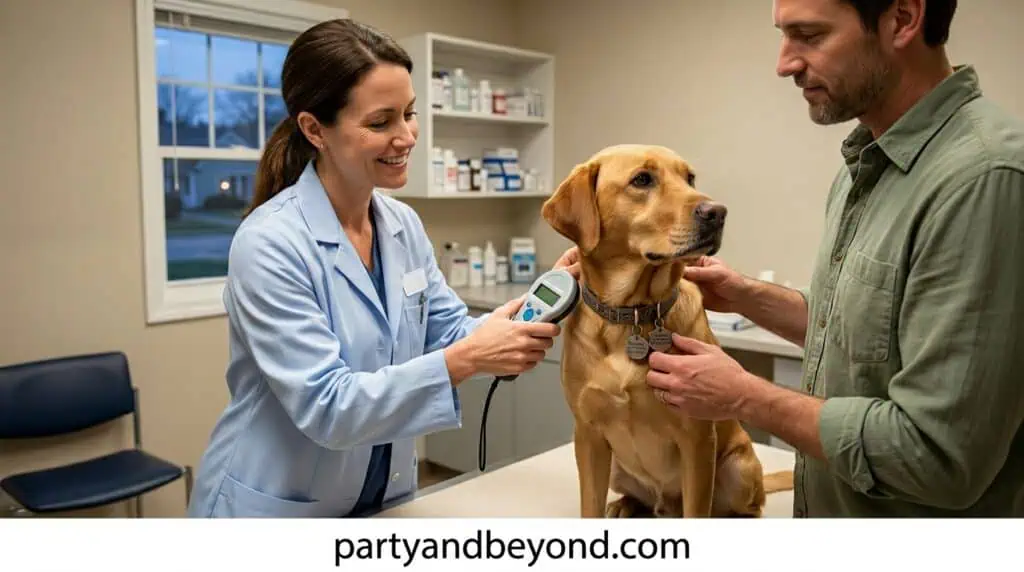
Because more dogs go missing on July 4th than any other day, this is the safety net that matters most. Make sure tags are current with your phone number, and if your dog isn’t microchipped, get it done before the holiday — most shelters and vets can do it same-day. Confirm your microchip registration details are up to date too; an unregistered chip can’t reunite you with a lost dog.
A Few More Critical Safety Steps
- Keep your dog inside: Even dogs that normally handle the yard fine can bolt during fireworks. Don’t leave them outside unattended.
- Use a secure leash and harness if your dog must go out — panic can cause dogs to slip a collar.
- Don’t comfort excessively: Calm, matter-of-fact interaction is better than anxious reassurance, which can amplify the dog’s fear.
- Close windows and curtains to muffle sound and block the flashes.
People Also Ask (Expanded Answers)
What’s the best thing to give a dog during fireworks?
The most effective approach during fireworks isn’t a single product or quick fix — it’s a combination of environmental comfort tools that work together. A safe room where your dog feels secure is the foundation, ideally paired with white noise, a fan, or calming background sounds to reduce the sharp impact of fireworks. An anxiety wrap or ThunderShirt can also help by applying gentle pressure that many dogs find soothing during stressful situations.
To keep your dog mentally occupied, a frozen stuffed Kong or long-lasting chew is highly recommended, as licking and chewing naturally helps lower stress levels in dogs. For dogs with more severe anxiety, veterinarians may recommend prescription medications, but these should always be discussed and tested well before the fireworks event to ensure safety and effectiveness.
Should I stay home with my dog on July 4th?
Yes — if your dog has shown even moderate signs of fireworks anxiety, staying home is strongly recommended. Your presence provides a sense of stability and reassurance, even if you are not actively comforting them. Dogs often feel safer simply knowing their owner is nearby and acting normally.
If you absolutely cannot stay home, preparation becomes even more important. Set up a fully prepared safe room, leave white noise or TV running, and make sure your dog has access to comforting items like bedding, toys, and chews. Some owners also use pet cameras to monitor behavior remotely, but this should never replace physical safety planning.
The goal is to reduce risk as much as possible, especially because panic during fireworks can lead to escape attempts or destructive behavior.
Do calming chews actually work?
Calming chews can be helpful, but their effectiveness varies widely from dog to dog. Ingredients such as L-theanine, melatonin, chamomile, and hemp-derived compounds may provide mild calming effects for some pets, especially those with low to moderate anxiety levels.
However, these products are not a guaranteed solution and should not be relied on alone during intense firework events. They work best when used as part of a larger calming strategy that includes environmental changes like a safe space, sound masking, and reduced exposure to triggers.
For dogs with severe noise phobia, calming chews are usually only a supporting tool rather than the main treatment option.
My dog has never had fireworks anxiety before — what changed?
It’s actually quite common for dogs to develop noise sensitivity later in life, even if they previously showed no fear. Anxiety can build gradually or appear suddenly after a single stressful or frightening experience involving loud sounds.
In older dogs, changes in hearing or cognitive processing can also make sudden noises feel more intense or confusing. This can increase their overall sensitivity to environmental stressors.
Sometimes, even a one-time exposure to extremely loud fireworks or thunder can create a long-lasting negative association. If your dog is showing new signs of anxiety, it’s a good idea to consult a veterinarian to rule out any underlying health issues and to discuss appropriate behavior support or treatment options.
How do I calm a dog during fireworks without medication?
It is absolutely possible to help many dogs cope without medication, especially in mild to moderate cases. The key is to combine multiple calming strategies rather than relying on just one.
Start by creating a quiet interior safe room where your dog feels secure and cannot escape. Add white noise, a fan, or calming music to help mask sudden firework sounds. An anxiety wrap or snug-fitting shirt can also provide comfort through gentle pressure.
Before fireworks begin, give your dog a long walk or play session to help reduce excess energy and promote relaxation. Once the fireworks start, offer a frozen Kong, chew toy, or food puzzle to redirect focus and encourage calming behavior.
Most importantly, stay calm yourself. Dogs are highly sensitive to human emotions, and your behavior can influence how they perceive the situation. When all these methods are combined, many dogs are able to get through fireworks with significantly less stress, even without medication.
Frequently Asked Questions
When should I start preparing my dog for July 4th fireworks?
Start 2–3 weeks early for anything that builds over time: call your vet about medication, begin a pheromone diffuser, and start desensitization training. Day-of steps like the safe room, exercise, and frozen Kong can be done the same day.
Are fireworks anxiety and thunderstorm anxiety the same?
They overlap but aren’t identical. Both involve loud noise and pressure changes, but storms build gradually and give warning signs, while fireworks start abruptly. Many of the same tools help both, though storm-phobic dogs also react to barometric pressure that fireworks don’t produce.
What are the signs my dog is stressed by fireworks?
Common signs include pacing, panting, trembling, drooling, hiding, clinginess, refusing food, whining or barking, and trying to escape. Severe stress can lead to destructive behavior or attempts to bolt — which is why a secure, closed safe room matters so much.
Conclusion
Keeping your dog calm during fireworks isn’t about finding one magic solution — it’s about preparing ahead of time and combining several proven strategies that work together. Dogs experience fireworks very differently than humans, with louder sounds, stronger vibrations, and no way to understand what’s happening around them. That’s why planning before the first firework goes off is so important.
Creating a quiet safe room, using white noise, providing a comforting anxiety wrap, and offering a frozen Kong or favorite chew can make a noticeable difference for many dogs. For pets with more severe fear, early desensitization training and a conversation with your veterinarian about medication may be the most effective path. The key is to start preparations days or even weeks before the holiday rather than waiting until your dog is already stressed.
Remember that every dog responds differently. Some may only need a calm space and your presence, while others require a combination of environmental management, training, and veterinary support. Pay attention to your dog’s behavior, stay patient, and avoid forcing them into situations that increase their anxiety.
Most importantly, prioritize safety. Keep your dog indoors, ensure their ID tags and microchip information are up to date, and use a secure leash if they need to go outside. With the right preparation and a thoughtful plan, you can greatly reduce your dog’s stress and help them get through fireworks season feeling safer, calmer, and more comfortable.
Read more: 4th of July Safety Tips Every Party Host Needs to Know
The Ultimate Guide to Hosting a 4th of July Pool Party
Cheap 4th of July Decorations That Actually Work