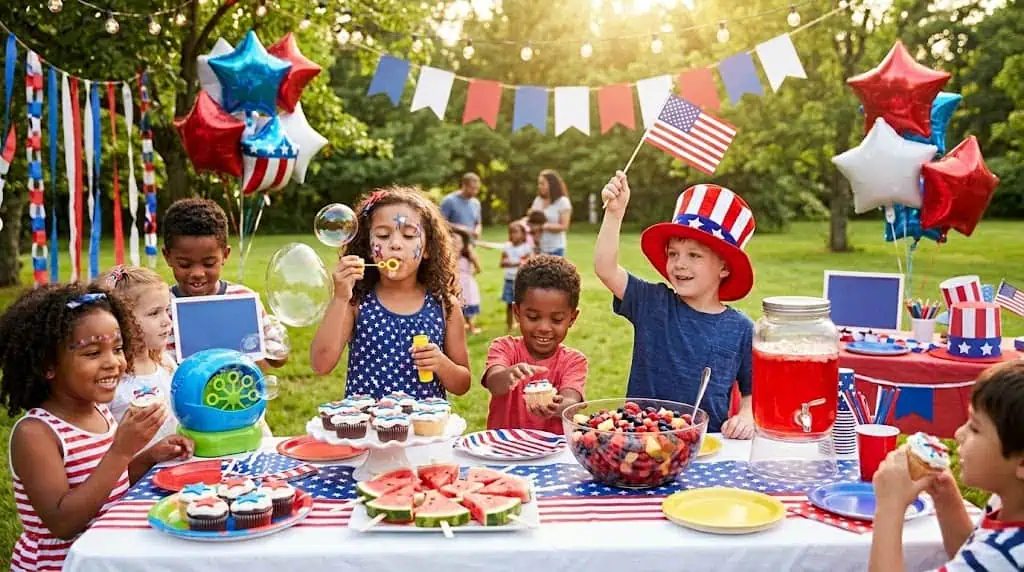
Here’s the truth about throwing a 4th of July party for little kids, and it’s the opposite of what most people assume: the secret isn’t more games, more food, or more hours — it’s a plan. A tight two-hour party with a clear flow runs ten times smoother than an all-afternoon free-for-all where a dozen sugared-up kids wander around looking for something to do. Under-10s thrive on structure, so when you line up a craft, a game, food, a cool-down, and a treat in the right order, the 4th of july party for kids under 10 basically runs itself.
Let me walk you through the whole 4th of july party for kids under 10 setup: when to hold it, what to do, what to feed them, how to decorate, and the safety pieces that genuinely matter when small kids are around fireworks and water.
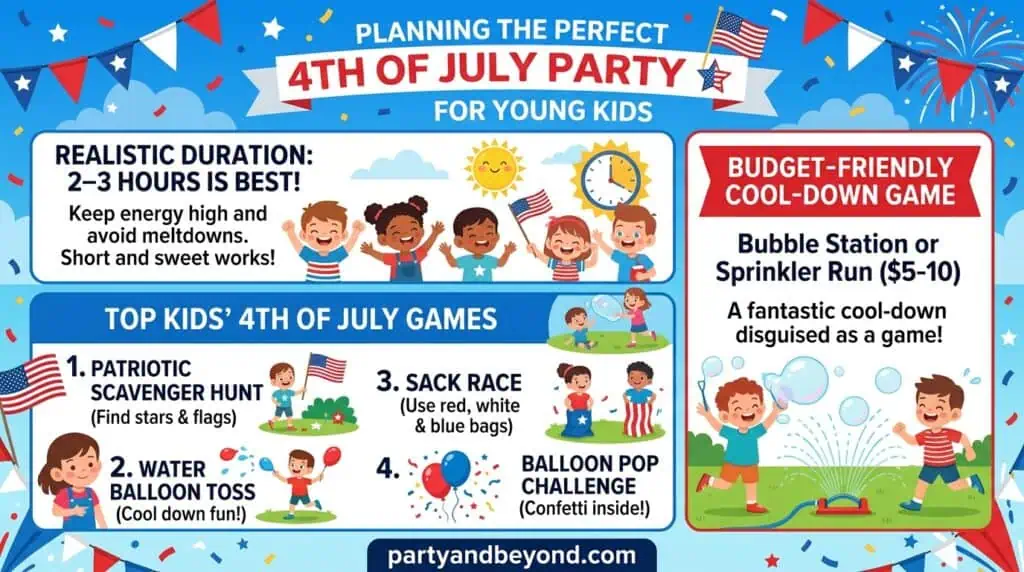
How long should a 4th of July party for young kids be?
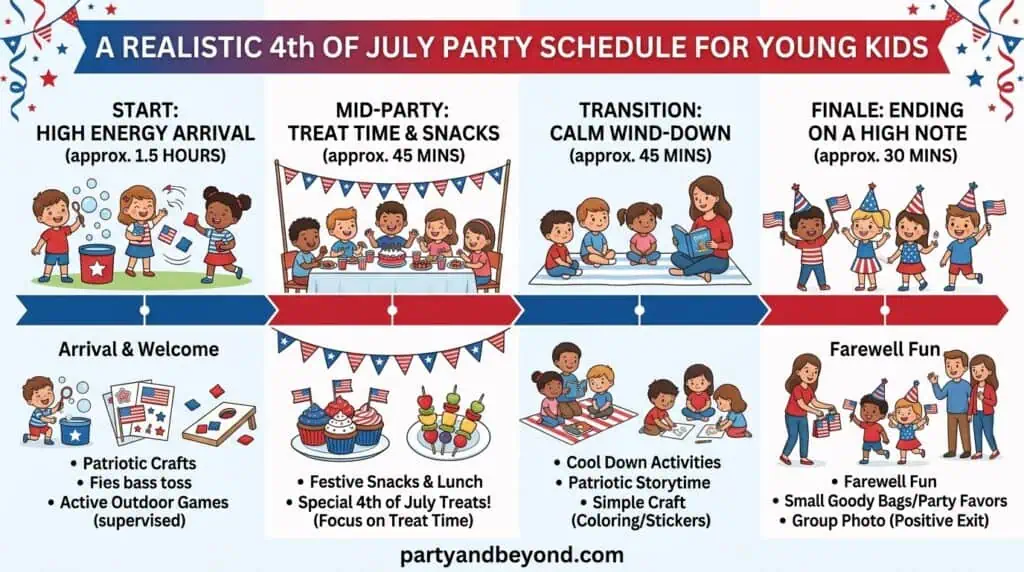
For kids under 10, aim for 2 to 2.5 hours — long enough to feel like a real party, short enough to end before the meltdowns. Most of the chaos parents dread is just a party that ran an hour too long. Schedule it for late morning or a 4–6 pm window to avoid peak sun.
A flow that works every time:
- Arrival craft
keeps early kids busy while you greet latecomers - Active games
burn the big energy off first. - Food
they’re genuinely hungry now. - Water play / cool-down
resets the group. - Treat + wind-down
end on a high.
Six to twelve kids is manageable solo; beyond that, recruit one parent helper for every four or five children.
What activities work best, by age?
Match the craft to the age — a bored 9-year-old and an overwhelmed 3-year-old cause the same chaos.
| Age group | Best activities | Cost | Supervision |
|---|---|---|---|
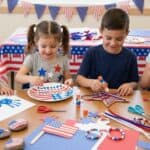
| Ages 2–4 | Handprint flags, star wands, sensory bin, driveway chalk | $0–8 | Hands-on, one adult close |
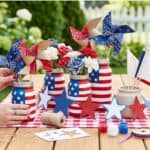
| Ages 5–7 | Pinwheels, paper fans, decorate-your-own cupcakes | $10–15 | Light help |
| Ages 8–10 | “Firework” salt painting, bubble-wrap stamp art | $5 | Mostly independent |
The decorate-your-own cupcake station doubles as dessert, which is exactly the kind of two-jobs-in-one that keeps a kids’ party simple.
What are the best 4th of July games for kids?
The best kids’ games are low-prep and don’t end with anyone crying about losing. Keep a handful ready so there’s never a lull.
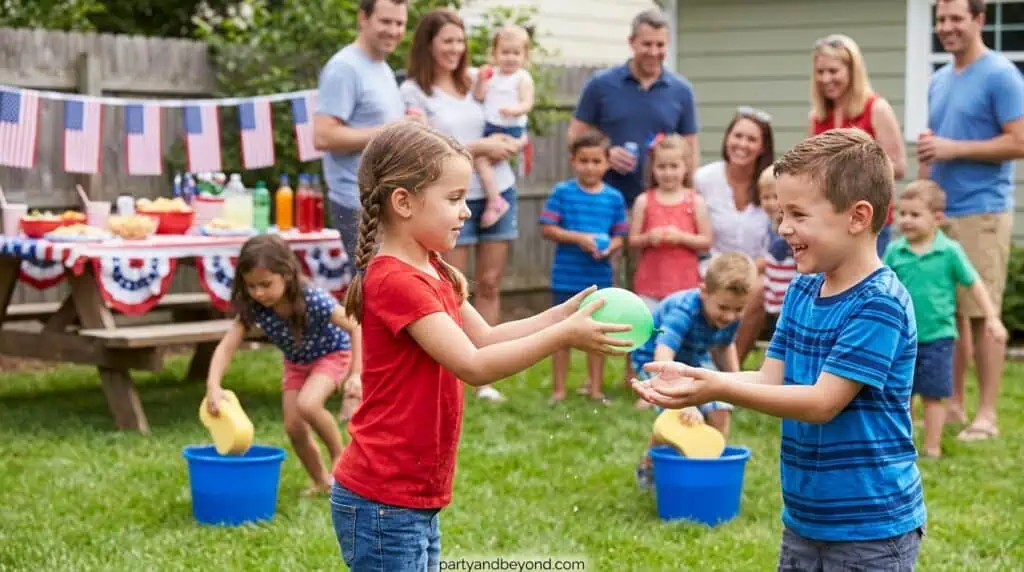
- Water-balloon toss and sponge relays
($5) — the heat-beating favorite.
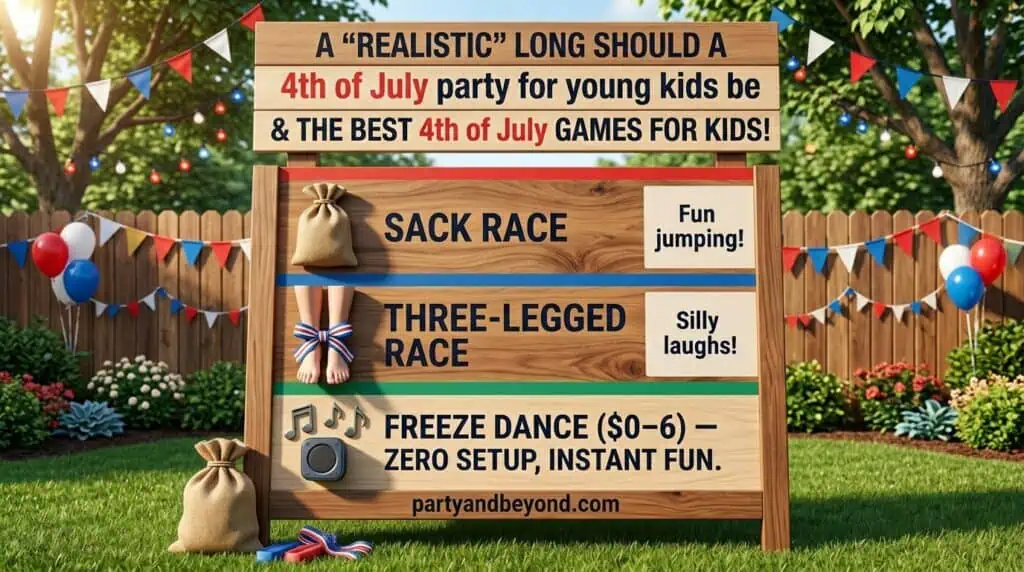
- Sack race, three-legged race, freeze dance
($0–6) — zero setup, instant fun.
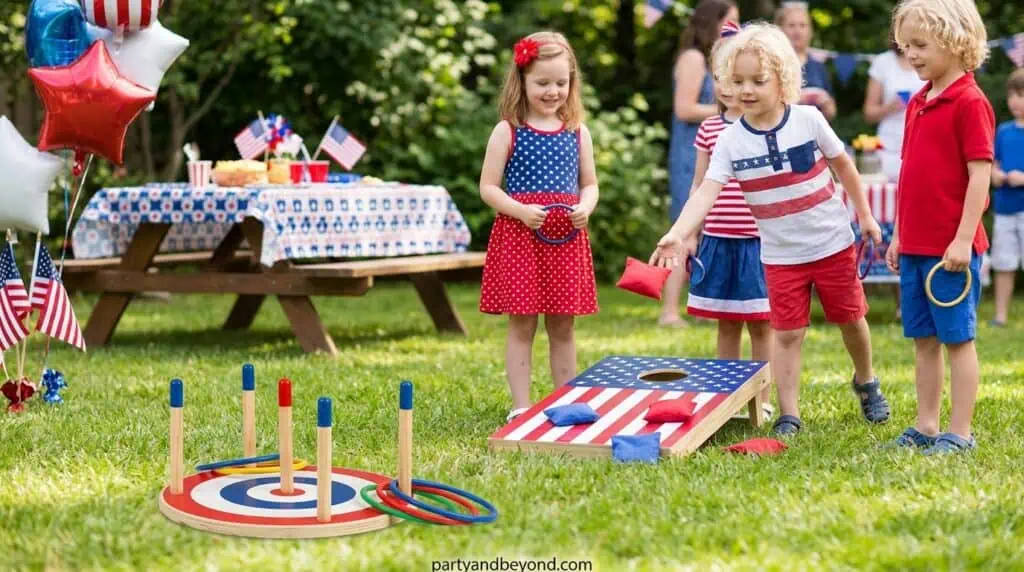
- Patriotic ring toss and bean-bag toss
($8) — good for kids who’d rather not run.
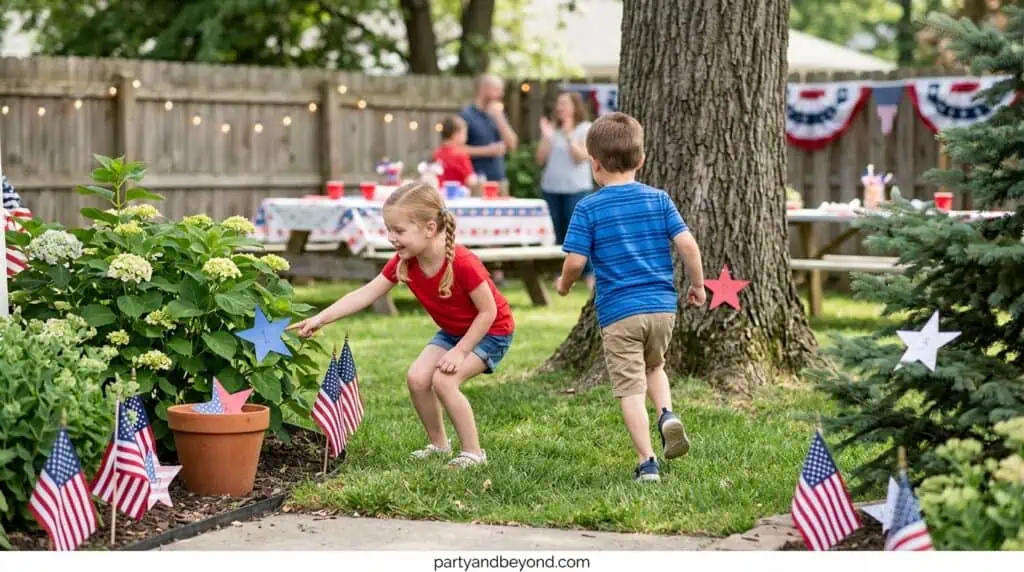
- “Find the hidden stars” scavenger hunt
($0) — hide paper stars around the yard.
- Bubble station or sprinkler run
($5–10) — a cool-down disguised as a game.
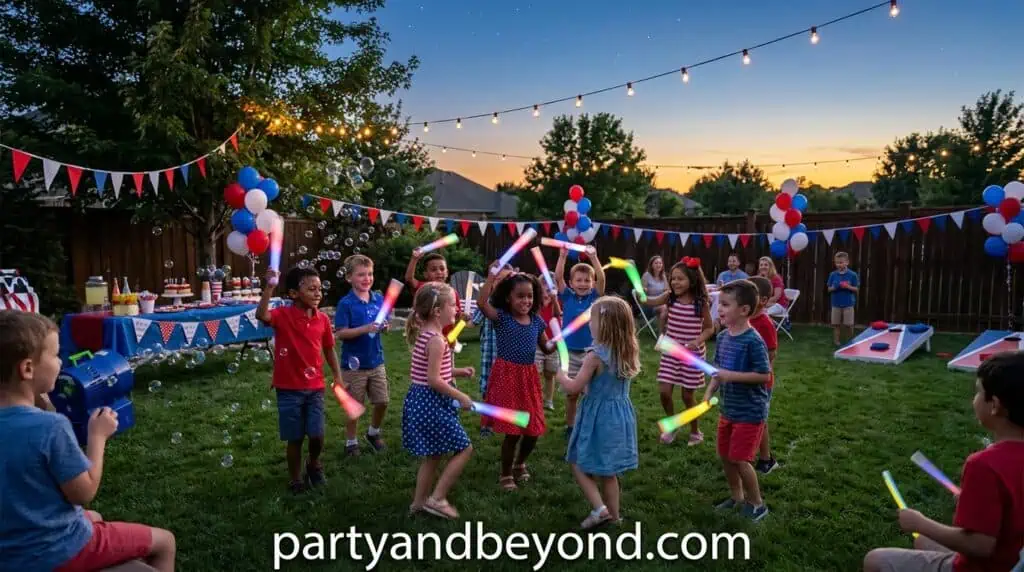
- Glow-stick dance party at dusk
the safe, kid-loved replacement for sparklers.
What food is best for a kids’ 4th of July party?
Little kids eat with their eyes and their hands, so keep it colorful, grab-able, and low-mess.
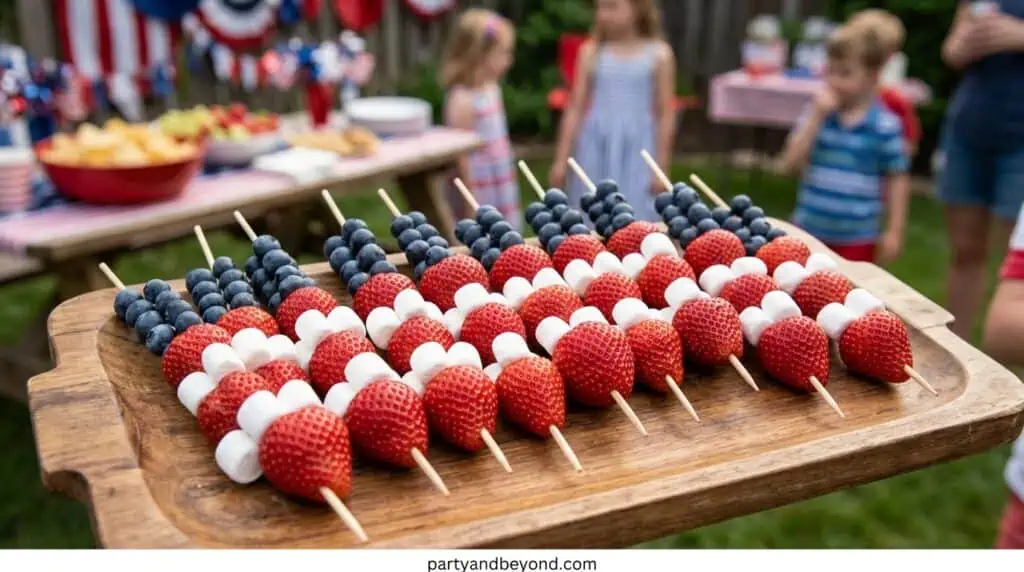
- Flag fruit kabobs
strawberries, marshmallows, and blueberries on a stick. Festive, healthy, and they actually finish it.
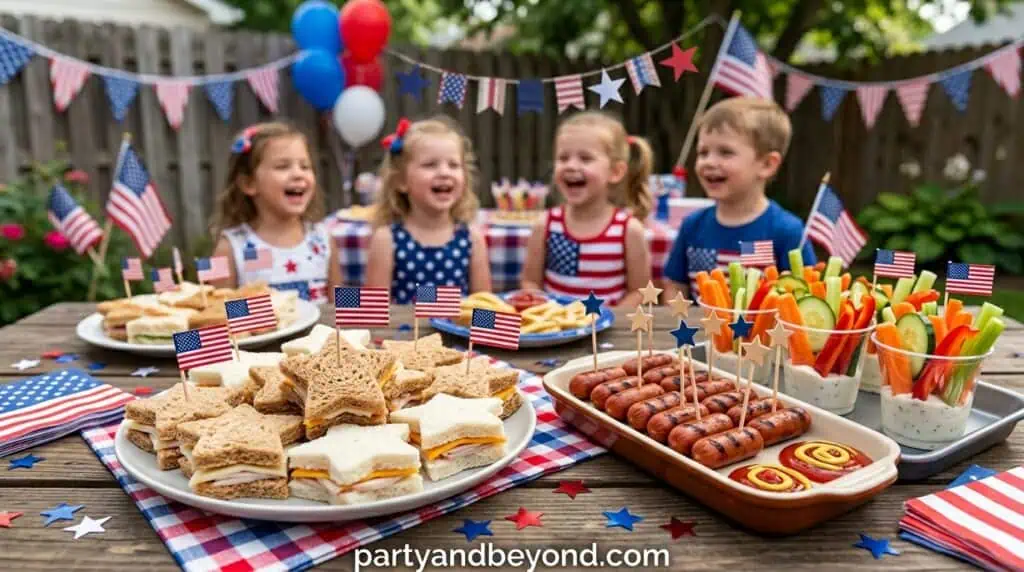
- Star-cut sandwiches, mini hot dogs, and veggie cups
easy mains with no fuss.
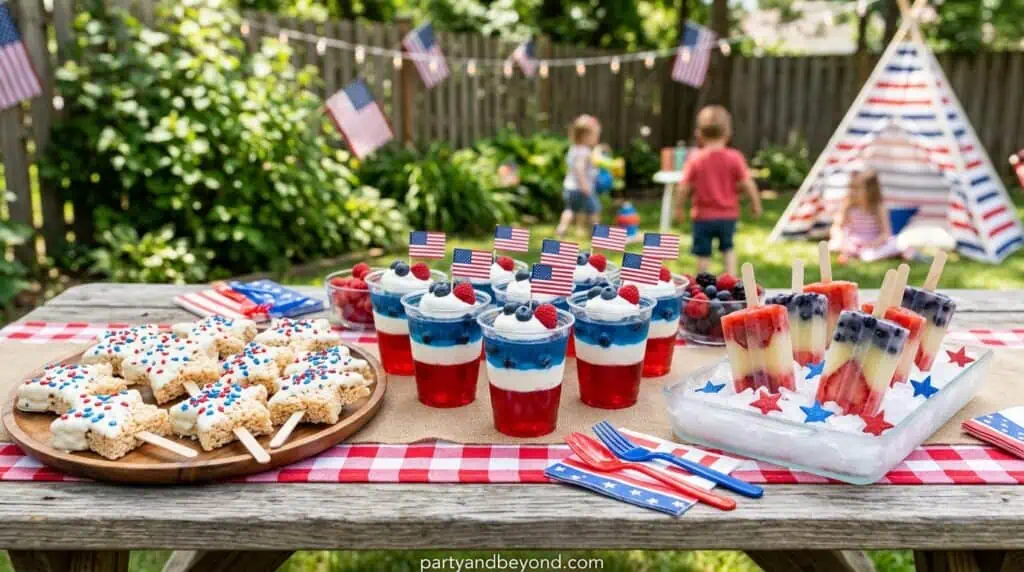
- Red/white/blue treats
rice-krispie stars, jello cups, and ice pops that double as a cool-down.
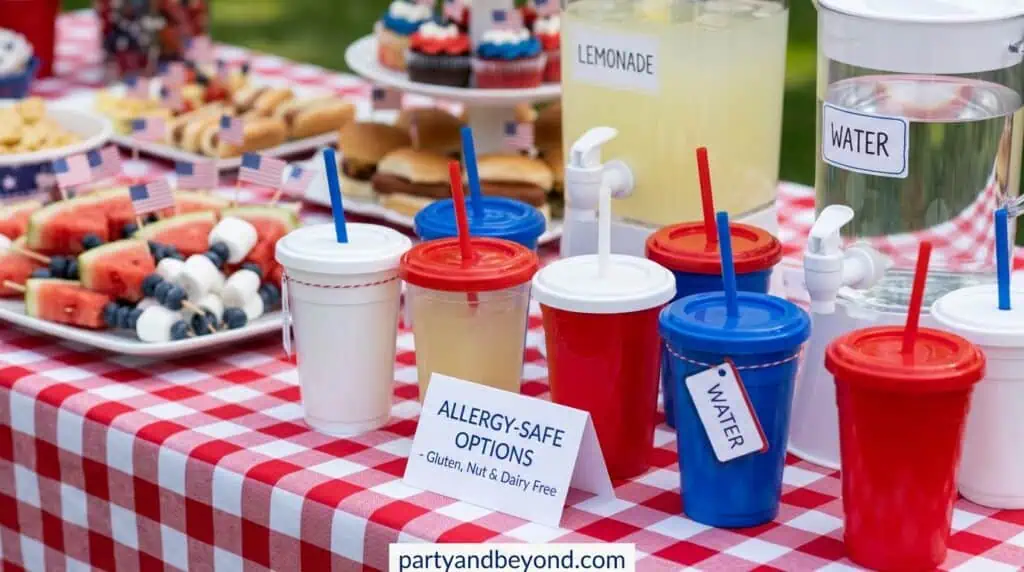
- Drinks
water and lemonade in spill-proof cups, with allergy-safe options clearly labeled.
Pro tip: Put a craft out the second kids start arriving. It gives early birds something to do while you greet the stragglers, and it turns a chaotic drop-off into a calm start that sets the tone for the whole party.
Simple, Bright Decorations
Kids care about color, not elegance. Don’t pour energy into a tasteful tablescape they’ll never notice.
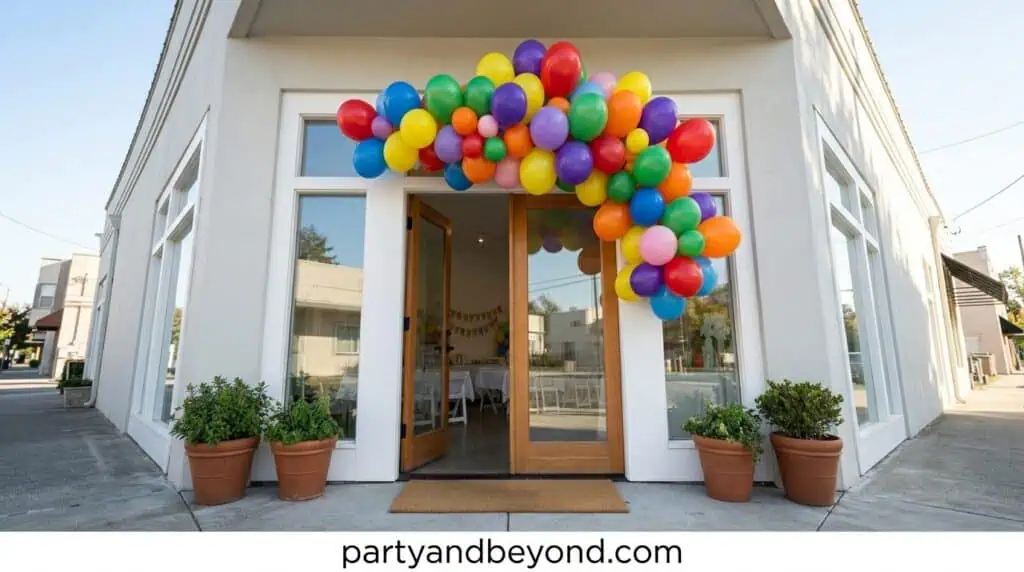
- A balloon arch or big balloon bunch
at the entrance ($10–15) is all the focal point you need.
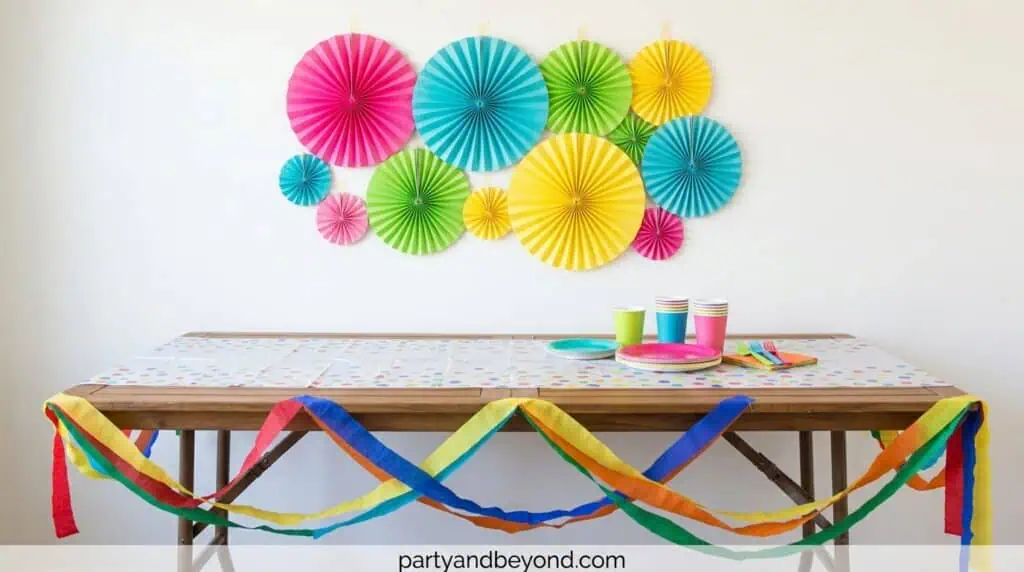
- Streamers, paper fans, and a dollar-store table runner
fill the space for almost nothing.
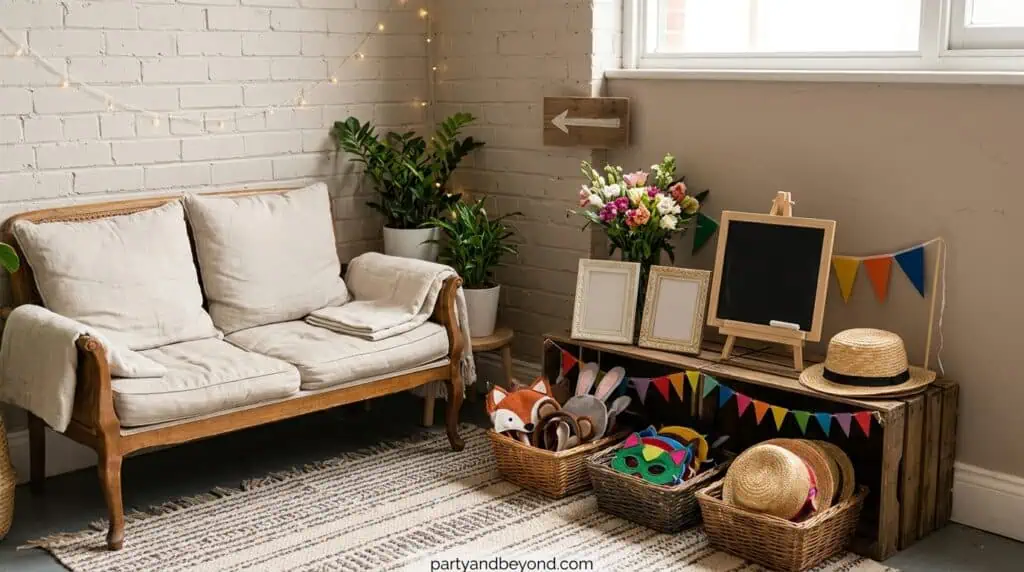
- A small photo corner with props
gives parents the pictures they’ll actually want.
Safety That Actually Matters With Little Kids
- No sparklers for under-10s. Sparklers burn hot enough that fire-safety groups commonly cite around 1,800°F — enough to cause serious burns. Hand small kids glow sticks instead.
- Assign a water watcher. For any pool or deep water, one adult’s only job is watching it — phone away, rotated every 15–20 minutes. Drowning is silent and fast.
- Beat the heat. Shade, sunscreen reapplied every 2 hours, and built-in water breaks. Watch for heat-exhaustion signs: dizziness, headache, clammy skin, sudden crankiness.
- Allergies and choking. Ask about allergies on the invite, label foods, and skip choking hazards (whole grapes, hard candy, popcorn) for toddlers.
- Mind the gate. If you’re near a road, give one person door-and-gate duty.
Common Mistakes to Avoid
- Making the party too long for little attention spans — 2.5 hours, tops.
- Sparklers for small kids — swap in glow sticks, always.
- No structure — open-ended time is when little kids melt down.
- Forgetting shade and water breaks in real July heat.
- Skipping the allergy question on the invite.
🎉 Quick Summary
- ✅ Best for: hosting kids under 10 on the 4th of July
- ⏱ Length: 2–2.5 hours, late morning or 4–6 pm
- 💰 Budget: about $40–$120 for 6–12 kids
- 🌟 Top pick: arrival craft + active games + glow-stick dusk finish
- 📌 Don’t skip: glow sticks instead of sparklers, and a water watcher
Frequently Asked Questions
How long should a 4th of July party for young kids be?
A 4th of July party for young children works best when it is kept short and structured, typically around 2 to 2.5 hours. This duration is long enough for kids to enjoy games, food, and activities without becoming overwhelmed or tired.
Timing also matters. A late morning slot or an early evening window (around 4–6 pm) is ideal because it avoids peak heat hours and keeps children more comfortable. Shorter, well-planned parties reduce the chances of meltdowns, boredom, or overstimulation, especially for kids under 10.
What are good 4th of July activities for toddlers?
Toddlers do best with simple, hands-on, and sensory-friendly activities that don’t require long attention spans. Great options include patriotic handprint crafts, sensory bins filled with red, white, and blue items, bubble play, and sidewalk or driveway chalk art.
It’s important to rotate activities frequently, as toddlers typically lose interest within a few minutes. Keeping activities short and flexible helps maintain excitement without frustration. The goal is to focus on exploration and fun rather than structured competition.
What food is best for a kids’ 4th of July party?
Kids’ party food should be colorful, easy to eat, and low-mess. Popular options include fruit kabobs arranged in red, white, and blue patterns, star-shaped sandwiches, mini hot dogs, veggie cups, and simple finger foods.
For dessert, themed treats like rice krispie star shapes, popsicles, and ice cream cups work well. Always label allergy-safe foods clearly and avoid choking hazards for younger children, such as whole grapes or hard candies. The easier the food is to grab and eat, the smoother the party will run.
Are sparklers safe for kids under 10?
No — sparklers are not safe for children under 10. Although they look harmless, sparklers burn at extremely high temperatures and can cause serious burns, injuries, and even clothing fires.
Instead, safer alternatives like glow sticks, LED wands, or light-up toys provide the same excitement without the risk. These options are especially effective for younger children and allow them to safely participate in the celebration without exposure to fire hazards.
What can I do instead of fireworks for little kids?
For younger children, a glow-stick dance party at dusk is a fun and safe alternative to fireworks. It creates a similar magical atmosphere without loud noises or safety risks.
During the day, activities like a sprinkler play zone, bubble station, or water balloon games help keep kids active and entertained. These options are not only safer but also more age-appropriate and easier to manage in a family setting.
How many kids should I invite?
For a smooth and manageable event, it’s best to invite around 6 to 12 children if you are hosting without additional help. This allows you to supervise effectively and keep activities organized.
If the group gets larger, it’s a good idea to have one additional adult helper for every 4–5 children. Proper supervision is key to keeping the party safe, fun, and stress-free for both kids and adults.
How do I keep kids cool at a July party?
Keeping kids cool is essential during a summer celebration. Start by creating shaded areas for rest, providing frequent water breaks, and applying sunscreen every two hours.
Incorporate water-based activities like sprinklers or water balloon games to help regulate body temperature. Watch for early signs of heat exhaustion such as dizziness, fatigue, or flushed skin, and make sure kids take breaks whenever needed. Keeping the environment relaxed and cool ensures a safer and more enjoyable experience.
What are cheap 4th of July party ideas for kids?
You can host a fun kids’ party on a budget by focusing on simple games and DIY activities. Ideas like a paper star scavenger hunt, freeze dance, sack races, and dollar-store crafts are inexpensive but highly engaging.
A basic build-your-own snack station can also double as an activity and a meal. With smart planning and DIY decor, a full kids’ party can often be hosted for around $40–$60 total, depending on group size.
What’s a good schedule for a kids’ 4th of July party?
A well-structured schedule keeps kids engaged and prevents chaos. Start with a welcome craft or coloring activity, followed by active games while energy levels are high.
Next, serve food, then move into water play or outdoor cooling activities. Finally, end the party with a calm wind-down activity and a small treat. Ending on a relaxed note helps children leave happy, satisfied, and not overstimulated.
What should I do if it rains?
If the weather changes, having a backup indoor plan is essential. Move activities inside and switch to table-based crafts, indoor scavenger hunts, or freeze dance games.
A glow-stick or dim-light dance party can still create a festive atmosphere indoors. The key is to maintain structure and keep kids engaged — even if the location changes, the experience can still feel fun and organized.
People Also Ask
Can babies and toddlers be around fireworks?
Babies and toddlers should be kept far away from all fireworks, as the loud sounds, sudden flashes, and vibrations can be overwhelming and potentially harmful. Their hearing is more sensitive than adults, so even distant fireworks can feel extremely intense.
If you’re attending a community fireworks show, it’s safest to watch from a significant distance rather than up close, and always provide proper ear protection such as infant earmuffs or noise-reducing headphones. Many parents also find it helpful to bring a stroller with a cover or a quiet item like a blanket or toy to help the child feel more secure.
In general, avoiding direct exposure is the best approach — babies and toddlers are much more comfortable and safe when they are in a calm, controlled indoor environment during fireworks.
What’s a safe alternative to a bounce house for small yards?
If you don’t have space or budget for a bounce house, there are plenty of safe and fun alternatives that still keep kids active. A sprinkler setup, small inflatable splash pad, or water play station can provide hours of entertainment in a very small area.
You can also create a DIY obstacle course using household items like cones, pool noodles, chairs, and ropes. This encourages movement, creativity, and friendly competition without requiring large equipment.
These alternatives are not only more affordable but also easier to supervise and adjust based on the number of children and available space.
How do I handle different ages at the same party?
Managing mixed age groups works best when you use structured activity zones and flexible games. Setting up separate stations allows younger children to enjoy simpler activities like coloring, bubble play, or basic crafts, while older kids can participate in more challenging games or creative projects.
It’s also helpful to choose universal games that work across age ranges, such as scavenger hunts, freeze dance, or relay races. These allow siblings and mixed-age groups to participate together without anyone feeling left out.
Read More: First Halloween Costume Ideas for Families With Baby — 25 Cute Matching Looks 2026
10 Easy 4th of July Desserts Anyone Can Make No Baking Skills Needed
23 super fun winter party games for teens