The worst Halloween party I ever hosted had 22 people, a great playlist, and absolutely nothing to do. By 9:15 everyone was standing in a ring around my kitchen island talking about work. In costume. It was bleak.
I’ve hosted an adult Halloween party every year since 2016, and the fix turned out to be simple: three planned activities, spaced about 45 minutes apart, and none of them requiring anyone to perform alone in front of strangers.
So here are 30 Halloween party games for adults that I’ve either run myself or watched work at somebody else’s house. Each one lists how many players it needs, how long it runs, and roughly what it costs. Skip the ones that don’t fit your crowd. You’re going to love this one.
Quick answer: Plan 3 games for a 4-hour adult Halloween party — one icebreaker in the first 30 minutes, one big group game around the 90-minute mark, and a costume contest near the end. For 20 guests, budget $30 to $60 total and pick games that run 10 to 20 minutes each; anything longer and half the room drifts back to the snack table.
Icebreakers for the First Hour
The first 45 minutes are the hard part. People arrive in waves, nobody knows each other, and everyone’s holding a drink with both hands. These run in the background and don’t require you to gather anyone.
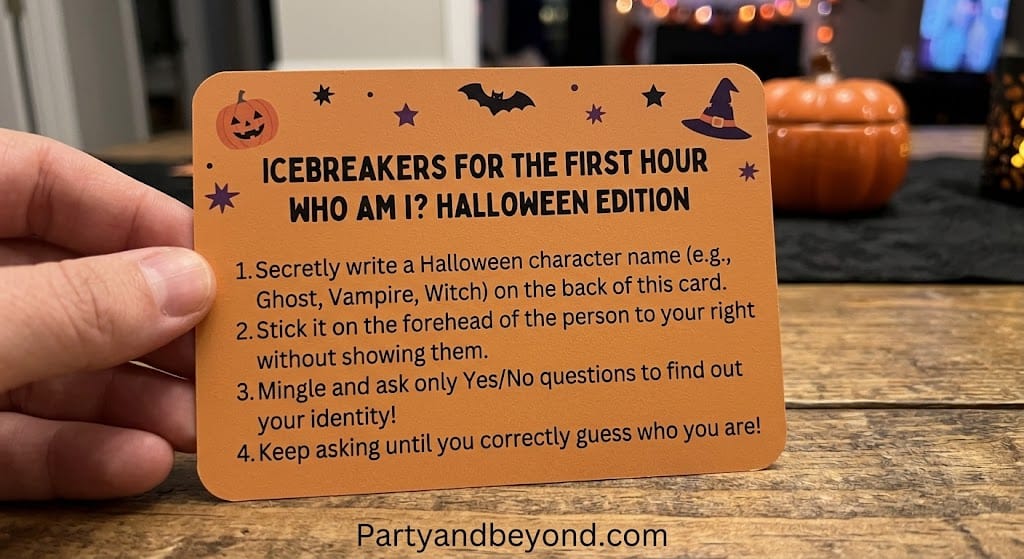
1. Who Am I? Halloween Edition
Tape a card with a horror character’s name to each guest’s back as they walk in. They ask yes-or-no questions to figure out who they are. Runs the entire first hour with zero supervision, and it forces conversation between people who’d otherwise stand in separate corners. Index cards and tape: about $4.
Best for: 10 to 40 guests, mixed groups who don’t all know each other.
2. Halloween Bingo
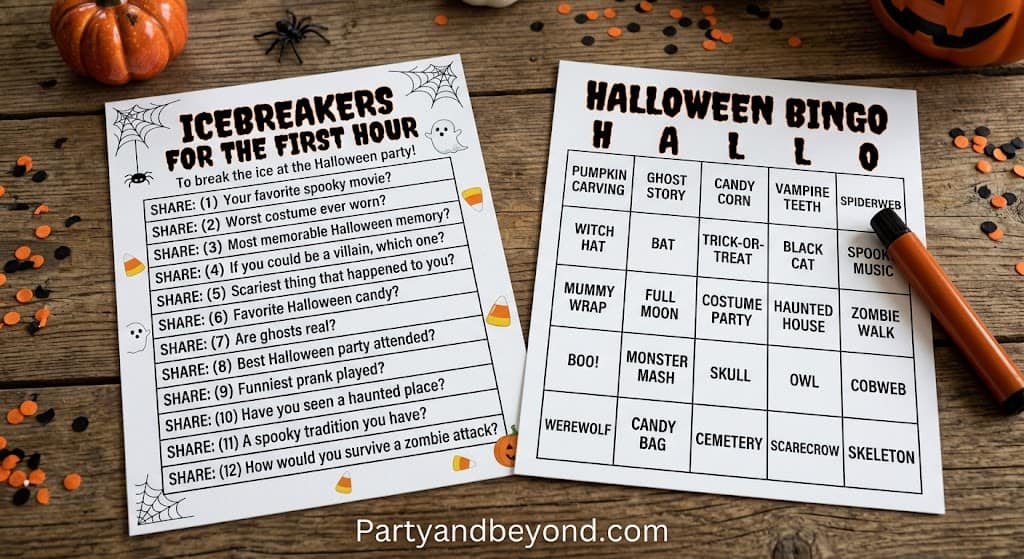
Cards filled with things you’ll see at the party — someone in a bedsheet ghost costume, a person double-dipping, a candy corn on the floor. Print 25 cards for a few dollars. Winner gets first pick of the prize table. In my experience this one quietly makes people pay attention to each other all night.
Best for: 15 to 30 guests, running passively for 2 hours.
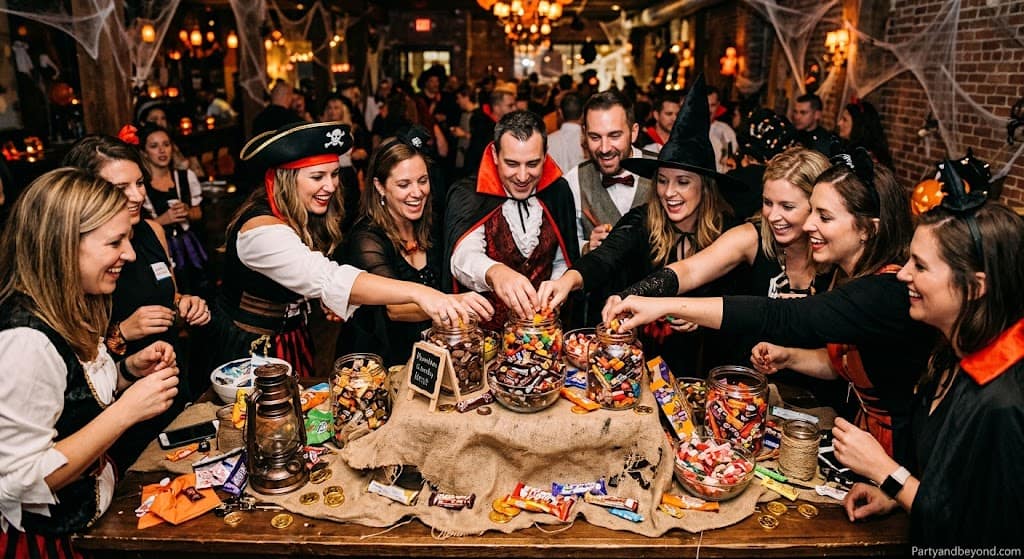
3. Guess the Candy Jar
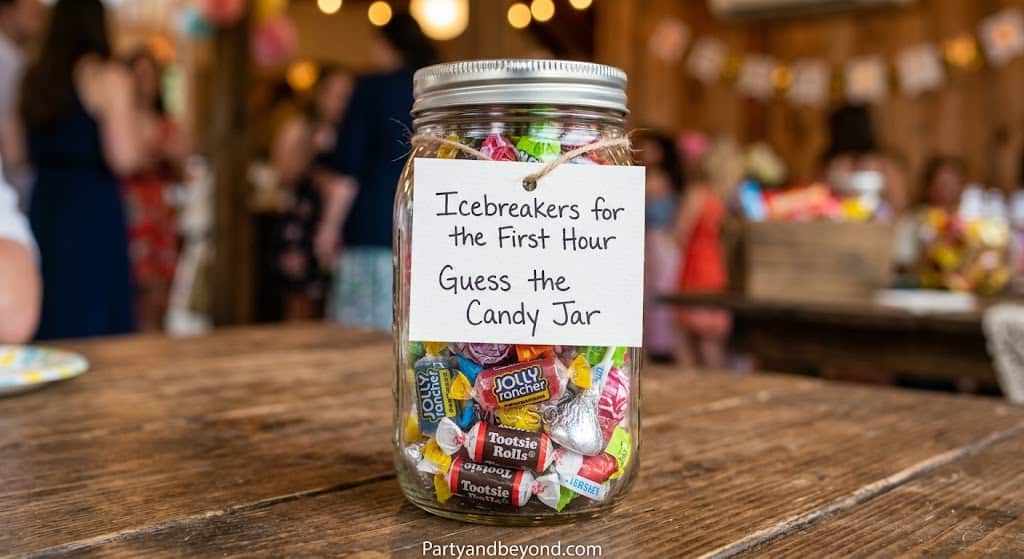
Jar of candy corn on the entry table, slips of paper, closest guess wins the jar. Costs $6 and takes four minutes to set up. Old as dirt, still works, and it gives arriving guests something to do with their hands.
Best for: any group size — the best low-effort activity on this list.
4. Two Truths and a Haunting
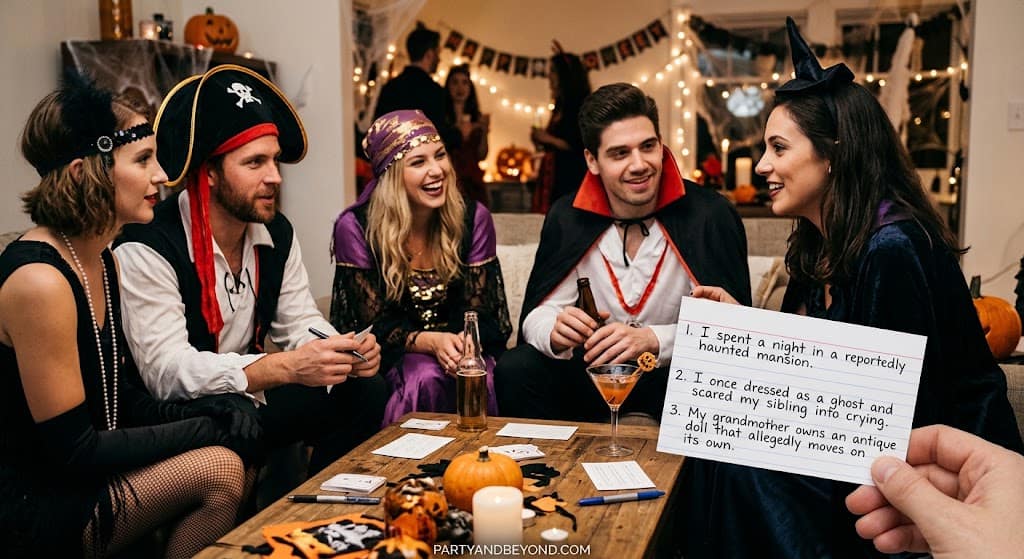
Two truths and a lie, except every statement has to be about something creepy that’s happened to them. You get genuinely good stories out of this. Free, no materials.
Best for: 6 to 12 guests sitting around a table.
5. Costume Speed Rounds
Three minutes per pair, guests explain their costume and why they chose it, then rotate. Sounds forced. It isn’t, because everyone in a costume secretly wants to explain it.
Best for: 12 to 20 guests, right at the 30-minute mark.

6. Halloween Emoji Decode
A printed sheet of emoji strings that spell out horror movie titles. Hand it out with a pen at the door. Twenty puzzles takes most people ten minutes and they’ll argue about three of them for an hour.
Best for: any size, especially parties where guests arrive over a long window.
Big Group Games for 15 to 30 People
This is the section that saves a party. Everything here scales, and none of it needs people to be quiet or sit down — which at a party with drinks is a losing battle anyway.
7. Murder Mystery Party
A full boxed murder mystery party game runs $25 to $45 and carries your entire evening. Everybody gets a character, a costume note, and secrets. The catch: you need commitment from guests a week ahead, and 9 times out of 10 two people will bail. Buy the version that scales, not the one with fixed roles.
Best for: 8 to 16 guests who RSVP reliably — plan 2 to 3 hours.

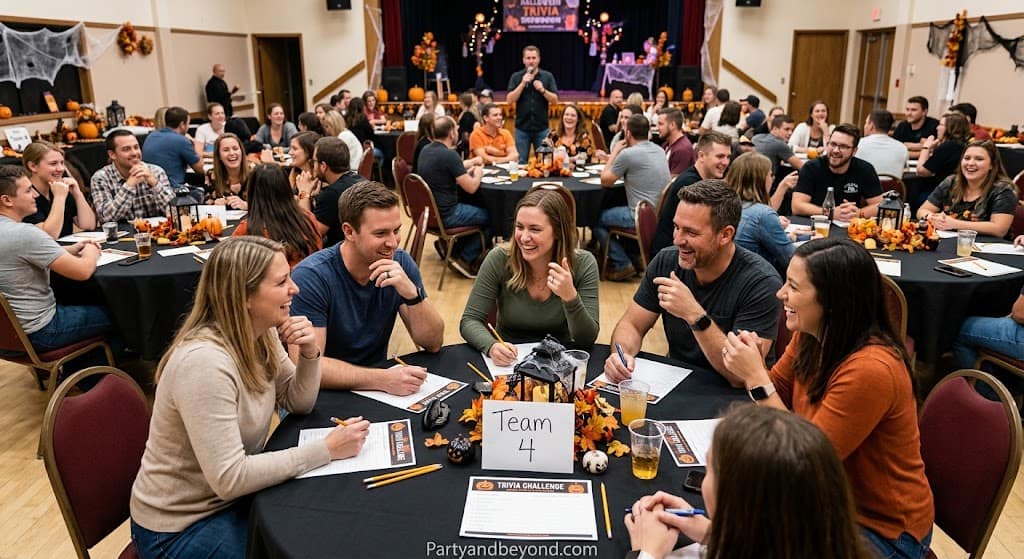
8. Halloween Trivia Showdown
Teams of four, five rounds of ten questions — horror films, Halloween history, candy brands, monster lore, a music round. A pre-made halloween trivia game costs about $15 and saves you three hours of writing questions. Run it in 20 minutes, not an hour.
Best for: 16 to 30 guests, seated or standing in teams.
9. Mummy Wrap Race
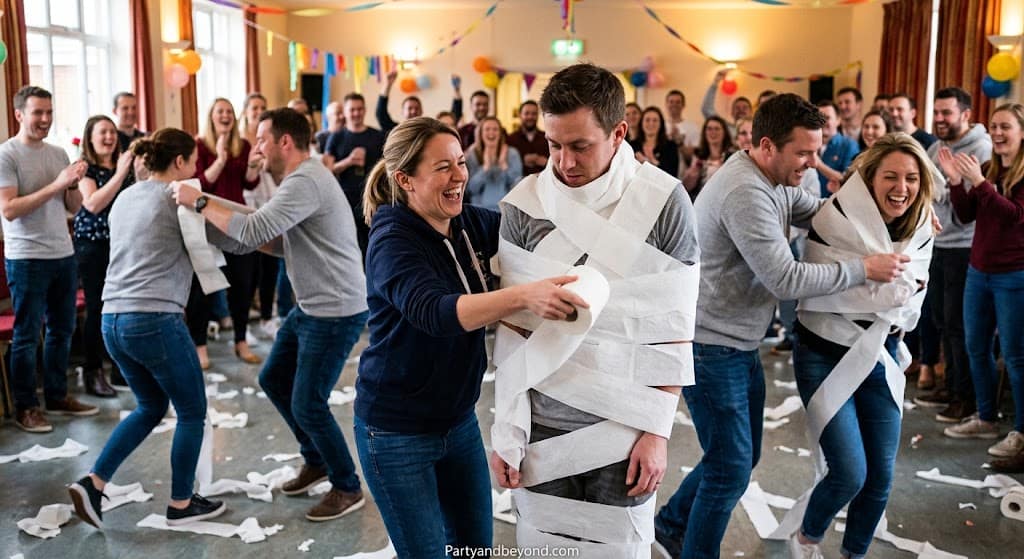
Teams of three, one gets wrapped in toilet paper, fastest complete mummy wins. Four rolls per team, so about $8 total. It’s loud, it takes six minutes, and the cleanup is genuinely annoying — do it on hard floors, not carpet.
Best for: 12 to 24 guests, peak-energy moment around the 90-minute mark.
10. Costume Contest with Real Categories
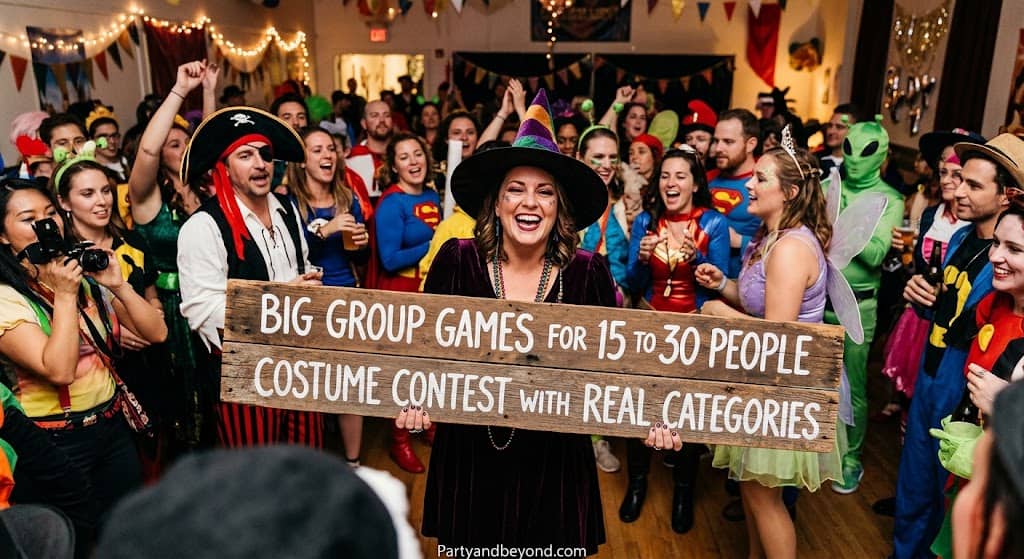
Not “best costume” — that’s a popularity vote. Run five categories: funniest, scariest, best last-minute, best group, and most likely to be uncomfortable by midnight. Everyone has a shot. Spend $40 on halloween costume contest prizes and make them things adults want, like a bottle of wine or a $20 coffee card, not plastic trophies.
Best for: any group over 10 — run it at the 2-hour mark when everyone’s arrived.
11. Halloween Family Feud
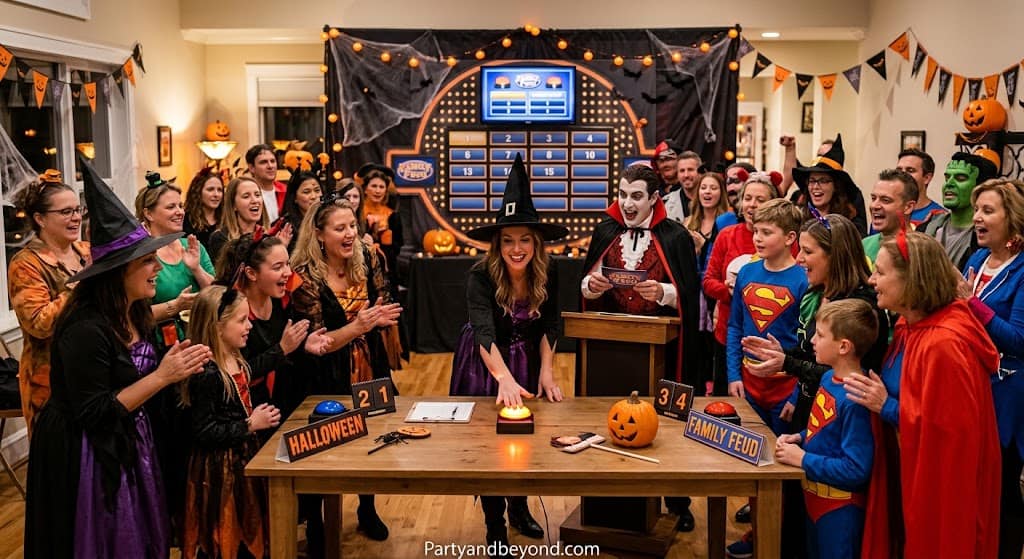
Survey your group chat a week ahead with questions like “name a candy nobody wants,” then play the answers back. Free, and the personalization is what makes it land.
Best for: 14 to 24 guests split into two teams.
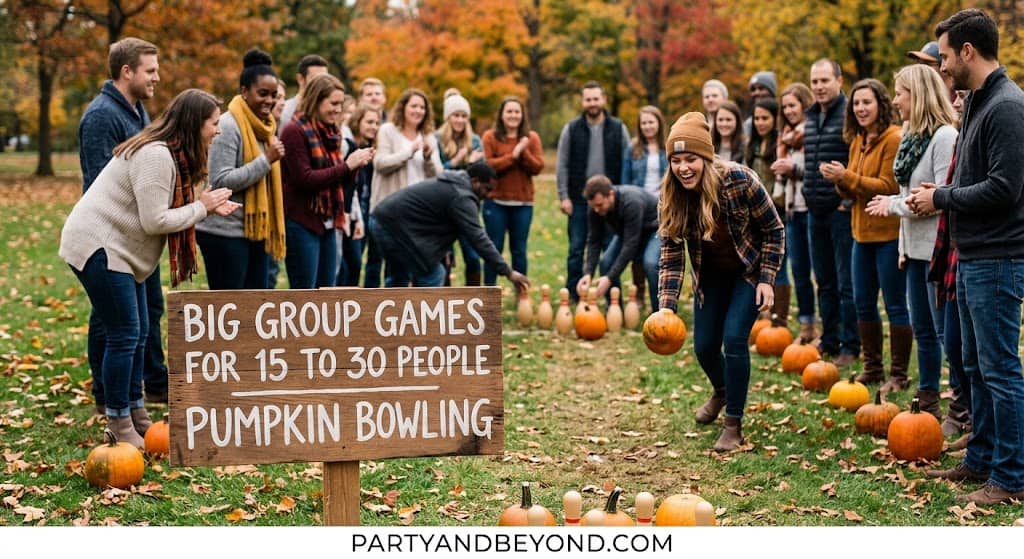
12. Pumpkin Bowling
Ten white-painted bottles as ghost pins, a small pumpkin as the ball, a hallway as the lane. Around $12 if you already have a pumpkin. Works outside too, which matters if your house is full.
Best for: 10 to 20 guests, running as a tournament bracket all evening.
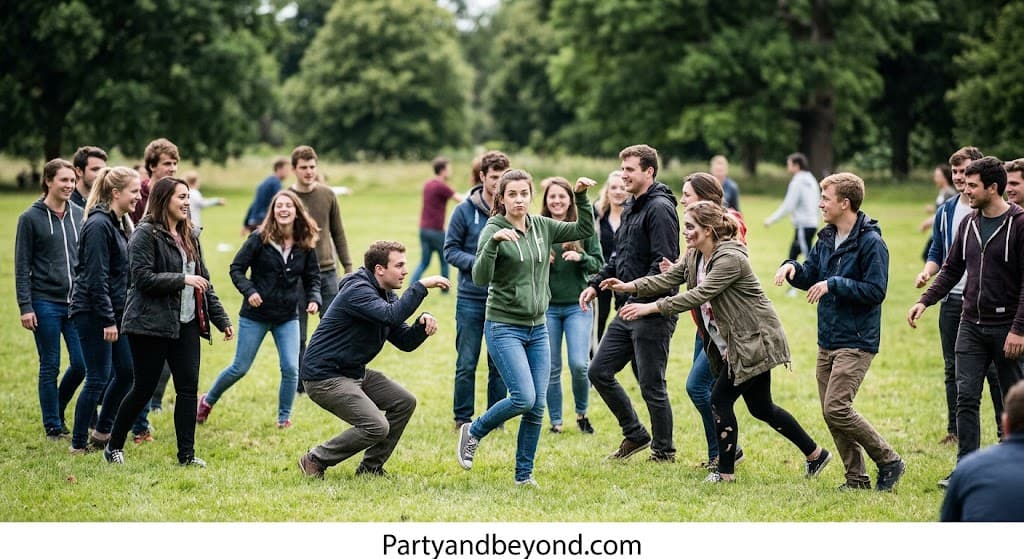
13. Zombie Tag Freeze
One zombie, everyone tagged becomes a zombie, last human wins. Yes, it’s a kids’ game. Yes, adults at a party lose their minds over it. Backyard only.
Best for: 12 to 25 guests with outdoor space and a tolerance for shouting.
14. The Great Candy Heist
White elephant rules with wrapped candy bundles and one cursed prize nobody wants. Ten dollars of candy plus one deliberately terrible gift. Runs 25 minutes and gets vicious in the best way.
Best for: 10 to 18 guests seated in a circle.
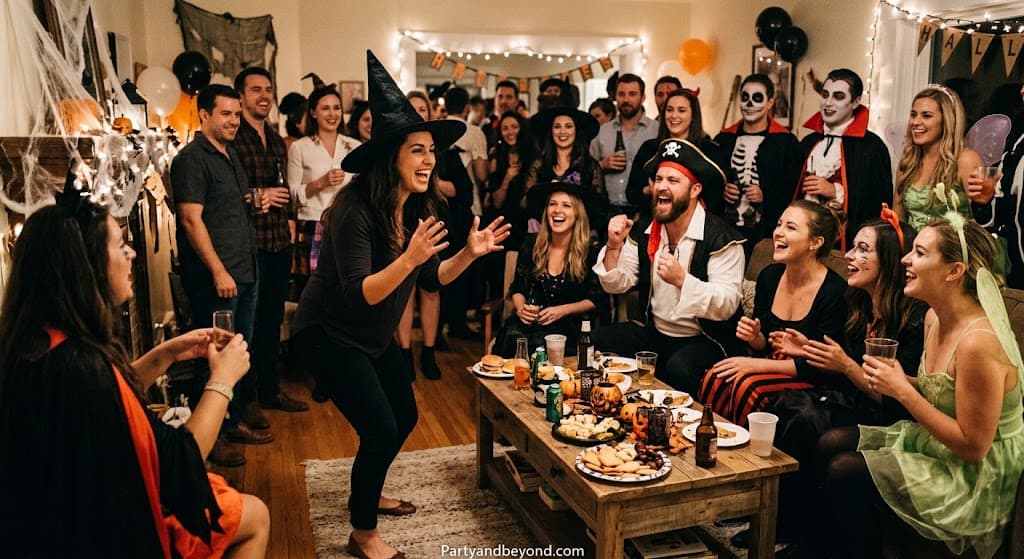
15. Halloween Charades
Horror movies, monsters, Halloween activities. Free, needs nothing, works at every group size, and is the single most reliable fallback when a planned game collapses.
Best for: 8 to 30 guests — split into teams over 16.
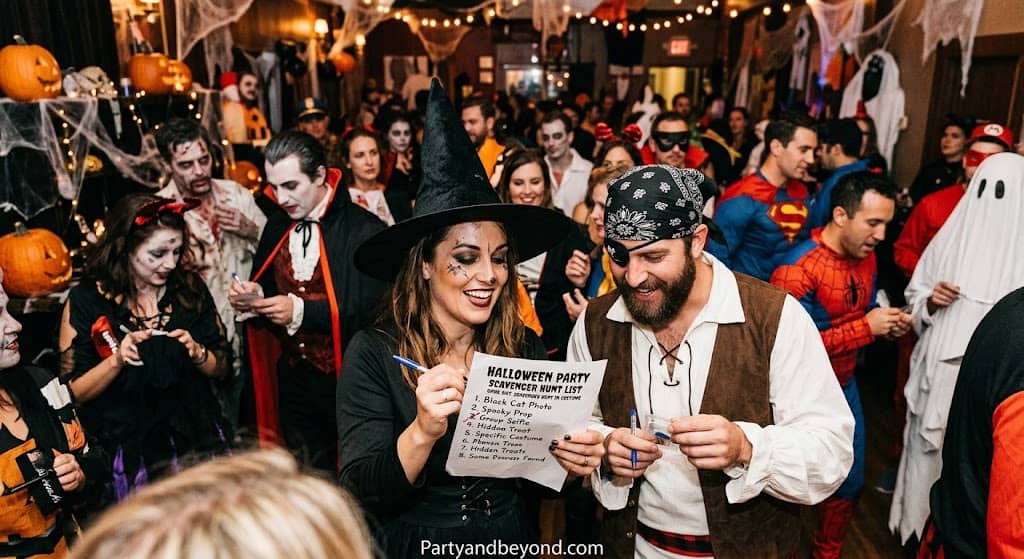
16. Scavenger Hunt in Costume
A list of photo tasks — find someone with the same costume, a photo with a jack-o’-lantern, a group shot of five monsters. Teams have 30 minutes. It gets people moving through the whole house instead of clustering in the kitchen.
Best for: 16 to 40 guests, especially if your party spans multiple rooms or a yard.
Halloween Drinking Games
Two rules before this section. Have water and real food out the entire time, and never make a drinking game the only activity — it’s the fastest way to a party that peaks at 9pm and ends at 10.
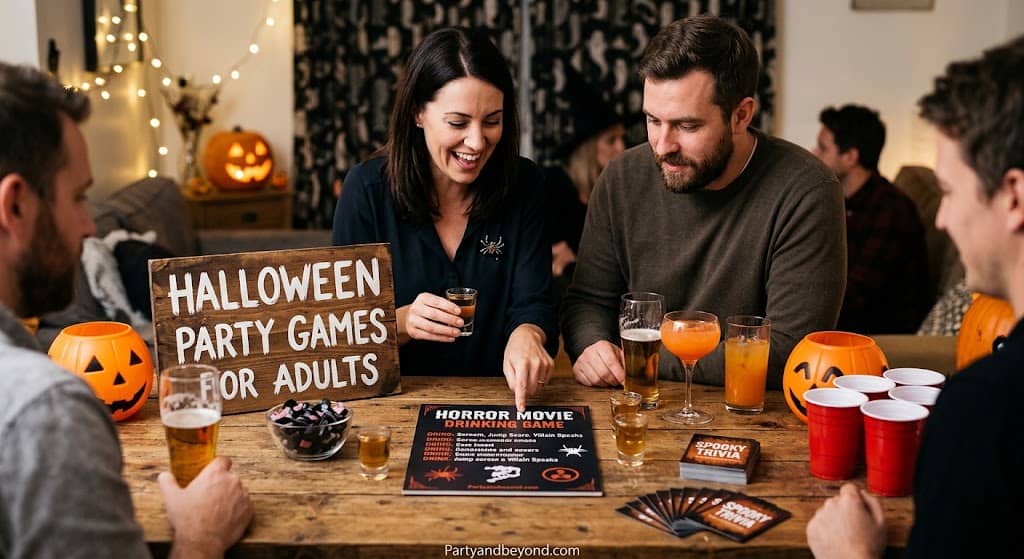
17. Horror Movie Drinking Game
Put on a classic slasher. Drink when someone splits up from the group, when a phone has no signal, when the killer isn’t actually dead. Costs nothing and requires zero explaining.
Best for: 6 to 12 guests on couches, late in the evening.
18. Witches Brew Roulette
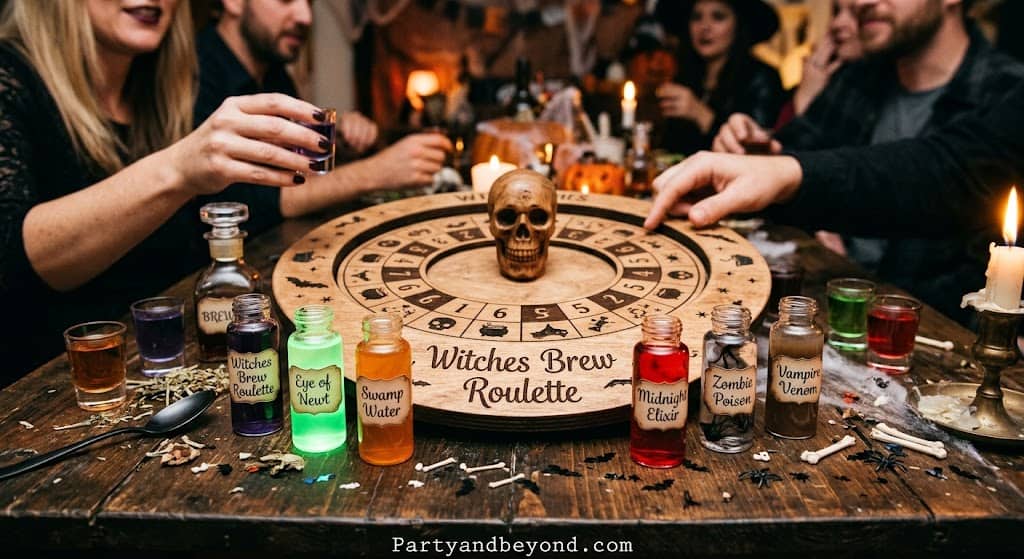
Ten cups of punch, three of them spiked with something unpleasant but harmless — pickle juice is my go-to. Guests draw blind. Costs about $9.
Best for: 8 to 15 guests who already know each other well.
19. Never Have I Ever: Halloween
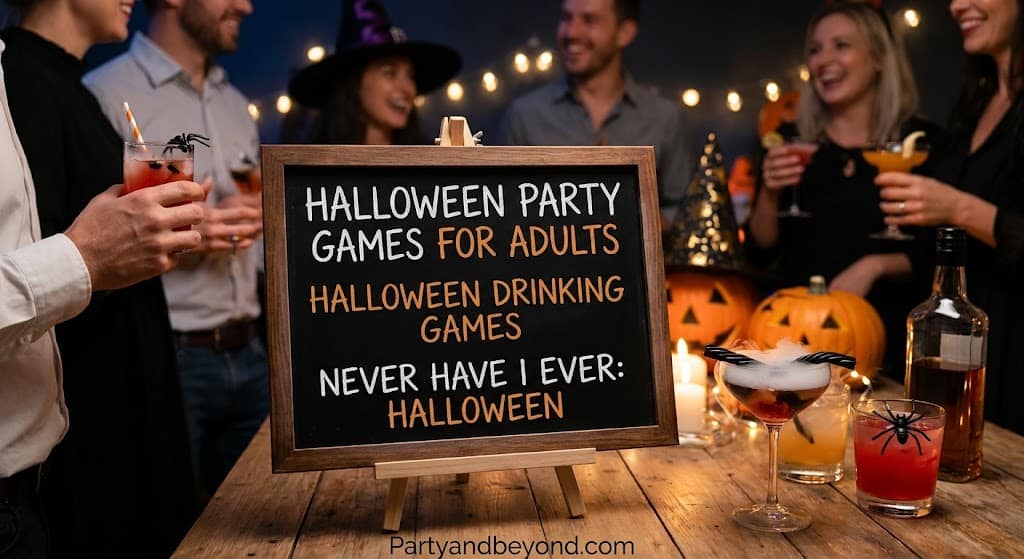
Prompts about costume disasters, trick-or-treating as a teenager, haunted house meltdowns. Free, and the stories are the actual payoff.
Best for: 6 to 14 guests in one conversation circle.
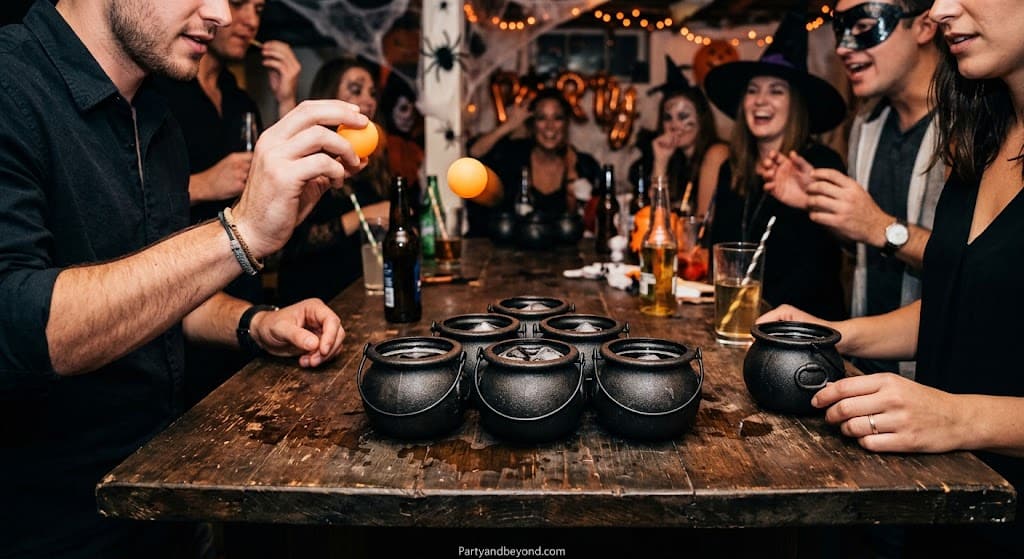
20. Beer Pong, Cauldron Edition
Standard beer pong with black cups and a cauldron under the table. Ten minutes to set up, plays for hours as a rolling tournament.
Best for: 4 to 16 guests rotating through, in a garage or basement.
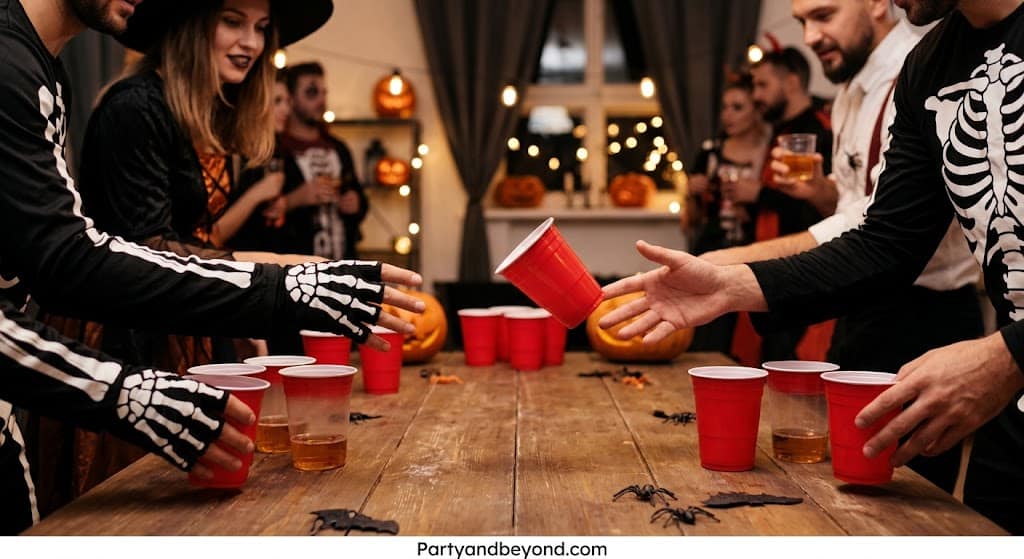
21. Flip Cup: Monster Mash
Team flip cup where the losing team wears a monster mask for the next round. It’s dumb. It’s also the game people bring up the following year.
Best for: 12 to 20 guests, high energy, needs a long table.
22. Spooky Story Shots
Everyone adds a sentence to a ghost story; anyone who stalls for more than five seconds drinks. Free, and the story goes somewhere absurd within four rounds.
Best for: 6 to 12 guests around a fire pit or low light.
Quiet Games and Low-Key Activities
Not every guest wants to shout. These run in a side room and catch the people who’d otherwise leave at 9.
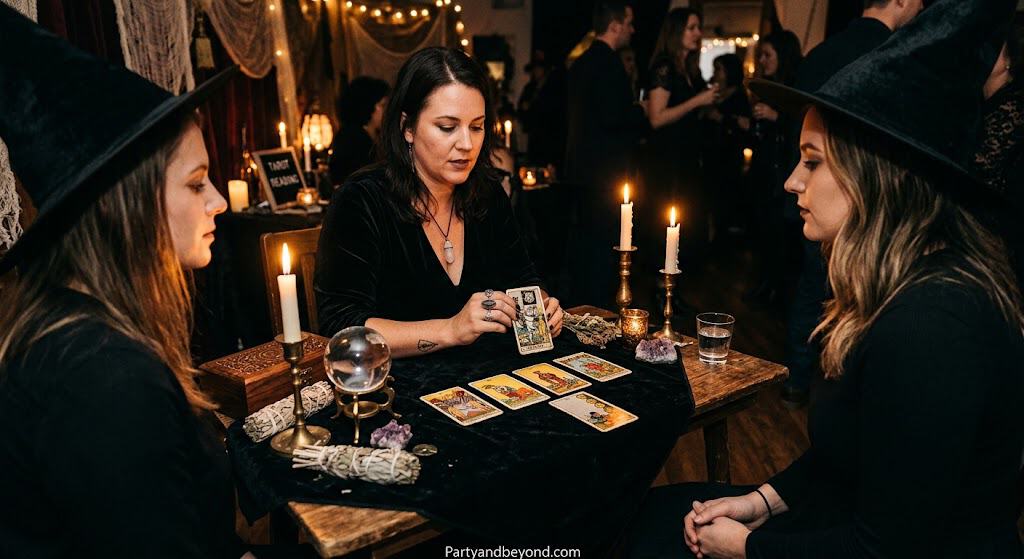
23. Tarot Reading Station
A $15 deck, a printed cheat sheet of card meanings, a small table with a lamp. Guests read for each other. It runs itself for three hours and is consistently the corner where the best conversations happen.
Best for: any party — set it up once and forget it.
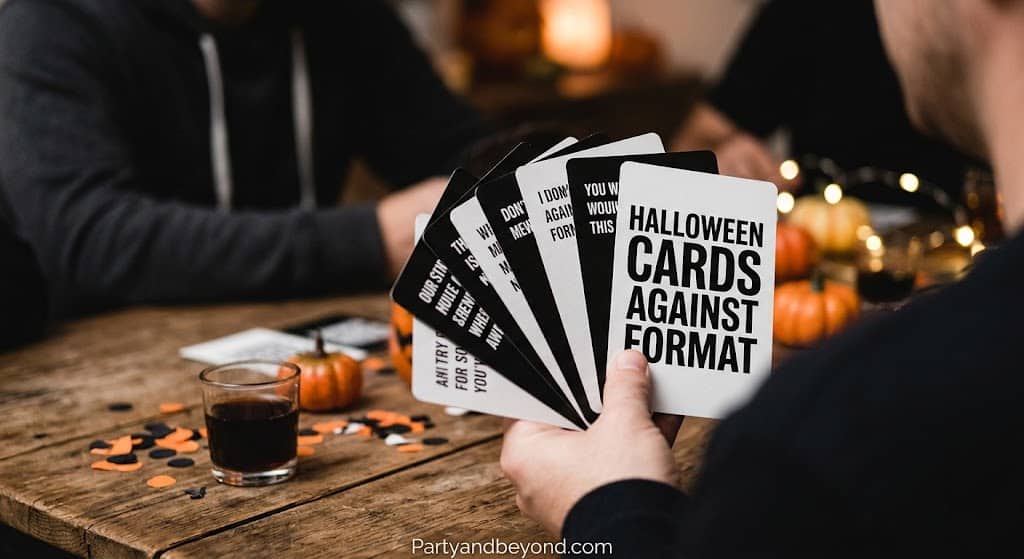
24. Halloween Cards Against Format
Any fill-in-the-blank card game with Halloween-themed prompts you write yourself on blank cards. Costs about $8 for blanks.
Best for: 6 to 10 guests seated, second half of the evening.
25. Pumpkin Carving Contest
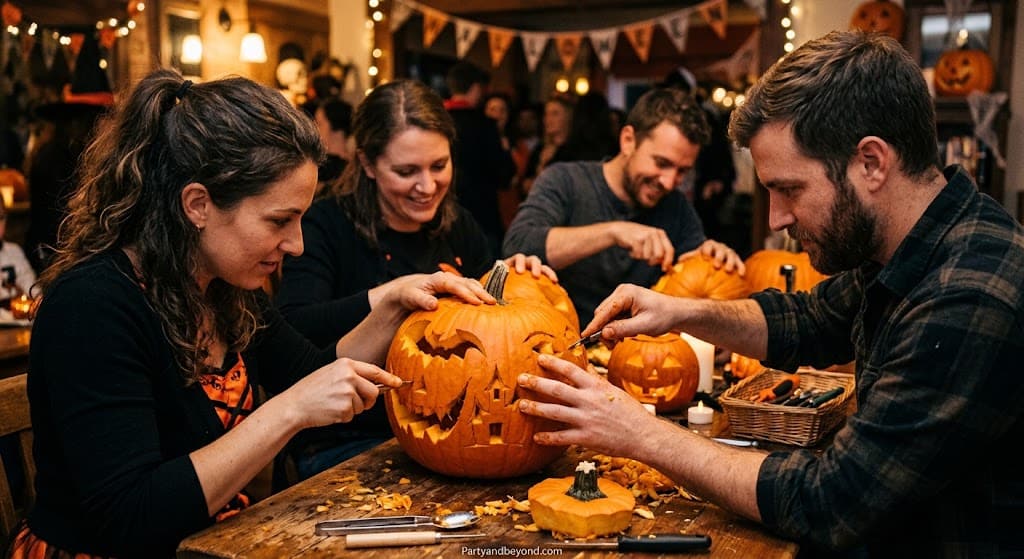
Small pumpkins, carving kits, 30 minutes on a timer, guests vote. Budget $5 per pumpkin. Put down a tarp and set out a bowl for the guts or you will regret it. My sister runs this one every year and has strong opinions about the cheap plastic carving saws, which she says work better than the knives.
Best for: 8 to 16 guests, early in the evening before drinks take hold.
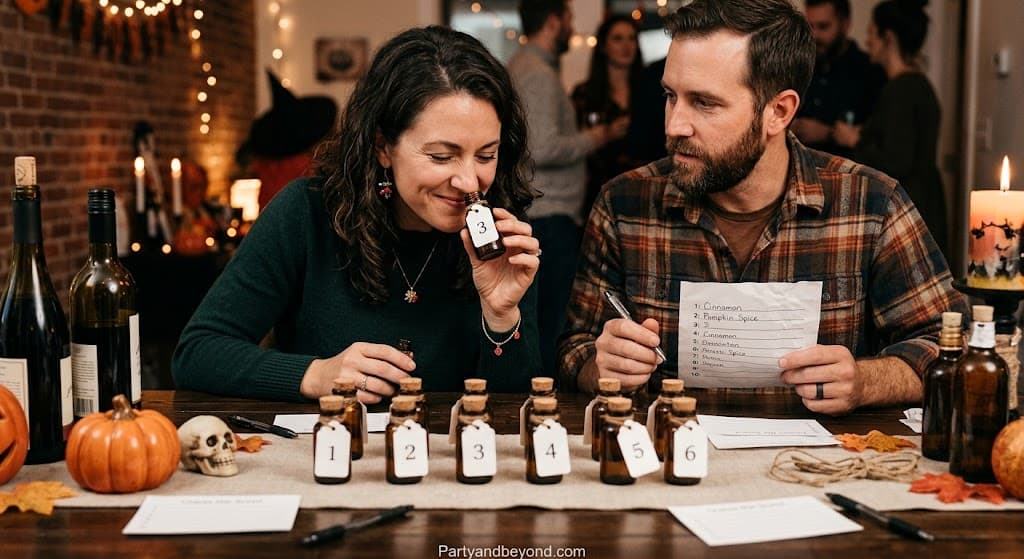
26. Guess the Scent
Eight numbered opaque cups with things inside — cinnamon, coffee grounds, vinegar, pumpkin puree. Guests smell and guess. Costs almost nothing from your own pantry.
Best for: 10 to 20 guests, running passively on a side table.
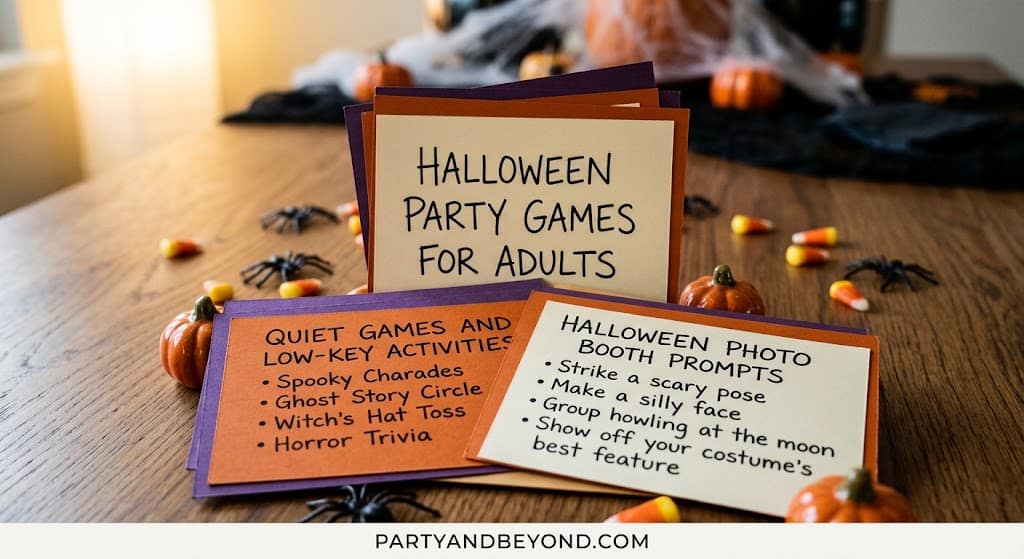
27. Halloween Photo Booth Prompts
A backdrop, a box of props, and a card listing five poses to hit. The prompt card is what turns a photo booth from an ignored corner into a line. A basic set of adult halloween party supplies with props runs about $20.
Best for: any size — and it gives you the group photos you’ll actually want.
28. Blind Candy Taste Test
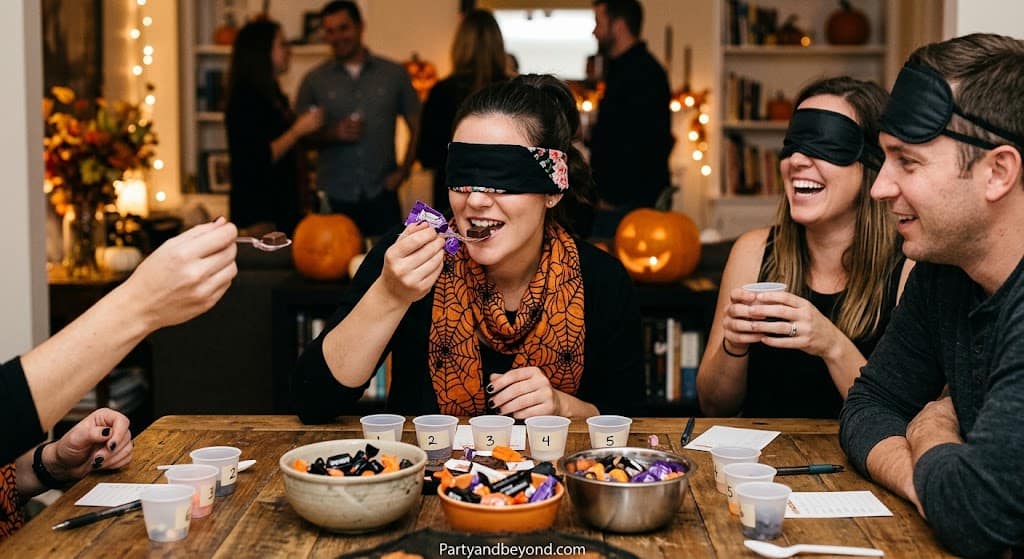
Blindfold, six mini candy bars, identify each one. People are wildly overconfident and almost nobody gets more than four. Ten dollars of candy.
Best for: 8 to 16 guests, five minutes per player as a spectator game.
29. Escape Room in a Box
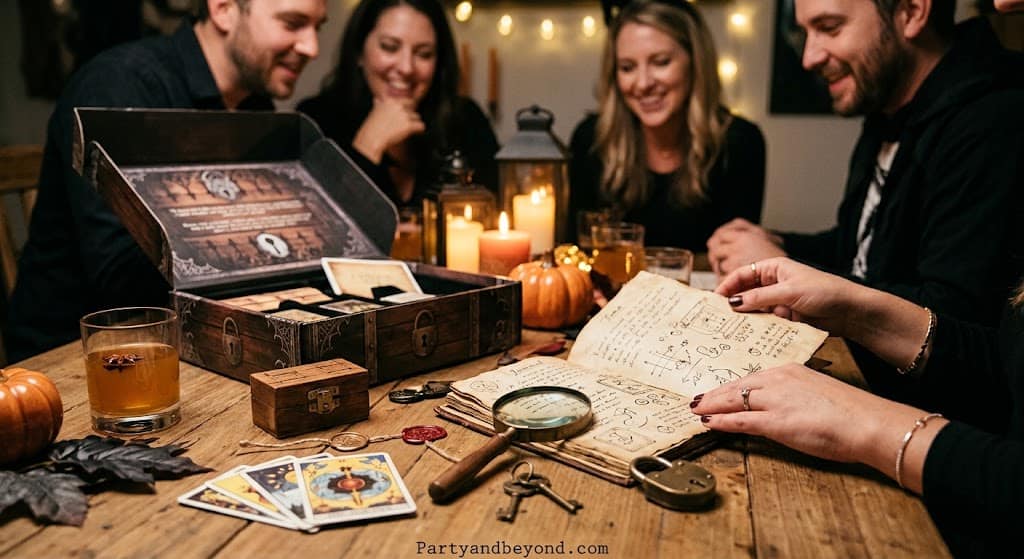
A boxed puzzle kit, $25 to $35, played by a team of six in a side room while the party continues. Most run about 60 minutes.
Best for: 4 to 8 guests who actively want a puzzle, not a crowd.
30. Halloween Playlist Battle
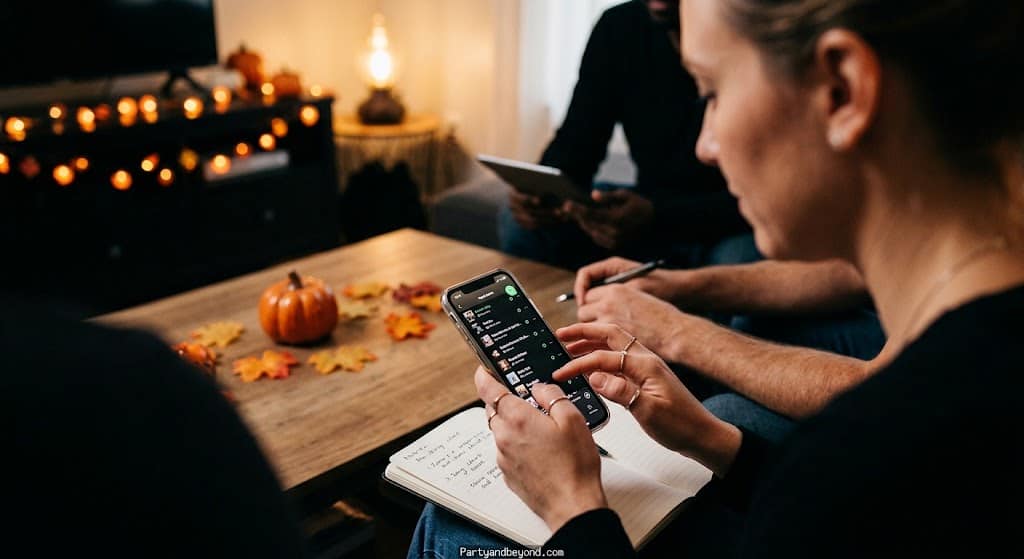
Each guest adds two songs to a shared playlist at the door. Whoever’s song gets the biggest reaction wins a prize. Free, and it solves the music problem at the same time.
Best for: 10 to 30 guests, running the entire night.
What games can adults play at a Halloween party?
Adults play best with games that have a clear end point, don’t require reading rules aloud, and let people drop in or out — charades, trivia in teams, a costume contest with multiple categories, mummy wrap races and a boxed murder mystery are the five that consistently work.
What fails: anything that puts one person on the spot in silence, anything that takes more than four minutes to explain, and anything requiring all 25 guests to stop talking at once. I’ve watched a genuinely well-designed game die because the host tried to get a room’s attention three times and gave up.
Pick two team games and one passive activity. Team games mean nobody’s exposed alone, and the passive activity — a photo booth, a candy jar guess, a tarot table — catches everyone who doesn’t want to participate but doesn’t want to stand around either.
How do you keep a Halloween party fun without alcohol?
Lean harder on activity and atmosphere, because alcohol is usually doing the work of loosening people up and you need something else in that slot. Run a game within the first 20 minutes rather than waiting until the 90-minute mark.
A pumpkin carving contest, a costume contest with real prizes, a horror movie with a bingo card, and a proper photo booth will carry four hours easily. Make the drinks feel intentional — a spiced cider bar with cinnamon sticks, orange slices and a dispenser beats a stack of soda cans by a mile, and costs about $20 for 20 people.
Honestly? My best-attended party was the alcohol-free one, because people brought their kids, stayed longer, and nobody had to plan a ride home.
What is a good Halloween game for 20 people?
Halloween trivia in teams of four is the best single game for exactly 20 people — five teams, 20 minutes, everyone participates, and no one’s embarrassed. It’s what I run every year at the 90-minute mark.
The mummy wrap race is the close second if your group is physical and you have hard floors. Six teams of three, plus two judges, and it’s done in eight minutes with a huge energy spike afterward.
Avoid anything that needs 20 people to take individual turns — a 20-person round of charades where each person performs takes 40 minutes and loses the room by turn nine. Team formats keep the dead time down.
Halloween Game Comparison Table
| Game | Players | Time | Cost | Energy level |
|---|---|---|---|---|
| Halloween trivia showdown | 16-30 | 20 min | $15 | Medium |
| Mummy wrap race | 12-24 | 8 min | $8 | High |
| Murder mystery party | 8-16 | 2-3 hrs | $35 | Medium |
| Costume contest | 10+ | 15 min | $40 | Medium |
| Who Am I? | 10-40 | Passive, 1 hr | $4 | Low |
| Pumpkin carving contest | 8-16 | 30 min | $5/person | Low |
| Zombie tag freeze | 12-25 | 10 min | Free | High |
| Tarot reading station | Any | Passive, 3 hrs | $15 | Low |
How to Actually Run the Night
Here’s the timeline I use for a 7pm to 11pm party, and it’s barely changed in six years.
Doors at 7. Who Am I? cards go on backs at the door, candy jar guess on the entry table. Nothing formal until 7:45, because people are still arriving and you’ll only have to repeat yourself.
At 8:15, the first real game — trivia or the mummy race. At 9:00, costume contest with the prize table visible. From 9:30 on, let it go loose: flip cup in the kitchen, a horror movie in the living room, the tarot table still running. Announce nothing after 10.
Two things I’ve learned the hard way. Prizes matter more than the games — people will play anything for a decent bottle of wine and won’t play a great game for a plastic spider ring. And keep every announcement under 30 seconds. If you’re explaining rules for two minutes, you’ve lost the back half of the room and they’re already talking again.
If you’re still sorting costumes, my roundups of funny Halloween costumes for women and couple costumes are where most of my guests end up. And send everyone home with something small — a few of these Halloween party favor ideas cost under $2 a head and make the ending feel deliberate instead of just people drifting out.
🎯 The short version:
- ✅ Run exactly 3 games for a 4-hour party, spaced about 45 minutes apart
- ✅ Team formats beat individual turns once you’re over 16 guests
- ✅ Budget $30 to $60 on games and prizes for 20 people
- ✅ Costume contests need 5 real categories, not one “best costume” vote
- ✅ Keep every rule explanation under 30 seconds or you lose the room
People Also Ask
What time should Halloween party games start?
Wait until about 45 minutes after your stated start time for the first structured game. Guests arrive across a 30-minute window, and starting early means repeating everything for latecomers. Passive games like a candy jar guess or name tags on backs can start the moment people walk in.
How many prizes do I need for a Halloween party?
Five to eight for a party of 20 — one per costume category plus two or three game winners. Spend $5 to $10 each rather than buying twenty cheap ones. Bottles of wine, gift cards and decent candy boxes all get taken home; plastic trophies get left on your counter.
What Halloween games work in a small apartment?
Trivia, charades, the candy taste test, a tarot station, guess-the-scent and any card game. Skip anything involving running, throwing or toilet paper. A small space actually helps conversation games because nobody can drift to the edge of the room.
Do adults really want to play party games?
Most do, once someone else starts it — the resistance is almost always about not wanting to be first. That’s why team games and passive activities work so well. Set something up and let two willing people begin; the rest join within about ten minutes.
Frequently Asked Questions
How long should each Halloween party game last?
Ten to twenty minutes for anything that requires the whole group’s attention. Past twenty minutes, people start checking phones and refilling drinks mid-game. Longer formats like a murder mystery or an escape box work because they’re voluntary and self-paced, not because the group tolerates a long activity.
What should I do if nobody wants to play?
Don’t force a group announcement — start the game with three willing people somewhere visible and let it pull others in. Passive games work here too: a candy jar and a photo booth require no participation decision. If two attempts fail, put on a horror movie and let the night be a hangout instead.
How much should I budget for Halloween party games?
Thirty to sixty dollars covers games and prizes for 20 guests if you mix free games with one purchased kit. A murder mystery box alone runs $25 to $45. Most of the games here cost under $10, and about a third cost nothing beyond what’s in your kitchen.
What are good Halloween games for a work party?
Trivia, Halloween bingo, a candy taste test, a costume contest with safe categories and a desk-decorating contest. Skip drinking games, anything physical, and anything that asks people to share personal stories. Keep it to 30 minutes total during a lunch hour.
Can I run these games outdoors?
Zombie tag, pumpkin bowling, the scavenger hunt, pumpkin carving and a photo booth all work outside. Add lighting — string lights or lanterns — because October gets dark by 6:30 in most of the country. Have an indoor backup for the two group games in case of rain.
What games work for a mixed group of adults and teens?
Charades, trivia, the mummy wrap race, scavenger hunts, pumpkin carving and blind candy taste tests all cross the age gap fine. Drop the drinking games and anything with adult-only card prompts. Teens usually want to be on a team with each other, so let them.
How do I pick which games to run?
Start from your guest count and your space, not from the game. Under 12 people, seated conversation games work. Over 16, you need team formats. If you have a yard, use it for the one high-energy game. Then pick one passive activity that runs all night regardless.
What if my guests don’t all know each other?
Use a name-tag icebreaker at the door — Who Am I? cards or a bingo card that requires talking to strangers. Both do the introductions for you. Avoid games that need existing shared history, like Never Have I Ever or a personalized family feud, until later in the night.
Do I need to decorate for the games to work?
No, but lighting matters more than decor. Swap a few bulbs for orange ones, kill the overhead lights, add candles or string lights. That costs about $15 and does more for the atmosphere than a hundred dollars of props. Games land better in a room that feels like a party.
How do I handle guests who arrive late?
Have one passive game they can join instantly — a candy jar guess, a bingo card, an emoji puzzle sheet. Don’t restart a group game for them. If your main event is a costume contest, schedule it at least two hours in so almost everyone’s there.
What’s the best game for a party of 8?
A boxed murder mystery, if people commit ahead of time. Otherwise Two Truths and a Haunting, charades or a card game around one table. Eight people is small enough that everyone can hear each other, so lean into conversation games rather than team competitions.
How do I clean up after the messy games?
Run the mummy wrap and pumpkin carving on hard floors or outside, with a tarp and a designated trash bag already in the room. Cleanup for both is under ten minutes if you’ve prepped; it’s twenty-five if you haven’t. My dog has eaten toilet paper off my rug twice now, which is its own argument for the tarp.
Read More:21 Halloween Table Decoration Ideas (Elegant to Spooky, From $10)