Disclosure: This post contains affiliate links. If you buy through them, I may earn a small commission at no extra cost to you.
Picture this: my friend Emma’s backyard last October. Six folding tables arranged in a horseshoe under string lights, each one labeled with a black cardstock sign in messy white chalk. Erupting Pumpkin. Witch’s Brew. Glow Slime. Frankenstein Static. Pumpkin Guts. Dry Ice Cauldron.
Eight kids in half-costumes drifting between stations, sleeves pushed up, plastic safety goggles cocked sideways. The air smelled like vinegar and Halloween candy at the same time. At table three, my niece was up to her elbows in black oobleck — gooey, alive, dripping through her fingers in slow motion. Her shoulders dropped. She forgot the candy bowl existed.
That’s Halloween science done right — and exactly what Halloween science experiments for kids looks like when it’s done right.
Here’s the thing — the best Halloween activities for kids aren’t the decorations, the costumes, or the candy. They’re the ones where a six-year-old looks up mid-experiment and says, “Wait — why is it doing that?” That moment is what Halloween science experiments for kids are really designed to create — curiosity, surprise, and a little bit of controlled chaos. These Halloween science experiments for kids can take as little as ten minutes with pantry ingredients or stretch into longer, messier lab-style fun that feels like magic in real time.
After hosting and attending over 30 kids’ Halloween parties in the last decade — and watching Emma turn her yard into a working science lab two Halloweens running — I can tell you which experiments earn their setup time and which ones look great on Pinterest but flop with actual kids. This guide to Halloween science experiments for kids breaks down the ones that truly work, keep kids engaged, and actually feel magical instead of messy for no reason. Let’s get into it.
What they ARE:
- Hands-on, sensory activities with a spooky theme
- Real science — chemical reactions, density, static electricity, chromatography, crystallization
- Doable with pantry staples, dollar store finds, and basic supervision
What they ISN’T:
- Pre-packaged kits that cost $40 and run out in one afternoon
- “Educational” content disguised as a worksheet
- Activities that require a Pinterest-perfect setup or a chemistry degree
The trick is matching the experiment to the age and the setting. A 4-year-old wants instant gratification — eruptions, fizz, color change. An 8-year-old wants to do it themselves and understand the why. According to , 73% of Americans plan to celebrate Halloween — and parents are increasingly looking for activity-based engagement beyond passive decorating.
DIY Pantry Halloween science experiments for kids vs. Store-Bought Kits: What’s Actually Worth It?
Honestly, store-bought Halloween science kits are overhyped. Let’s be honest — I bought one for $32 two years ago and it contained $4 worth of baking soda, food coloring, and a plastic pumpkin shaker. Here’s the real comparison:
| Approach | Cost per Experiment | Reusability | Wow Factor | Best For |
|---|---|---|---|---|
| Pre-packaged store kit | $25–$40 (one-time) | Low — one shot | 6/10 | Last-minute gifts |
| DIY pantry experiments | $2–$8 each | High — pantry refills | 9/10 | Parties, classrooms, repeat fun |
| Hybrid (kit + DIY add-ons) | $15–$20 total | Medium | 7/10 | Reluctant first-timers |
Trust me on this: a $5 bottle of, a $1 box of , and a bottle of vinegar from your kitchen will outperform any boxed kit on the shelf.
The 21 Best Halloween Science Experiments for Kids
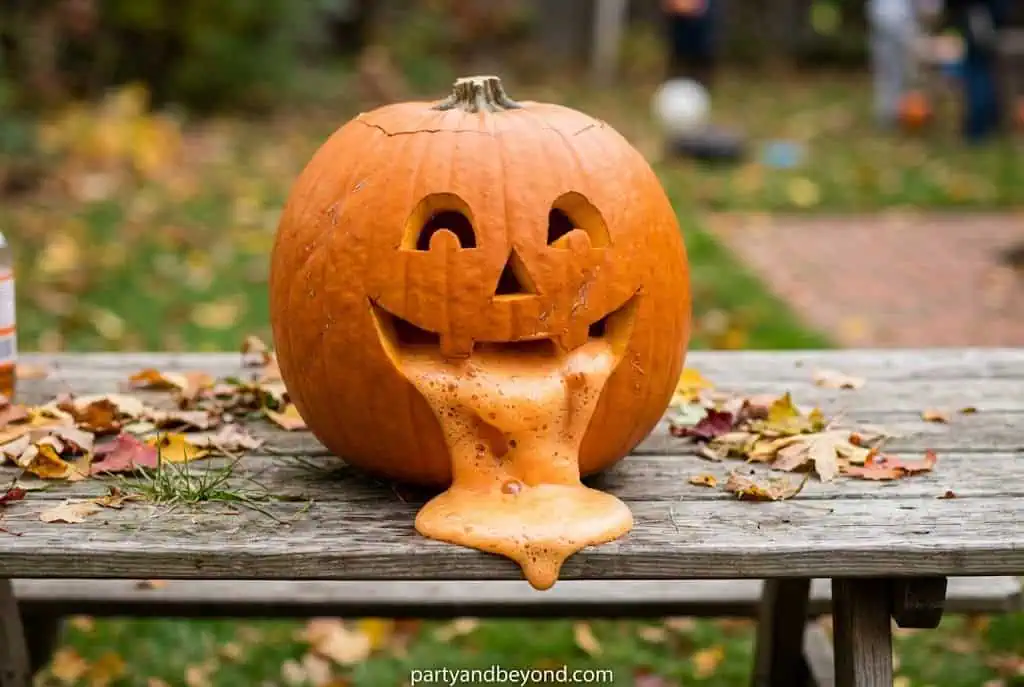
1. Erupting Jack-O-Lantern Volcano
The classic. Picture an actual carved pumpkin foaming bright orange goop down its grin. Done right, this looks like the pumpkin came alive. Done wrong, you skipped the dish soap and got a sad little fizz. The dish soap is the trick.
- Materials & cost: Carved pumpkin (free if you’re already carving), ½ cup baking soda, 1 cup vinegar, 2 tbsp dish soap, orange food coloring. Total: $3–$5
- How to do it: Hollow out the pumpkin. Pour baking soda and dish soap into the cavity. Add a few drops of food coloring. Pour vinegar in slowly. Stand back.
- The science: Acid (vinegar) + base (baking soda) = CO₂ gas. Dish soap traps the gas in bubbles, creating foam.
- Best for: Outdoor party stations, ages 4–10
2. Glow-in-the-Dark Witch’s Slime
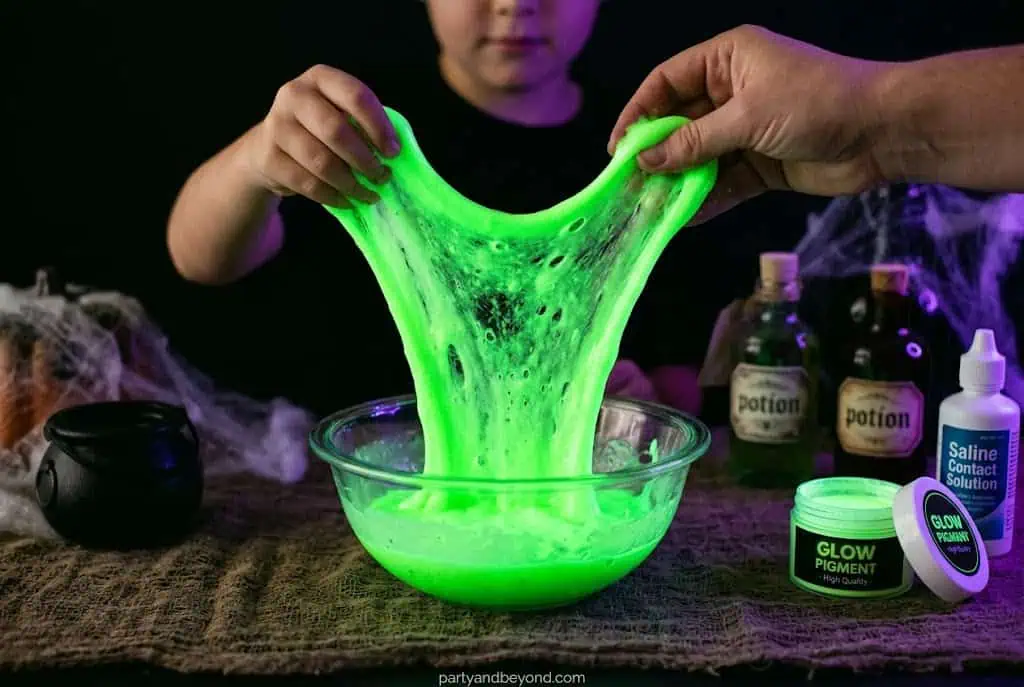
The trick is buying real glow pigment — not the weak stuff. Half the glow powder on Amazon is dim and disappointing. Get the 4+ star reviewed kind.
- Materials & cost: Clear glue ($1.25 Dollar Tree), saline contact solution, baking soda, glow-in-the-dark pigment. Total: $10–$12
- How to do it: Mix ½ cup glue with ½ tsp baking soda. Stir in 1 tsp glow pigment. Add saline solution 1 tbsp at a time, stirring, until it pulls from the bowl.
- The science: Borate ions in saline cross-link the glue’s polymer chains, creating slime. Phosphors in glow powder store light energy and release it slowly.
- Best for: Sensory play, ages 6–12
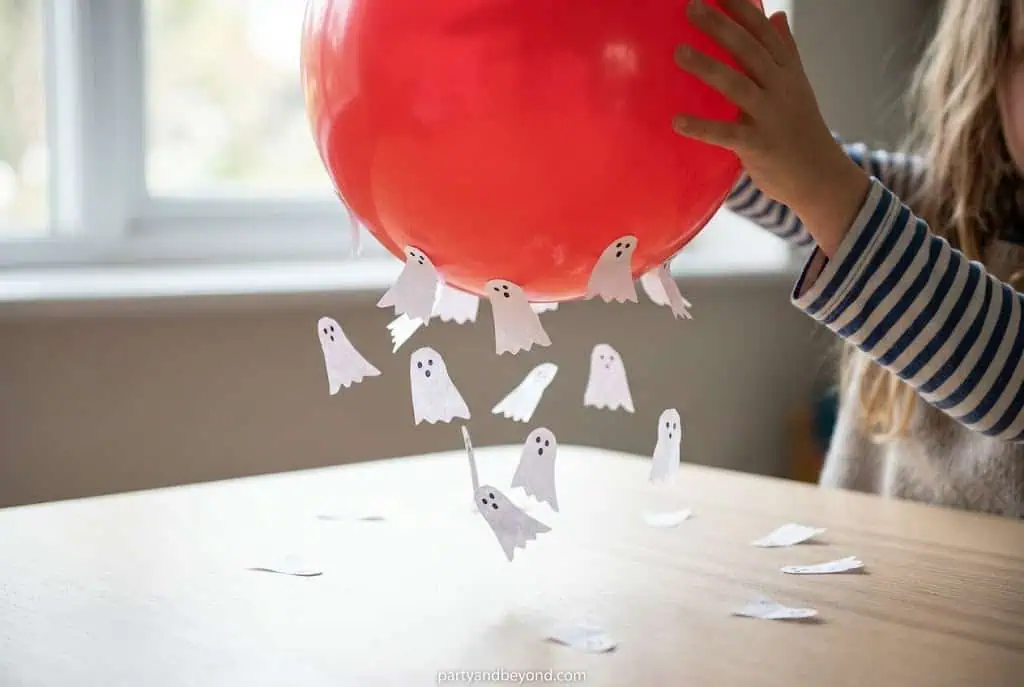
3. Dancing Tissue Paper Ghosts
A static-electricity classic. Cheap, fast, and works without warning.
- Materials & cost: Tissue paper cut into tiny ghost shapes, an inflated balloon, a wool sweater or your own hair. Total: $2
- How to do it: Cut 20 mini ghosts from tissue paper. Lay them on a flat surface. Rub the balloon vigorously on hair or a sweater for 15 seconds. Hover the balloon over the ghosts — they jump and dance.
- The science: Rubbing transfers electrons, charging the balloon negatively. Neutral ghosts get attracted to the charge.
- Pro tip: Static electricity is humidity-dependent. If it’s a damp Halloween night, do this one inside.
- Best for: Ages 4–8
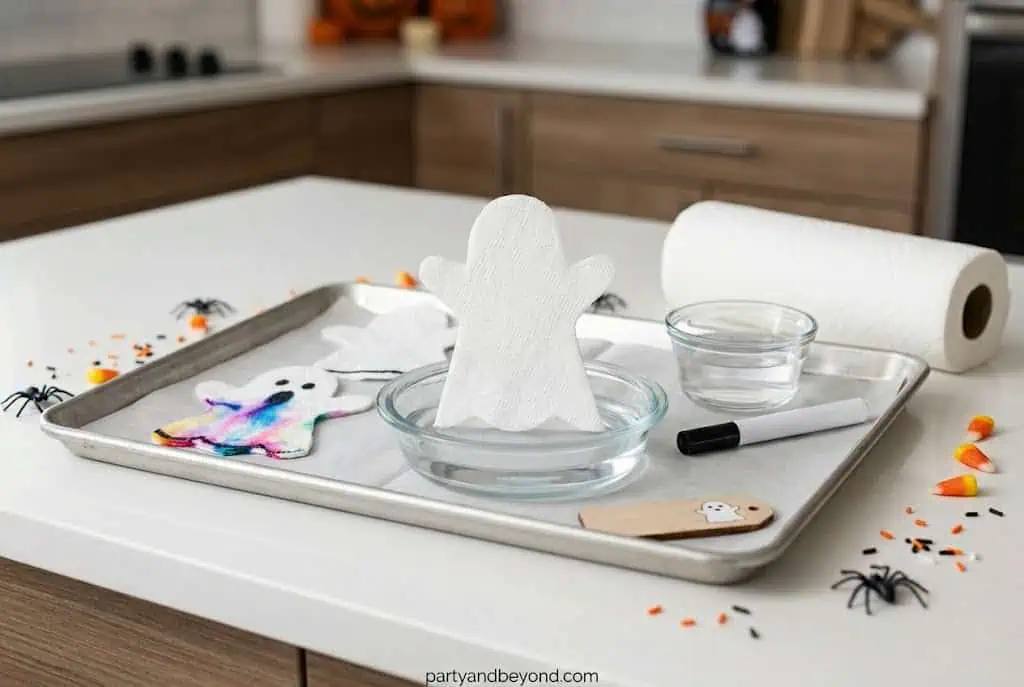
4. Bleeding Paper Towel Ghost Chromatography
I tried this at my kitchen counter last fall without a tray — the black marker bled straight through and stained my white quartz. Trust me on this: lay down newspaper or use a baking sheet.
- Materials & cost: White paper towels, black washable markers (not permanent), water, shallow dish. Total: $5
- How to do it: Cut paper towels into ghost shapes. Draw a thick black line at the bottom of each. Dip the bottom 1″ into water. Watch the ink separate into purple, blue, and pink as it travels up.
- The science: Black ink is a mixture of pigments. Water moves them up at different speeds, separating them. That’s chromatography.
- Best for: Ages 7–12, color science learners
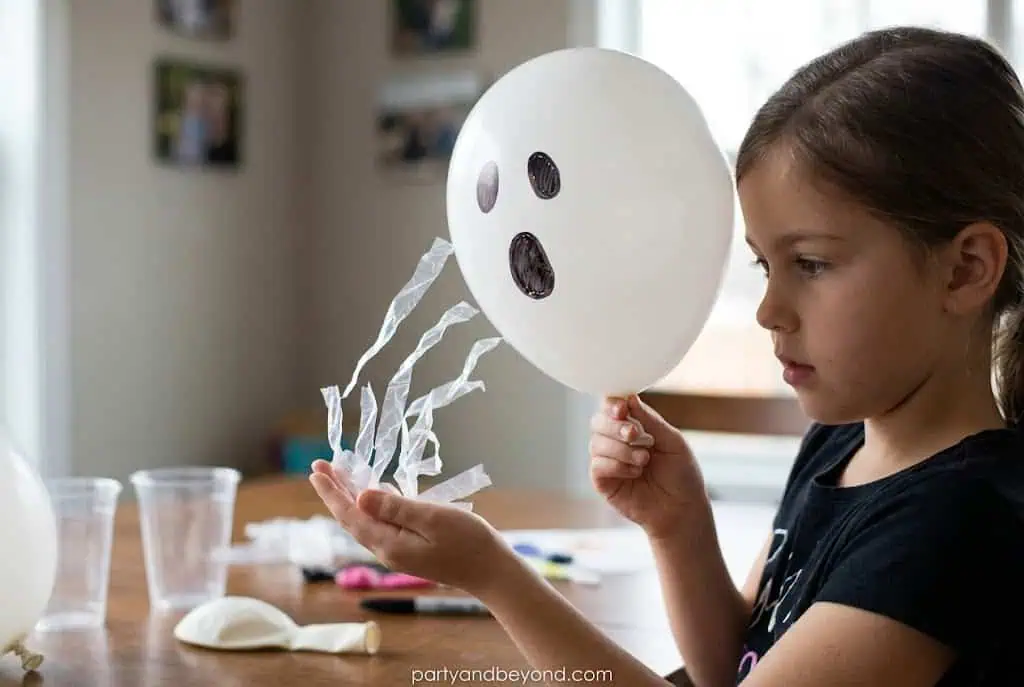
5. Floating Ghost Balloon
Sound complicated? It isn’t.
- Materials & cost: White balloon, plastic grocery bag cut into 1″ strips, marker. Total: $2
- How to do it: Draw a ghost face on the balloon. Inflate. Rub on hair. Hold strips of plastic loose in your fist. As the charged balloon nears, the strips levitate upward like ghostly tendrils.
- The science: Same static principle — like charges repel.
- Best for: Ages 5–10
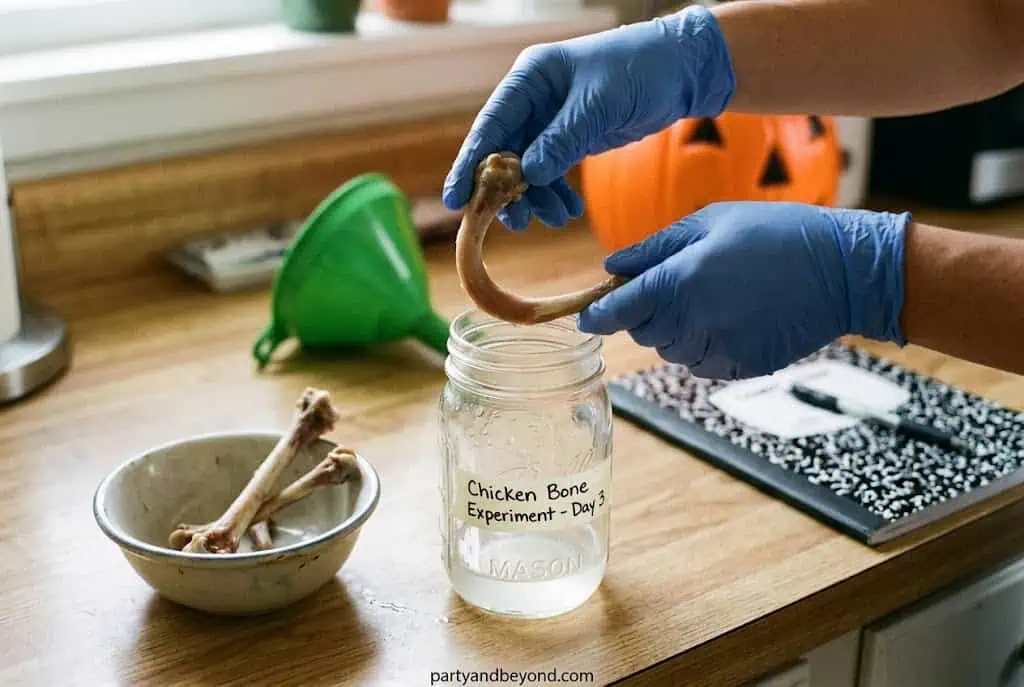
6. Rubber Chicken Bones
The patience experiment. Three days for the payoff, but the payoff is wild.
- Materials & cost: Clean chicken leg bone (saved from dinner), jar of white vinegar. Total: $4
- How to do it: Boil and clean a chicken bone. Place in a jar. Cover with vinegar. Wait 3 days, changing vinegar once. Remove — the bone bends like rubber.
- The science: Vinegar dissolves the calcium that makes bones hard, leaving only the flexible collagen behind.
- Best for: Ages 8–12, week-long Halloween countdown activity
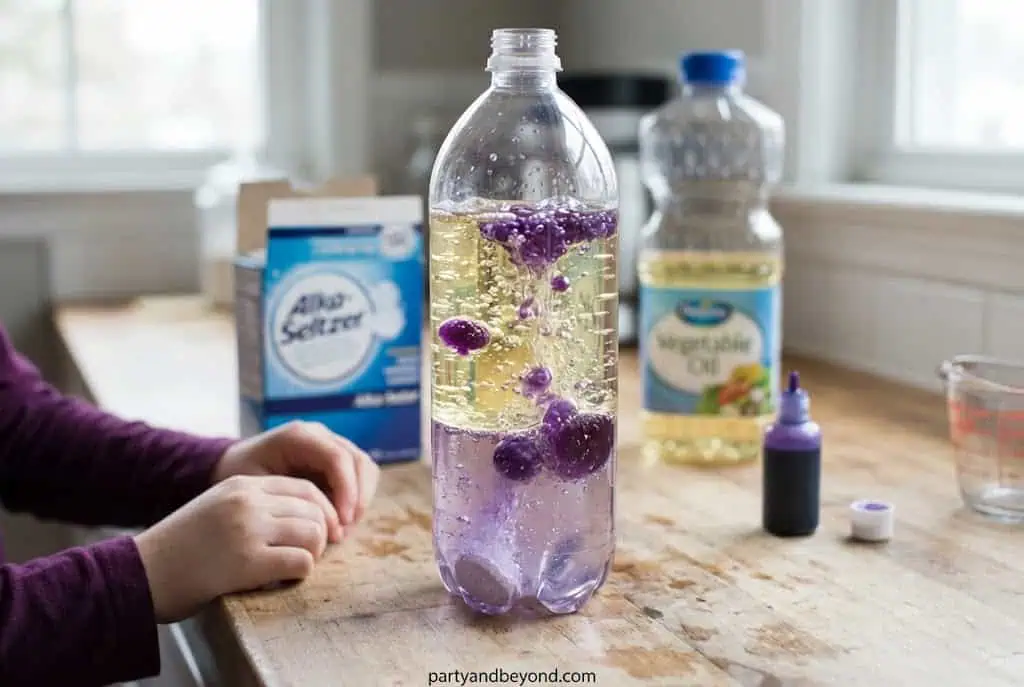
7. Bubbling Witch’s Brew Lava Lamp
A 10-minute showstopper.
- Materials & cost: Empty plastic bottle, ⅓ water, ⅔ vegetable oil, food coloring (purple or green), Alka-Seltzer tablets. Total: $5
- How to do it: Fill bottle ⅓ with water. Top off with oil — they separate. Add 10 drops of food coloring (it sinks through the oil and joins the water). Drop in a piece of Alka-Seltzer. Bubbles carry colored water blobs up through the oil.
- The science: Oil and water don’t mix. CO₂ bubbles from Alka-Seltzer carry water droplets upward.
- Best for: Party centerpiece, ages 5–12
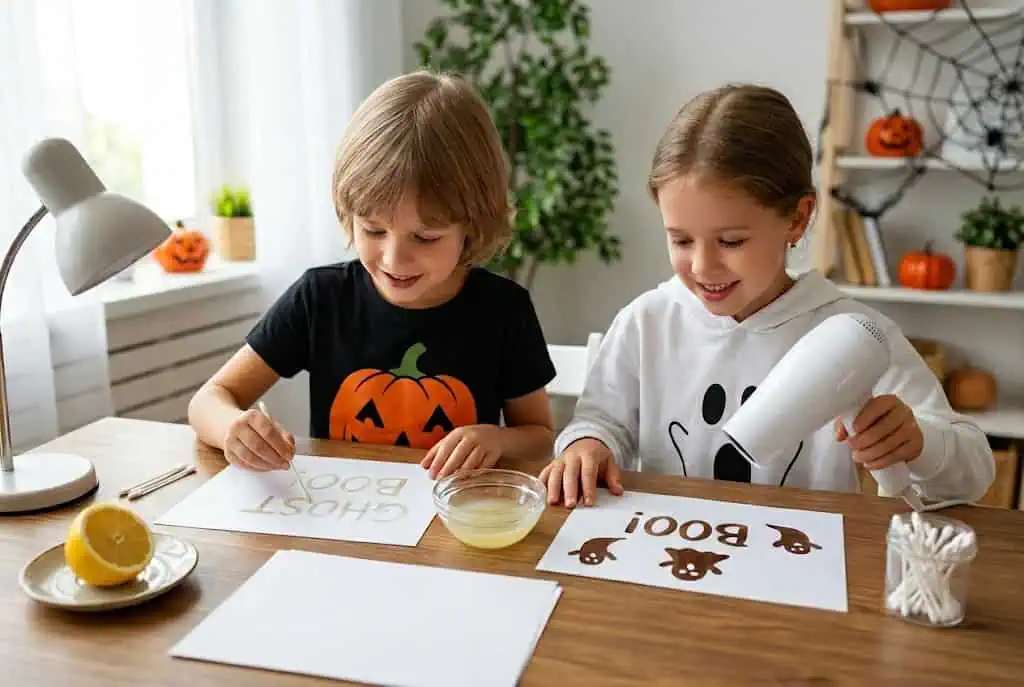
8. Invisible Ghost Ink
- Materials & cost: Lemon juice, cotton swab, white paper, lamp or hair dryer. Total: $3
- How to do it: Dip cotton swab in lemon juice. Write a spooky message on paper. Let dry. Heat under a lamp or with a hair dryer — the message appears in brown.
- The science: Lemon juice contains carbon compounds that oxidize and brown when heated, faster than the paper around them.
- Best for: Ages 6–10, treasure hunt component
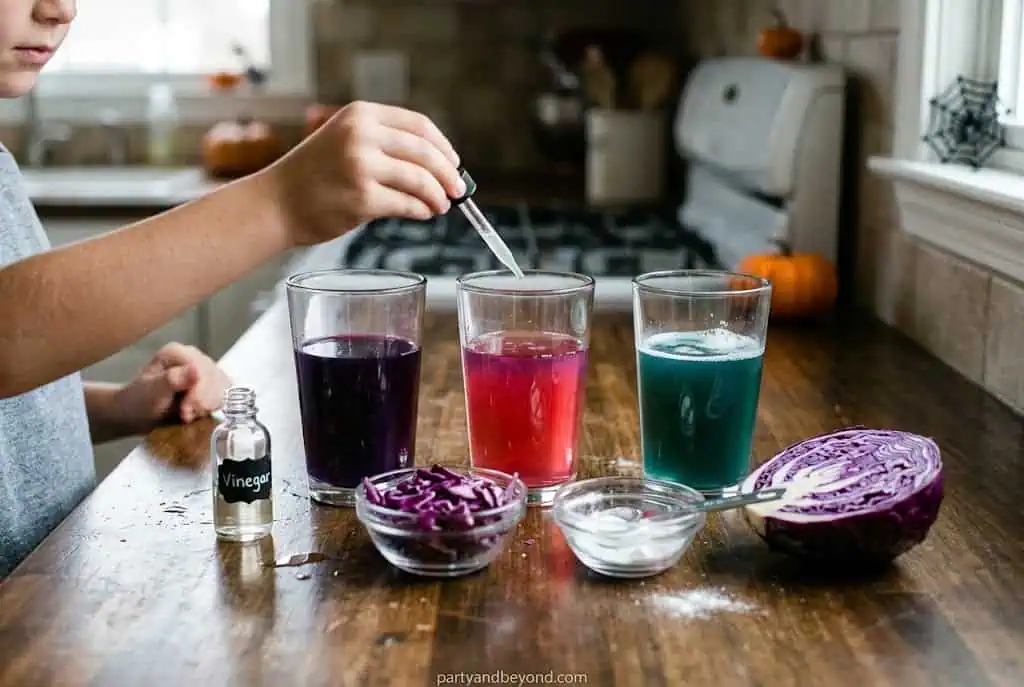
9. Color-Changing Magic Potion
This one feels like real magic.
- Materials & cost: Half a head of red cabbage, water, vinegar, baking soda, clear glasses. Total: $4
- How to do it: Boil chopped red cabbage in water for 10 minutes. Strain — you get deep purple liquid. Pour into glasses. Add vinegar → it turns red/pink. Add baking soda → it turns blue/green.
- The science: Red cabbage juice is a natural pH indicator. Acids turn it red, bases turn it blue.
- Best for: Ages 7–12
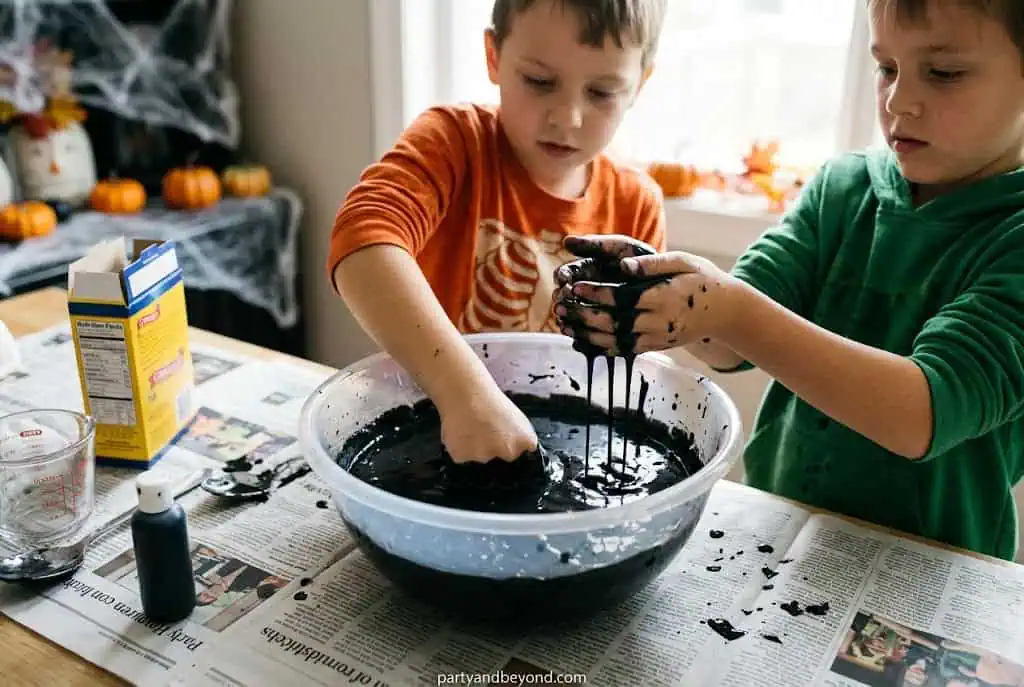
10. Black Halloween Oobleck
Costs $2, mesmerizes kids for 45 minutes. Underhyped on Pinterest, unbeatable in real life.
- Materials & cost: 2 cups cornstarch, 1 cup water, black food coloring. Total: $4
- How to do it: Mix cornstarch and water slowly. Add black food coloring. Punch it hard — feels solid. Let it rest — drips through fingers.
- The science: A non-Newtonian fluid. Pressure activates the suspended starch into a near-solid; release lets it flow like liquid.
- Best for: Sensory play, ages 4–10
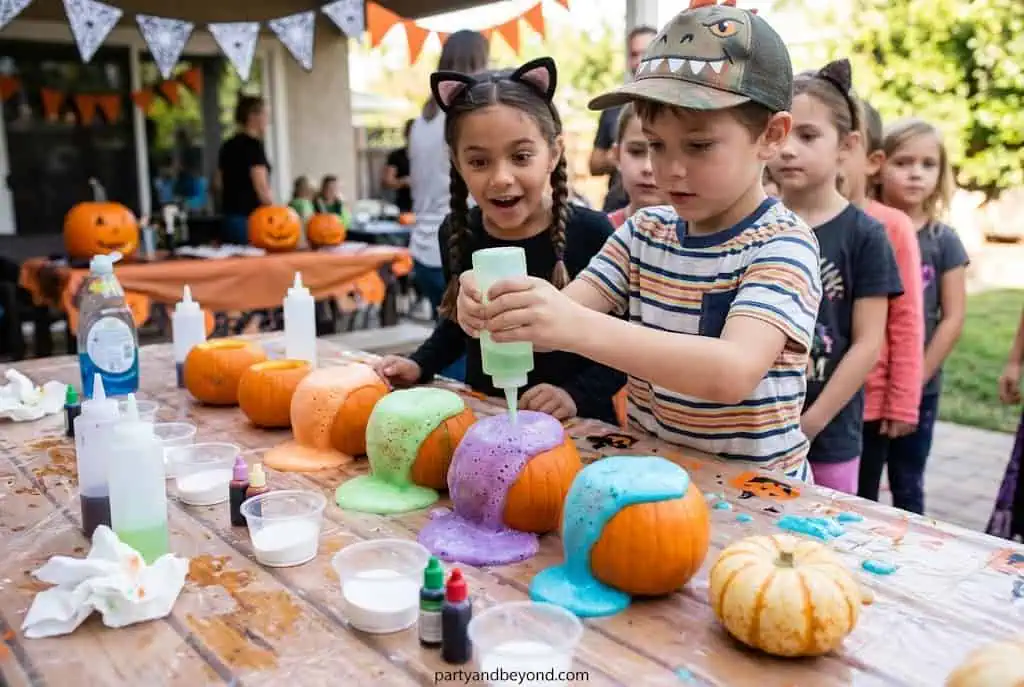
11. Mini Pumpkin Volcano Station
Emma swears by this trick — she set up six mini pumpkins in a row at her son’s 7th birthday and had every kid do their own. The line at that table didn’t break for 40 minutes.
- Materials & cost: 6–10 mini pumpkins ($1–$2 each at grocery), baking soda, vinegar in squeeze bottles, food coloring, dish soap. Total: $15 for 6 stations
- How to do it: Hollow out tops of mini pumpkins. Pre-fill each with 2 tbsp baking soda, drop of dish soap, and food coloring. At party time, each kid pours their own vinegar.
- Pro tip: Pre-portion vinegar into squeeze bottles and baking soda into solo cups before guests arrive. You’ll thank yourself.
- Best for: Halloween party stations, ages 4–10
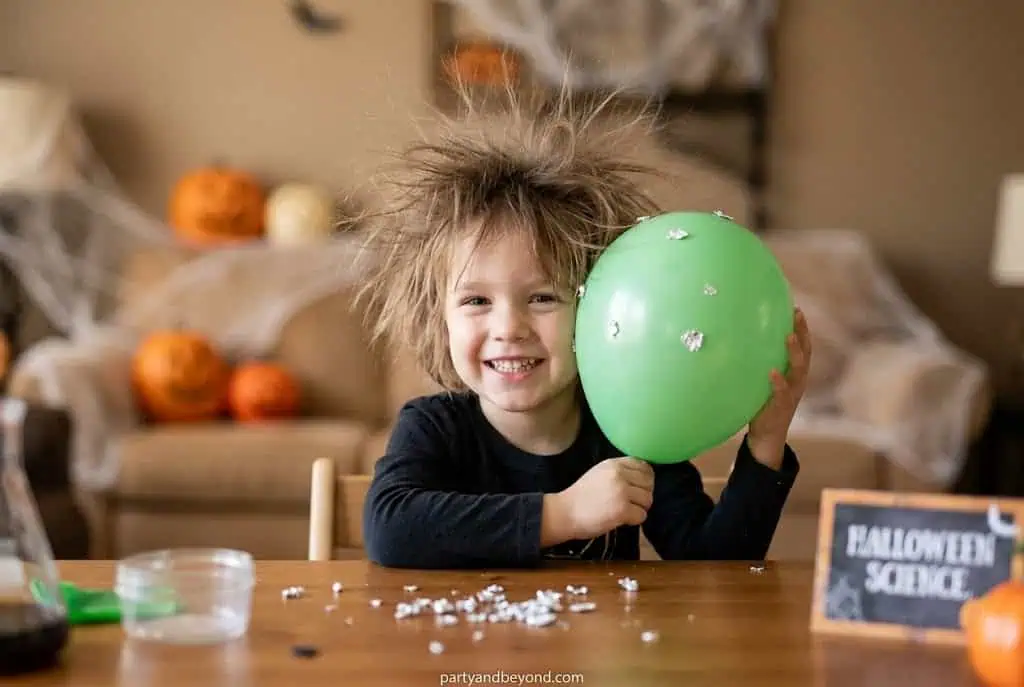
12. Frankenstein Static Hair
- Materials & cost: Inflated balloon, dry hair, tiny aluminum foil bits. Total: $1
- How to do it: Rub balloon on hair. Watch hair stand up. Hold balloon above foil pieces — they jump up to meet it.
- Best for: Ages 3–7, lightning-fast win
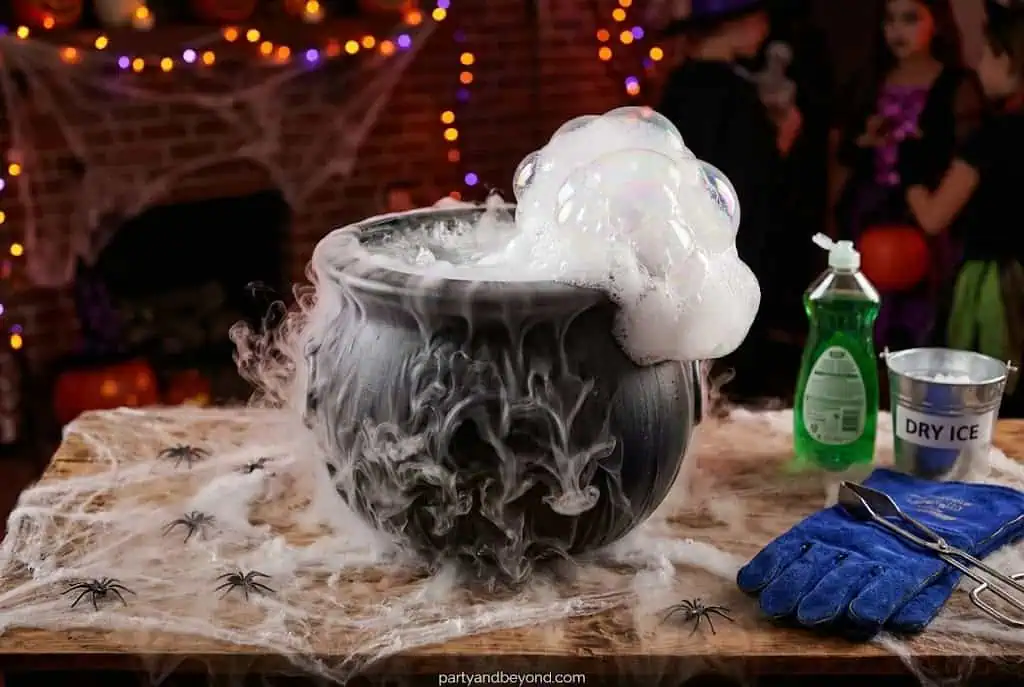
13. Dry Ice Witch’s Cauldron (Adult-Led)
I attended a neighborhood Halloween party where the host did dry ice in a plastic cauldron without warning the parents. One kid grabbed a piece. Burn city. Now I always announce dry ice loudly and station myself next to it.
- Materials & cost: Dry ice from grocery store ($1–$2/lb), warm water, dish soap, plastic or metal cauldron, gloves. Total: $10–$15
- How to do it: Wearing gloves, drop dry ice into warm water. Add dish soap for billowing foam clouds.
- The science: Dry ice (solid CO₂) sublimates directly to gas at room temp, creating fog. Soap traps the fog in bubbles.
- ⚠️ Safety: Never touch dry ice with bare hands. Adults only handle. Use in ventilated areas.
- Best for: Party centerpiece, ages 6+ with supervision
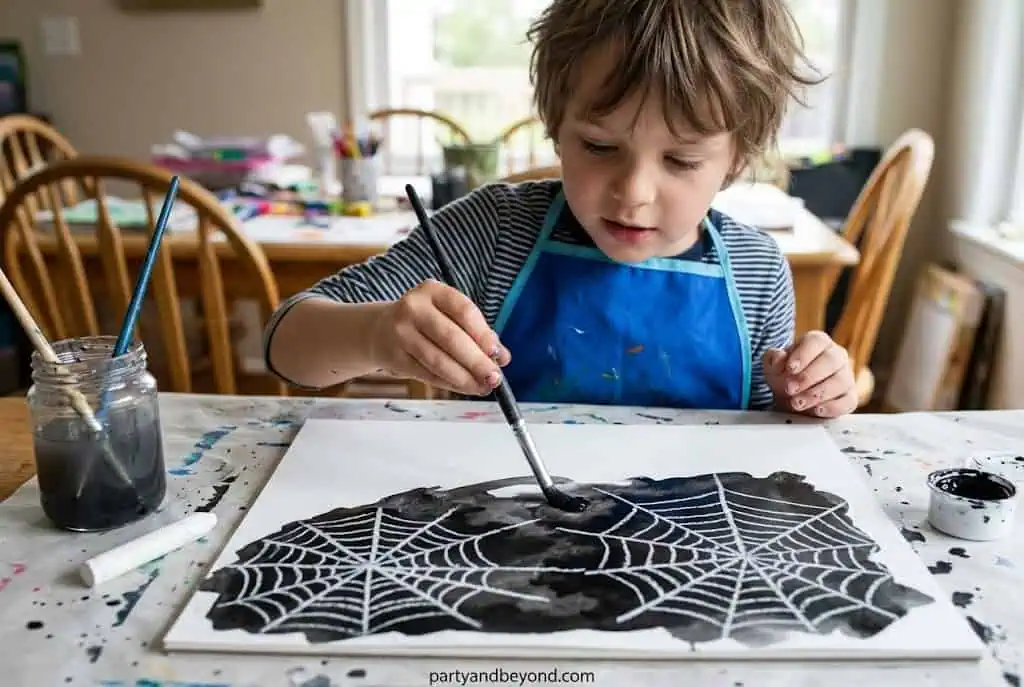
14. Spider Web Wax Resist Art
- Materials & cost: White crayon, watercolor paper, black watercolor paint. Total: $5
- How to do it: Kids draw spider webs with white crayon on white paper (invisible). Paint over with black watercolor — webs appear in white.
- The science: Wax repels water, so paint can’t stick to the crayon lines.
- Best for: Ages 4–10
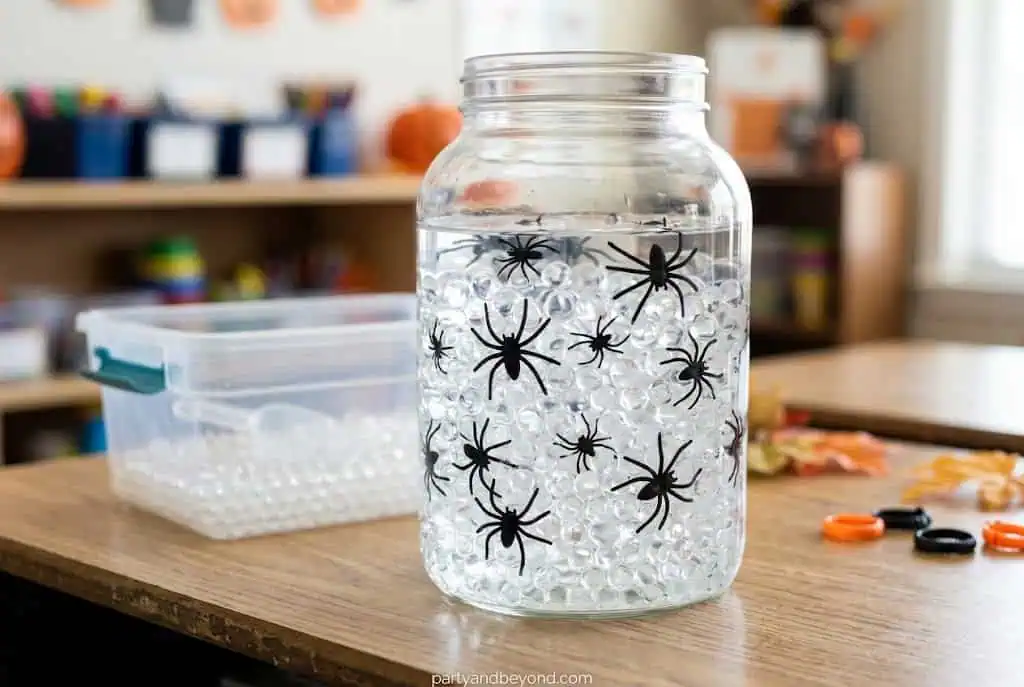
15. Floating Spider Eggs
Hauntingly weird sensory bin.
- Materials & cost: Clear water beads ($1.25 Dollar Tree), large glass jar, plastic spiders. Total: $8
- How to do it: Soak water beads in water for 6–8 hours. Add to clear jar with spiders. The beads become nearly invisible — spiders look suspended.
- The science: Water beads have the same refractive index as water when fully hydrated, making them disappear.
- Best for: Ages 5–10, sensory station
16. Halloween Density Tower
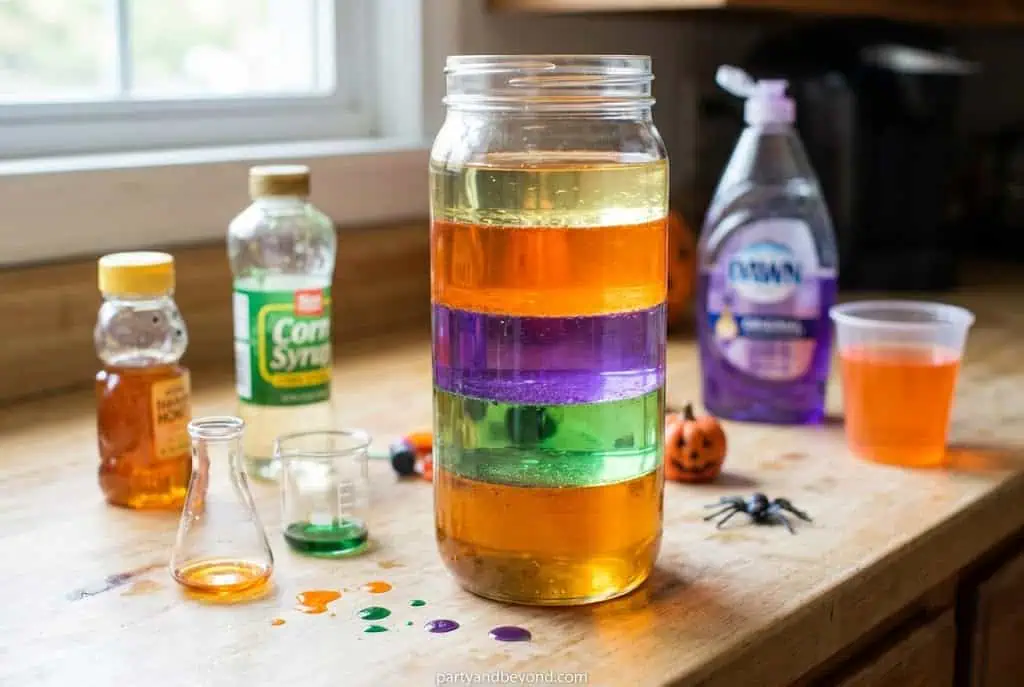
- Materials & cost: Honey, corn syrup, dish soap, water, vegetable oil, food coloring (orange + green + purple), tall glass jar. Total: $8
- How to do it: Layer slowly in order — honey, corn syrup (green), dish soap (purple), water (orange), oil. Each floats on the denser layer below.
- The science: Liquids of different densities stack without mixing.
- Best for: Ages 8–12
17. Exploding Ghost Canisters
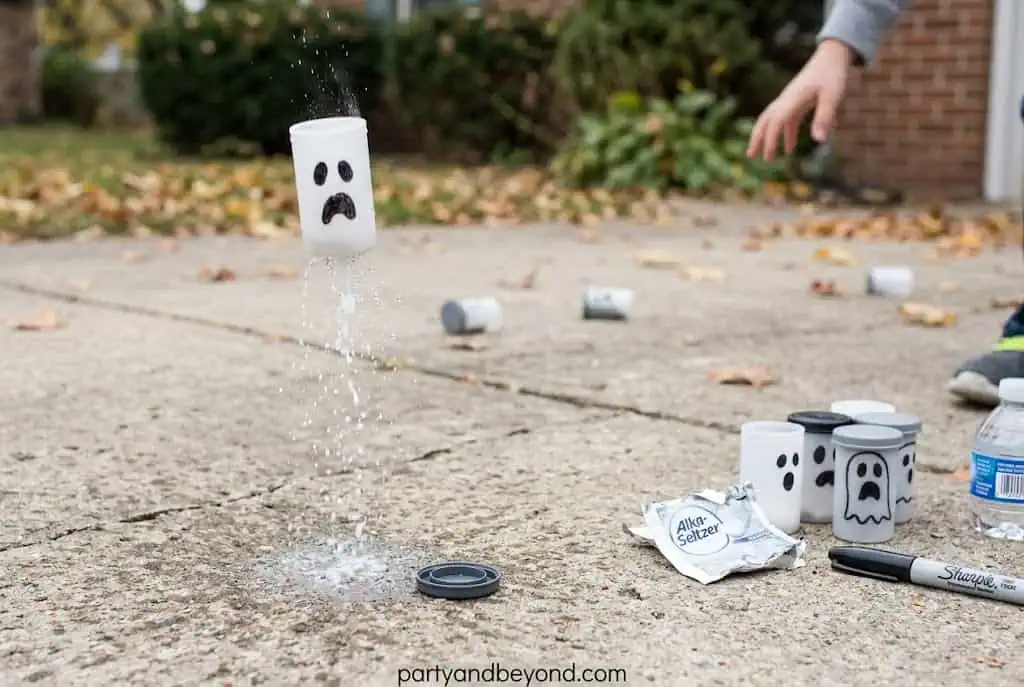
- Materials & cost: Empty film canisters or small vitamin bottles with snap lids, water, Alka-Seltzer, white tape + black sharpie for ghost faces. Total: $5
- How to do it: Decorate canisters as ghosts. Outside: fill ⅓ with water, drop in Alka-Seltzer, snap lid on, place upside down, step back. POP — ghost launches.
- Pro tip: Always do this outside or in a bathtub. I learned this the loud way.
- Best for: Outdoor only, ages 5–10
18. Pumpkin Guts Slime
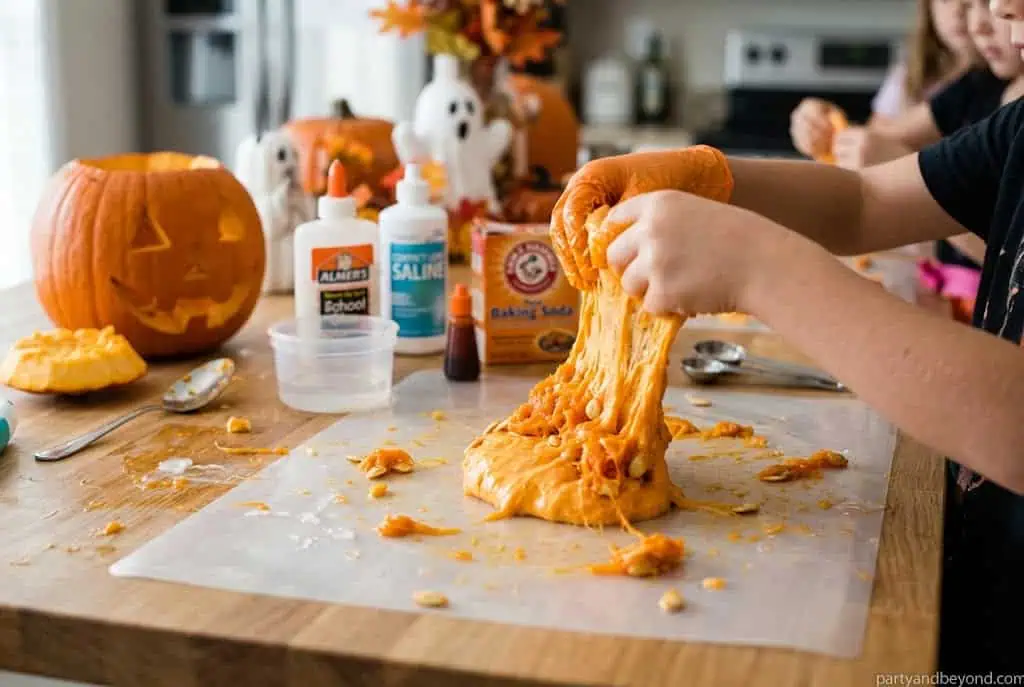
At my niece’s birthday last October, we carved pumpkins and then turned the guts straight into slime. She still talks about it. It’s the cheapest activity I’ve ever pulled off — the main ingredient was already going in the trash.
- Materials & cost: Pumpkin pulp from carving (free), clear glue, saline solution, baking soda, orange food coloring. Total: $8
- How to do it: Strain pumpkin guts. Mix with ½ cup glue, ½ tsp baking soda, orange coloring. Add saline 1 tbsp at a time until slimy.
- Best for: Post-carving activity, ages 6–12
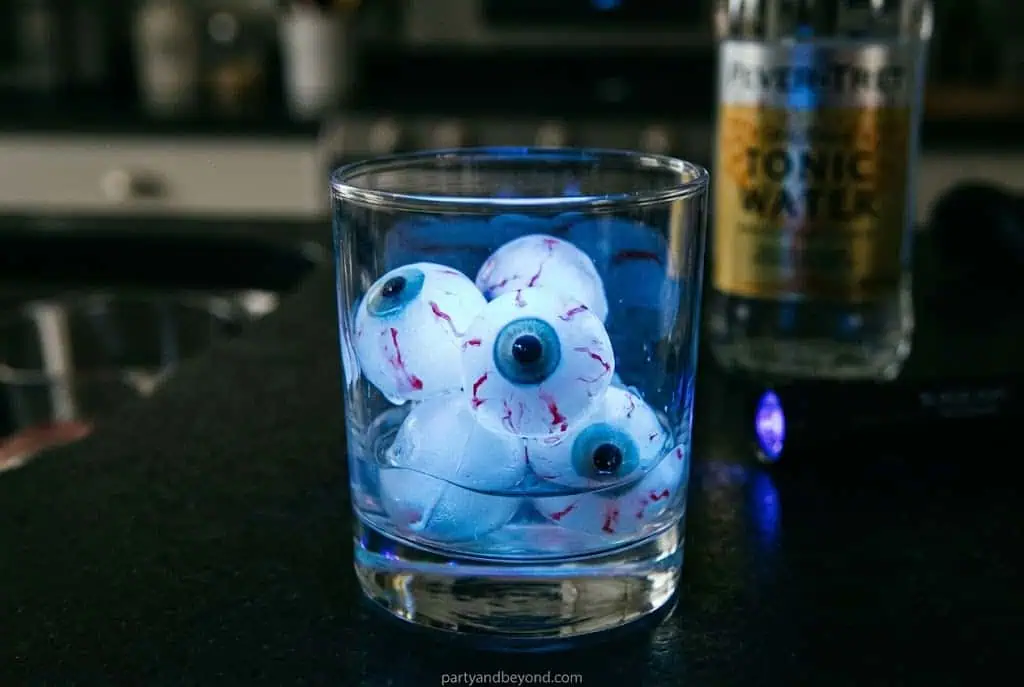
19. Glowing Tonic Water Eyeball Ice
- Materials & cost: Tonic water, spherical ice mold or small balloons, , red food coloring. Total: $12
- How to do it: Freeze tonic water in eyeball-shaped ice molds with a drop of red food coloring. Display in clear glasses under a blacklight at the party.
- The science: Quinine in tonic water fluoresces blue-white under UV light.
- Best for: Ages 6+, party drink station
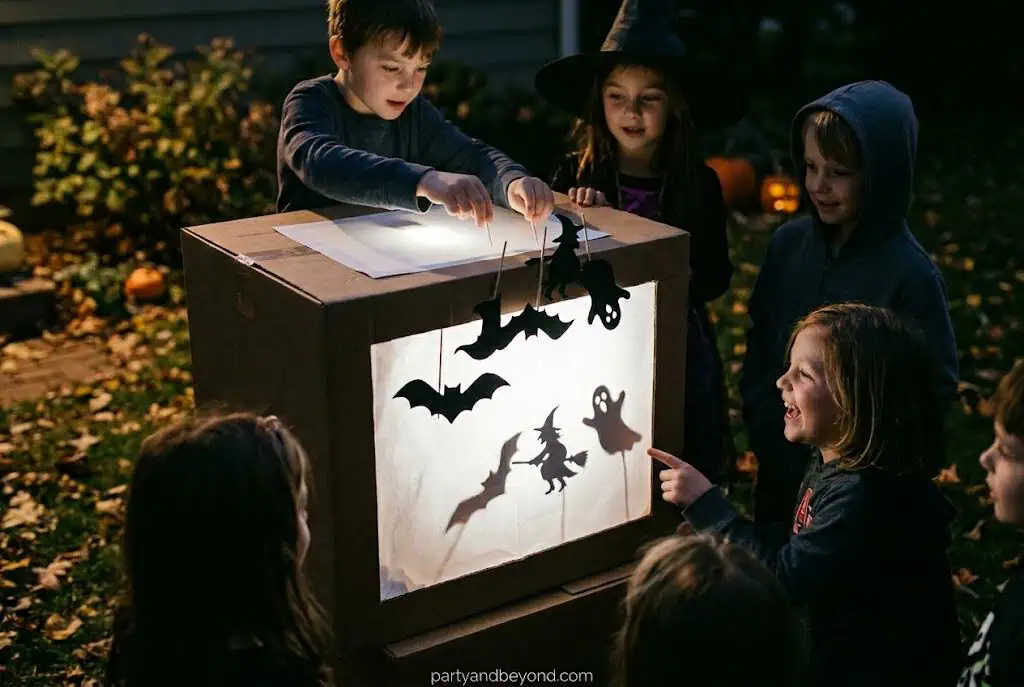
20. Spooky Shadow Theater
The first time I tried this in my own backyard, the kids ditched the script I wrote and made up their own monster story. 9 times out of 10, kids will surprise you with what they invent.
- Materials & cost: Cardboard box, white tissue paper, flashlight, black cardstock cutouts (bats, ghosts, witches), sticks. Total: $3
- How to do it: Cut a rectangle in the cardboard. Tape tissue paper across as a screen. Shine flashlight from behind. Kids move cutouts between light and screen.
- The science: Light blocked by opaque objects creates shadows. The closer to the light, the bigger the shadow.
- Best for: Ages 4–10, low-stim activity
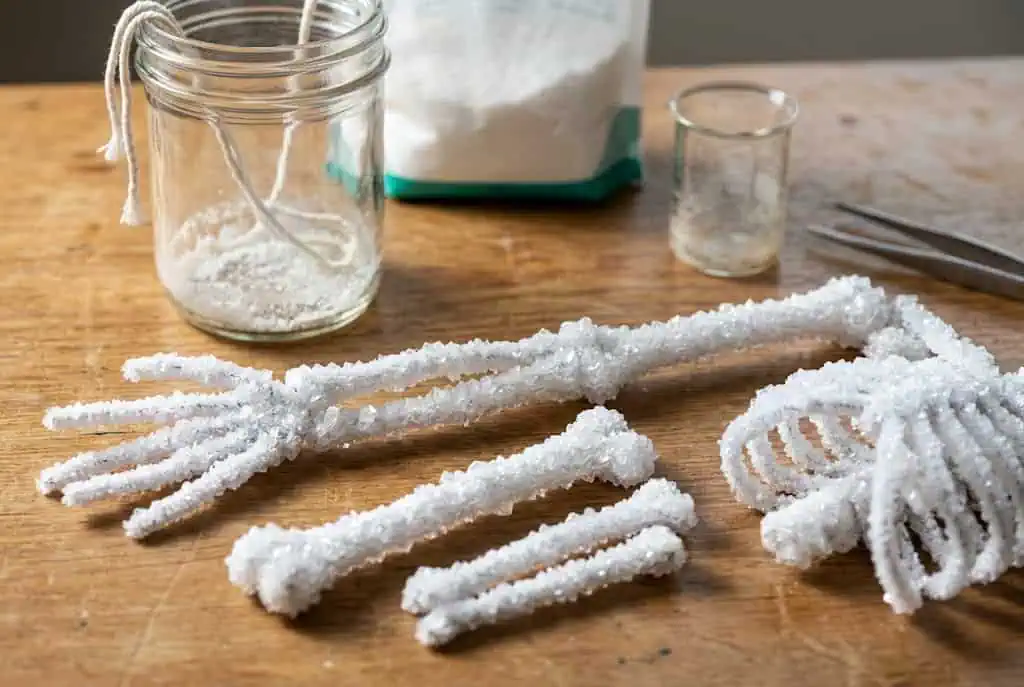
21. Crystal Skeleton Bones
The patient kid’s reward.
- Materials & cost: White pipe cleaners shaped like bones, borax, boiling water, wide-mouth jar, string. Total: $6
- How to do it: Shape pipe cleaners into bones. Suspend in jar by string. Mix 3 tbsp borax per cup of boiling water — pour over bones. Leave overnight. Morning: crystal-covered bones.
- ⚠️ Safety: Adult handles boiling water and borax mixing. Kids can shape pipe cleaners and observe the result.
- Best for: Ages 8+, overnight project
What’s the Cheapest Halloween science experiments for kids ?
Hands down — the dancing tissue paper ghosts. Two dollars, ten minutes, and the science behind it (static electricity) is exactly the kind of “Wait, what?” moment that kids replay for weeks. Runner-up: the Frankenstein static hair experiment, which costs literally a dollar if you already have a balloon lying around. According to NRF (2025), 51% of Halloween celebrators decorate their homes — but the cheapest decoration of all is a kid’s wide-eyed amazement at a bouncing ghost.
How Do You Set Up a Halloween science experiments for kids Station?
Done right, a science party flows like a rotation — six stations, 10 minutes each, timer on your phone. Done wrong, eight kids swarm one table and someone cries. Here’s the formula that worked for Emma:
- Stations: 4–6, depending on guest count (1 per 2 kids)
- Setup per station: A baking sheet or tray (for mess), pre-portioned supplies in cups, a printed instruction card with a kid-friendly explanation
- Rotation timer: 10 minutes per station, with a 2-minute reset between
- Adult coverage: 1 adult per 6 kids minimum; more for dry ice or borax stations
- Cleanup buckets: Empty plastic bins at every station for trash
Common Mistakes to Avoid
The mistake most hosts make is trying every experiment in one afternoon. Pick 4–6 max, test them before kids arrive, and have a backup if something fizzles.
- Buying expensive kits instead of pantry staples
- Skipping the trays — mess goes everywhere
- Letting kids handle borax, dry ice, or boiling water unsupervised
- Doing static experiments on humid nights (they bomb)
- Forgetting to wear old clothes — food coloring stains everything
- Not pre-portioning supplies for party stations (chaos)
💡 Pro Tip: Test Every Halloween science experiments for kids24 Hours Ahead
I tested this at three parties — when you test an Halloween science experiments for kids the day before, you catch the variables nobody warns you about. Glow powder that’s too weak. Tonic water that doesn’t fluoresce enough. Vinegar concentration that’s off. Twenty minutes of testing saves 20 minutes of disappointed kids.
People Also Ask
Are Halloween science experiments for kids safe for preschoolers? Most are, with adult supervision. Skip dry ice, borax crystals, and exploding canisters for ages 4 and under. Stick to oobleck, lava lamps, dancing ghosts, and erupting pumpkins — all use food-safe pantry ingredients.
How do you make a witch’s brew with dry ice? Place 1–2 lbs of dry ice in a cauldron of warm water, wearing gloves. The dry ice sublimates into thick CO₂ fog. Add a squirt of dish soap to create cascading bubble clouds. Always supervise — never let kids touch dry ice directly.
What’s the science behind the bleeding paper towel Halloween science experiments for kids ? It’s chromatography. Black washable marker ink is made of multiple pigments. When water travels up the paper towel through capillary action, it carries the pigments at different speeds, separating them into purple, pink, and blue.
Can I do Halloween science experiments for kids in a classroom? Yes — best classroom picks are the color-changing potion, bleeding paper towel chromatography, and lava lamp. All are mess-controllable, work in 15–20 minutes, and teach a clear science concept that aligns with elementary curriculum.
What’s the easiest Halloween science experiments for kids for a 4-year-old? Black oobleck. Mix 2 cups cornstarch, 1 cup water, and black food coloring. It’s mess-tolerant, takes 5 minutes to prep, has no safety concerns, and entertains preschoolers for 30+ minutes.
🎉 Quick Summary
✅ Best for: Halloween parties, classrooms, rainy-day kids’ activities, ages 4–12 💰 Budget range: $2–$15 per experiment ⏱ Setup time: 5–45 minutes (most under 20) 🌟 Top pick: Erupting jack-o-lantern volcano — universal kid-pleaser 📌 Don’t skip: Pre-portion supplies and lay down trays — saves your sanity and your countertops
Frequently Asked Questions
1. What household items can I use for Halloween science experiments for kids ? Most experiments work with pantry staples: baking soda, vinegar, food coloring, cornstarch, vegetable oil, dish soap, lemon juice, and cabbage. Add cheap dollar store finds like balloons, glue, tissue paper, and pipe cleaners and you can do 15+ experiments for under $25 total.
2. How long do Halloween science experiments for kids take to set up? Most take 5–20 minutes of setup and 5–15 minutes of active play. The slowest are crystal skeleton bones (overnight) and rubber chicken bones (3 days). The fastest are static electricity tricks — under 2 minutes from start to “whoa.”
3. Are these experiments messy? Some are. Lava lamps, oobleck, and erupting pumpkins splatter. Always use baking sheets or trays underneath, wear old clothes or smocks, and set up outside when possible. Cleaner options: invisible ink, shadow theater, chromatography ghosts.
4. What’s the best Halloween science experiments for kids for a classroom? The color-changing magic potion using red cabbage juice. It teaches pH chemistry, costs $4 total, requires no flames or dangerous chemicals, and gives every kid a “wow” moment. The chromatography experiment is also classroom-friendly.
5. How do you make Halloween science experiments for kids slime at home? Mix ½ cup clear school glue with ½ tsp baking soda. Add food coloring or glow pigment. Stir in saline contact solution 1 tbsp at a time, stirring constantly, until the slime pulls away from the bowl. Knead until smooth — about 2 minutes.
6. Can I do Halloween science experiments at a kid’s party? Yes — and the station format works best. Set up 4–6 different experiments at separate tables, rotate kids every 10 minutes, and assign one adult per station. According to NRF (2025), 32% of Halloween celebrators throw or attend a party, and activity-based parties consistently outperform pure decoration setups.
7. How do you make invisible ink for Halloween? Mix equal parts lemon juice and water. Use a cotton swab to write messages on white paper. Let dry completely. Reveal the writing by gently heating with a hair dryer or holding near (not touching) a warm light bulb. The acid in lemon juice browns when heated.
8. What’s the cheapest Halloween science experiments for kids I can do? Dancing tissue paper ghosts. Total cost: about $2 for tissue paper and a balloon. Setup time: 5 minutes. Wow factor: surprisingly high — kids replay it for 20 minutes once they see the static effect work.
9. Are borax crystal Halloween science experiments for kids safe for kids? Borax is safe for kids to observe, but only adults should handle the boiling water and borax mixing. Once the solution cools and crystals form (8–12 hours), kids can safely touch and remove the crystallized bones. Always wash hands after handling.
10. Can preschoolers do Halloween science experiments for kids? Yes — with the right experiments. Best preschool picks: black oobleck, dancing ghosts, frankenstein static hair, erupting mini pumpkins, and bleeding paper towel chromatography. Skip anything with dry ice, borax, or projectile reactions for under-5s.
11. What’s the science behind static electricity ghosts? When you rub a balloon on hair or wool, electrons transfer from your hair to the balloon. The balloon becomes negatively charged. Neutral tissue paper ghosts get attracted to the negative charge through induction — temporarily polarizing and jumping toward the balloon.
12. How do you set up a Halloween science experiments for kids for 8 kids? Plan 4 stations with 2 kids per station. Rotate every 10 minutes for a 40-minute activity block. Pre-portion all supplies into individual cups. Have one adult supervising every two stations. Lay down trays everywhere. Build in 5 minutes of cleanup at the end.
13. What Halloween experiments work without baking soda? Plenty — chromatography ghosts, invisible lemon juice ink, density towers, oobleck, water bead spider eggs, wax resist art, shadow theater, static electricity tricks, and tonic water glow drinks all skip baking soda entirely.
14. Where can I buy Halloween science experiments for kids supplies cheaply? Dollar Tree for glue, balloons, food coloring, tissue paper, water beads, and pipe cleaners. Grocery store for baking soda, vinegar, cabbage, lemon juice, and cornstarch. Amazon for and . According to NRF (2025), 42% of Halloween shoppers choose discount stores first — that strategy applies perfectly to science supplies.
Read More : 21 Easy Halloween Crafts That Sell Like Crazy (2026 Edition)
21 Housewarming Party Favor Ideas
14 Birthday Decoration Ideas: Creative & Fun Party Decorations for 2026