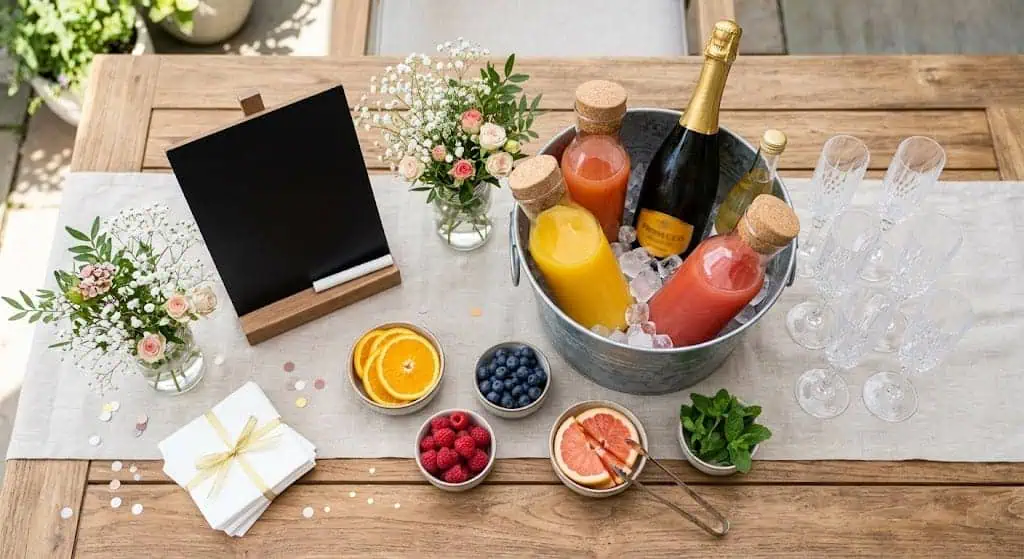
Quick Answer: For 12 guests, plan on 5–6 bottles of sparkling wine (each bottle pours about 6 mimosas), 3 juice options (orange, one citrus alternative like grapefruit, and one non-citrus like cranberry or peach), and a non-alcoholic “momosa” station with sparkling cider as the base. Budget $60–$90 for a casual setup or $120–$180 for an upgraded bridal-shower-style bar with fresh garnishes and signage.
Mimosa Bar Ideas
A mimosa bar reads like the most expensive thing on the brunch table, but it’s actually one of the cheapest centerpieces you can build. The trick is doing the quantities math ahead of time so you’re not running to the store mid-party, and leaning on styling over spending to make it look pulled-together.
How many bottles of champagne do I need for a mimosa bar?
One standard 750ml bottle of sparkling wine pours about six mimosas when mixed at a typical 2:1 or 1:1 ratio with juice. For planning purposes, figure 2–3 mimosas per guest over a two-hour brunch window — people tend to slow down after the first refill once food arrives.
| Guest count | Bottles of sparkling wine | Juice (total quarts) | Garnish needs |
|---|---|---|---|
| 6 guests | 3 bottles | 2 quarts | 1 small tray |
| 12 guests | 5–6 bottles | 3–4 quarts | 1 full tray |
| 20 guests | 9–10 bottles | 6 quarts | 2 trays |
| 30 guests | 14–15 bottles | 9 quarts | 3 trays |
Cheap, dry sparkling wine (Cava or Prosecco) is the better budget pick over Champagne — the sweetness of the juice covers most of the flavor nuance anyway, so there’s no reason to spend more here.
A few things shift the math slightly. If brunch runs longer than two hours, or if the group skews toward heavier drinkers, add one extra bottle per six guests as a buffer. On the other end, if food is served early and the bar opens later in the event, you can usually trim 10–15% off these numbers since fewer guests circle back for thirds. It’s also worth keeping one or two backup bottles unopened and out of sight — running out mid-party is more noticeable than having slightly too much left over.
What juices go in a mimosa bar besides orange?
Orange juice is the default, but a good bar offers at least two or three options so guests aren’t stuck with one flavor all morning. The most reliable lineup beyond orange:
- Grapefruit juice — tart contrast, pairs well with rosemary garnish
- Peach nectar — the classic “Bellini” swap, thicker texture so it needs a good stir
- Cranberry juice — best for fall/winter or holiday-themed bars
- Pineapple juice — sweeter, popular with younger crowds and tropical themes
Best for small groups (under 8): stick to two juices to avoid waste. Best for larger or themed parties (12+): three to four juices justifies the table space and gives guests a reason to come back for round two.
Buy juice, not concentrate-from-water mixes — the texture and color difference is noticeable in a mimosa, where the juice makes up half the glass. Refrigerated cartons in the juice aisle (not the shelf-stable boxed kind) hold their flavor and color better once mixed with sparkling wine. For peach nectar specifically, give it a good stir or a quick whisk before serving since it separates and settles at the bottom of the carafe.
If guests have dietary preferences to account for, it’s worth labeling which juices are 100% juice versus juice blends, since some pineapple and cranberry products are cut with apple or pear juice as filler. This matters less for taste than for guests managing sugar intake or specific allergies.
How do I set up a mimosa bar on a budget?
Most of what makes a mimosa bar look expensive is repetition and labeling, not the cost of the items themselves.
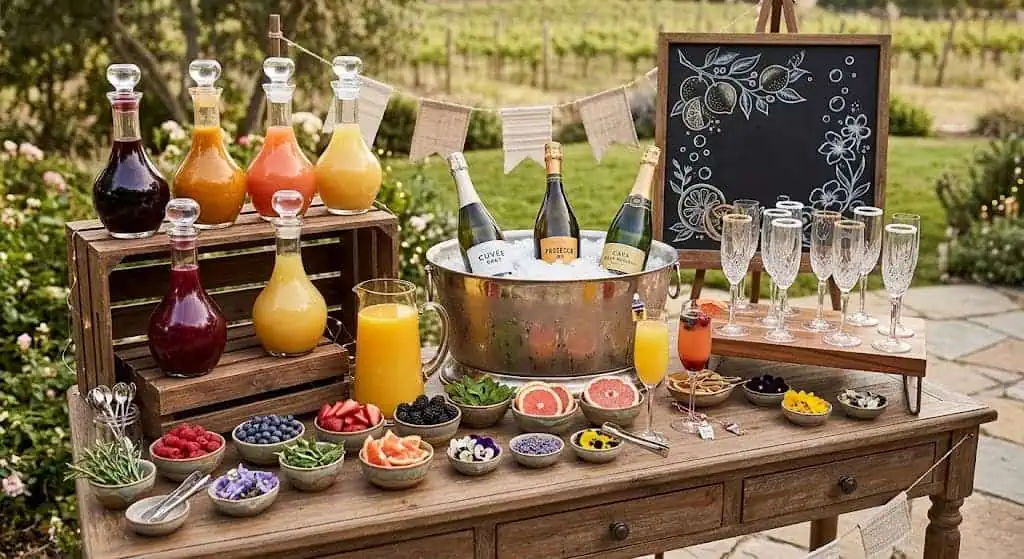
- Carafes: mismatched glass pitchers from a thrift store work better than buying matching ones — it reads as intentional, not cheap
- Ice bucket: a galvanized metal tub or even a large mixing bowl lined with a towel does the job for chilling bottles
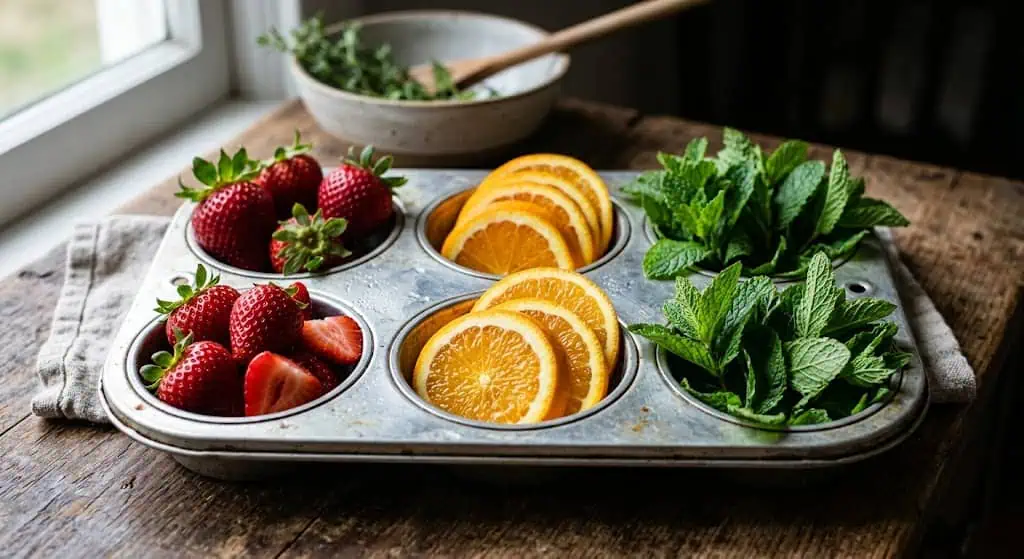
- Garnish tray: a muffin tin or ice cube tray makes an instant compartmentalized garnish station for berries and citrus wheels
- Glassware: champagne flutes aren’t required — stemless wine glasses or even mason jars keep the look casual and consistent
Sourcing carafes secondhand is the single biggest cost-saver on this list. Thrift stores and estate sales regularly carry glass pitchers and decanters for a fraction of retail price, and a slightly mismatched set actually photographs better than a uniform set bought new — it reads as collected rather than purchased for one event. If buying new is easier, a basic glass pitcher set from a kitchen retailer typically runs $15–$25 for two to three pieces, which covers a small bar.
For the backdrop, a plain tablecloth in a neutral color does more for the overall look than any single decorative item. Busy patterns compete with the carafes and garnish for attention, while a solid linen lets the colors of the juice and garnish stand out.
Garnish tray essentials
Keep the garnish selection to five or six items so the tray doesn’t look cluttered, and pick things that do double duty as a snack if left untouched:
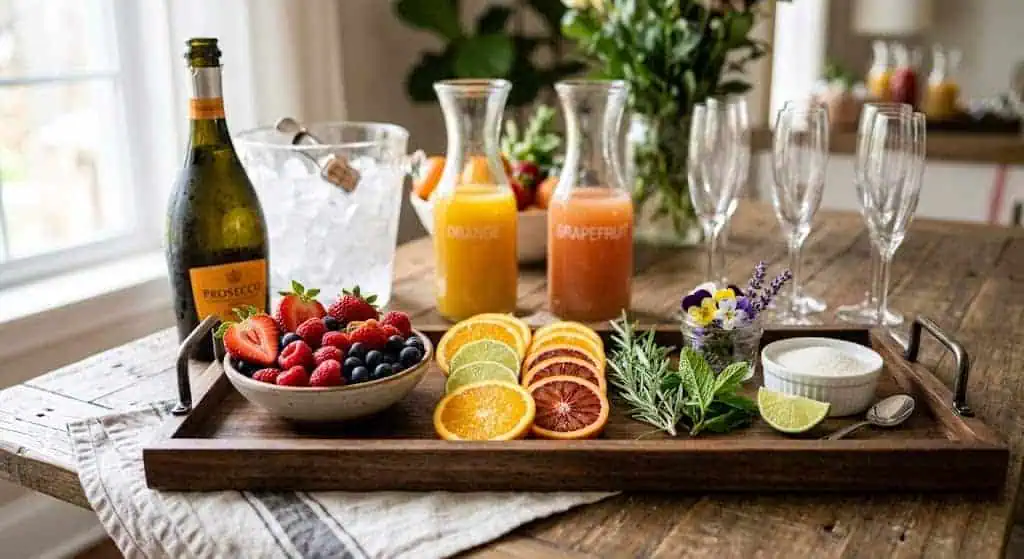
- Fresh berries — strawberries, raspberries, blueberries
- Citrus wheels — orange, lime, or blood orange for color
- Fresh herbs — rosemary sprigs or mint leaves
- Edible flowers (optional, for a bridal shower upgrade)
- Sugar rim option — a small dish of sugar with a lime wedge for rimming glasses
What’s a momosa and how do I make a non-alcoholic mimosa station?
A “momosa” station deserves the same setup quality as the alcoholic side, not an afterthought pitcher pushed to the corner. Swap sparkling wine for sparkling cider or non-alcoholic sparkling grape juice, and pair it with the same juice lineup so non-drinkers and pregnant guests get the full flavor selection.
Best for: pregnant guests, designated drivers, guests who don’t drink, and mixed-age gatherings where kids are present. Label this station as clearly as the alcohol side — a small sign that says “Momosas” next to the regular bar keeps things simple and avoids guests having to ask.
How do I label a mimosa bar?
Signage is the cheapest upgrade on this list. A few options that don’t require design skills:
- Small chalkboard easels for each juice carafe
- Printable tent cards (free templates are widely available online)
- Washi tape and a marker directly on glass carafes
- A single larger sign listing ratios for guests who want to mix their own (“2 parts juice, 1 part bubbly”)
Responsible hosting notes
A self-serve alcohol station works best with a few guardrails in place. Keep sparkling wine bottles within reach of one designated pourer rather than fully self-serve if the group skews larger, have water and food available alongside the bar, and make sure the non-alcoholic option is visibly equal — not hidden — so no one feels singled out for choosing it.
It also helps to set the bar up away from a direct path to exits or stairs, particularly for daytime events where guests may be driving later. A clearly marked end time for the bar — even something as simple as switching to coffee and water an hour before guests are expected to leave — keeps the event from drifting later than planned without anyone having to make it awkward.
Mimosa bar setup timeline: what to do and when
The difference between a bar that looks styled and one that looks thrown together is usually timing, not effort. Spreading the work across the night before and the morning of keeps the sparkling wine cold, the garnish fresh, and the host relaxed when guests arrive.
The night before:
- Wash and slice citrus wheels, store them flat between damp paper towels in an airtight container so they don’t dry at the edges
- Rinse berries but leave them whole and dry — cut or washed-and-wet berries soften overnight
- Chill all juice cartons and as many sparkling wine bottles as fit in the fridge; the rest go into the ice tub in the morning
- Print or write out your signage and set out the carafes, tray, and glassware so nothing gets hunted for at the last minute
The morning of (about 45 minutes before guests):
- Pour juices into carafes and return them to the fridge until the bar opens — pre-pouring saves fumbling with cartons mid-party
- Fill the ice tub and nestle the backup bottles in, leaving one or two out and ready
- Arrange the garnish tray last so herbs and berries look fresh rather than wilted
- Do not open any sparkling wine until the first guest is ready to pour — carbonation starts fading the moment a bottle is uncorked
The single most common timing mistake is opening bottles early “to be ready.” A mimosa made with flat sparkling wine is the one thing guests will actually notice, so it’s worth keeping bottles sealed until the moment of pouring.
Common mimosa bar mistakes to avoid
Most mimosa bar problems trace back to a handful of avoidable setup choices rather than the ingredients themselves:
- Opening sparkling wine too early. Flat bubbly is the number one complaint. Pour on demand, not in advance.
- Skipping the non-alcoholic option. A bar with no momosa station leaves pregnant guests, drivers, and non-drinkers with nothing — and it’s the easiest gap to close.
- Too many juices for the group size. Four juices for six guests means three half-used cartons and a cluttered table. Match juice count to headcount.
- Using concentrate or shelf-stable juice. The color and texture difference shows immediately in a glass that’s half juice.
- No labels. Unlabeled carafes force every guest to ask or guess, which slows the whole bar down. Signage is the cheapest fix on the entire setup.
- Warm ingredients. Room-temperature juice waters down the drink as ice melts and dulls the sparkle. Everything should go out cold.
Themed mimosa bar variations
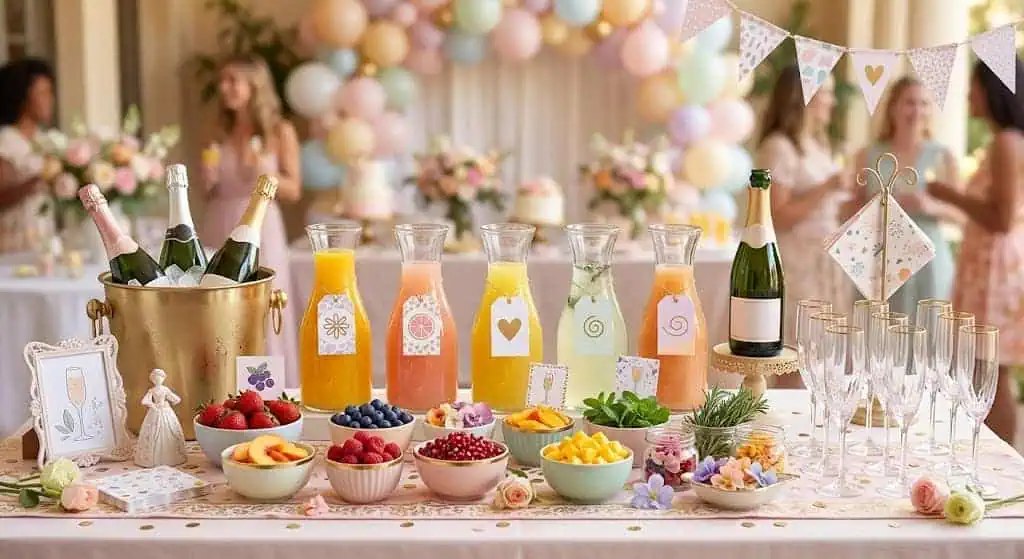
Bridal shower pastel bar
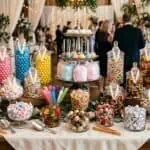
Best for: bridal showers, baby showers. Use pastel-colored juices (pink grapefruit, peach), white or blush linens, and edible flower garnish for a soft, photo-ready look.
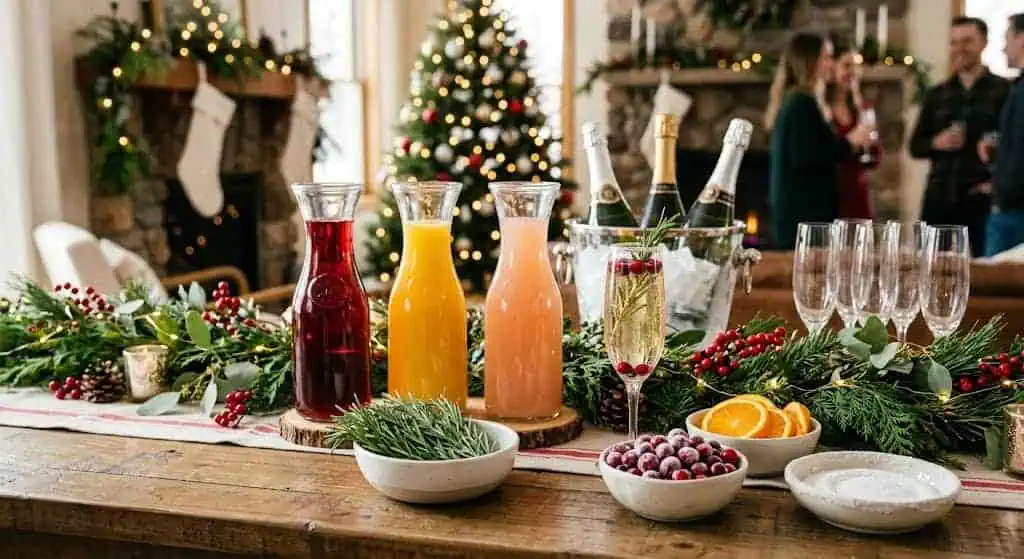
Holiday cranberry-rosemary bar
Best for: fall and winter brunches, holiday gatherings. Cranberry juice as the lead flavor, rosemary sprigs as garnish, and a cinnamon stick stirrer adds a seasonal touch without extra cost.
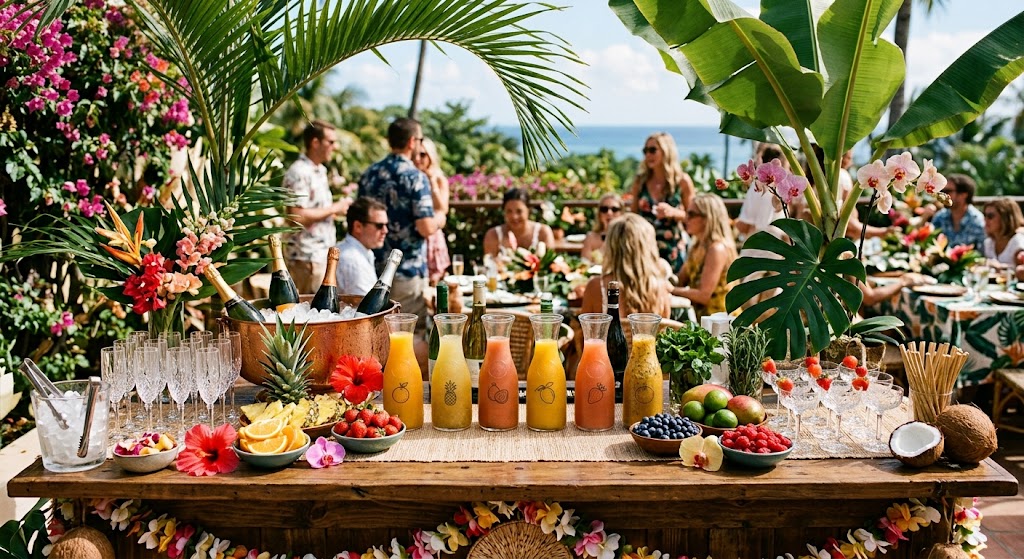
Tropical brunch bar
Best for: summer gatherings, birthday brunches, beach or pool-adjacent events. Pineapple and guava juice as the primary flavors, with a garnish tray of pineapple wedges, mint, and toasted coconut flakes. A simple bamboo or rattan tray underneath the carafes reinforces the theme without needing additional decor.
Mimosa bar cost breakdown by tier
Costs scale with how much of the styling is sourced new versus thrifted, and how many juice and garnish options are offered. The ranges below assume a 12-guest setup and a casual two-hour brunch window.
| Tier | What’s included | Estimated cost (12 guests) |
|---|---|---|
| Casual | 2 juices, basic sparkling wine, paper signage | $60–$90 |
| Upgraded | 3–4 juices, fresh garnish tray, printed signage, momosa station | $120–$180 |
| Themed/styled | Color-coordinated linens, edible flowers, custom signage, glassware rental | $200+ |
How do I keep a mimosa bar going for a longer event?
For brunches that stretch past the typical two-hour window — think bridal showers or holiday gatherings that drift into the afternoon — the goal is keeping the bar looking fresh without constant refilling. Set out juice in two smaller carafes per flavor rather than one large one, so you can swap in a cold backup while the first warms up rather than topping off a room-temperature carafe. Keep a second garnish tray prepped in the fridge and swap it out halfway through; a refreshed tray of berries and citrus resets the whole bar visually with almost no effort.
Rotate backup sparkling wine bottles from the fridge into the ice tub as you open them, so there’s always a properly chilled bottle ready. And as the event winds down, quietly transitioning the bar toward coffee, water, and any leftover juice gives guests a natural signal without an announcement — the momosa base doubles nicely as a non-alcoholic spritz for the tail end of the party.
In short: Plan one bottle of sparkling wine per six mimosas, offer at least two juice flavors beyond orange, give the non-alcoholic momosa station equal billing, and rely on labeling and garnish over expensive glassware to make the bar look styled. A 12-guest setup runs $60–$180 depending on how upgraded the styling is.
Frequently Asked Questions
How much champagne do I need for 10 people at a mimosa bar?
Plan on 4–5 bottles of sparkling wine for 10 guests, assuming 2–3 mimosas per person over a two-hour brunch.
What’s the best ratio of juice to champagne for a mimosa?
A 1:1 ratio is the classic mimosa, but 2 parts juice to 1 part sparkling wine works well for a milder, brunch-friendly pour that lasts longer per bottle.
Can I make a mimosa bar without champagne flutes?
Yes — stemless wine glasses, mason jars, or coupe glasses all work and often photograph better than traditional flutes for a casual setup.
What juice is best for a mimosa besides orange juice?
Grapefruit and peach nectar are the most popular alternatives, with cranberry and pineapple as good seasonal or themed swaps.
How far in advance can I set up a mimosa bar?
Juices and garnish can be prepped and refrigerated the night before. Keep sparkling wine bottles chilled but unopened until close to guest arrival to preserve carbonation.
What’s a momosa?
A momosa is a non-alcoholic mimosa made with sparkling cider or non-alcoholic sparkling grape juice in place of champagne.
How do I keep a mimosa bar cold without a lot of equipment?
A galvanized tub or large mixing bowl filled with ice works as well as a dedicated ice bucket for chilling bottles and juice carafes.
Is Prosecco or Champagne better for a mimosa bar?
Prosecco or Cava are better budget choices — they’re typically cheaper than Champagne, and the juice mix masks most flavor differences anyway.
How many garnish options should a mimosa bar have?
Five to six garnish options is the sweet spot — enough variety without making the tray look cluttered or going to waste.
What size group is a mimosa bar best suited for?
Mimosa bars work for groups as small as 6 and scale easily up to 30+; smaller groups should limit juice options to two to avoid waste, while larger groups benefit from three to four.
Do I need a designated pourer for a mimosa bar?
For groups over 15–20, having one person handle the sparkling wine pours (while juice stays self-serve) helps manage portions and reduces spills.
How do I make a mimosa bar look elevated without spending more?
Consistent labeling, a few fresh garnish items, and mismatched-but-coordinated glass carafes do more visual work than expensive glassware or florals.
People Also Ask
What do you need for a DIY mimosa bar?
Sparkling wine, two or more juices, carafes or pitchers, an ice bucket, garnish, glassware, and labeling — that’s the full setup.
How do you display juice for a mimosa bar?
Glass carafes or pitchers labeled with small signs or tags work best, ideally grouped together so guests can see all the options at once.
What is a good mimosa bar sign?
A simple sign listing the juice options and a basic mixing ratio (“2 parts juice, 1 part bubbly”) covers what guests need without extra design work.
Read More: 23 Picnic Party Ideas