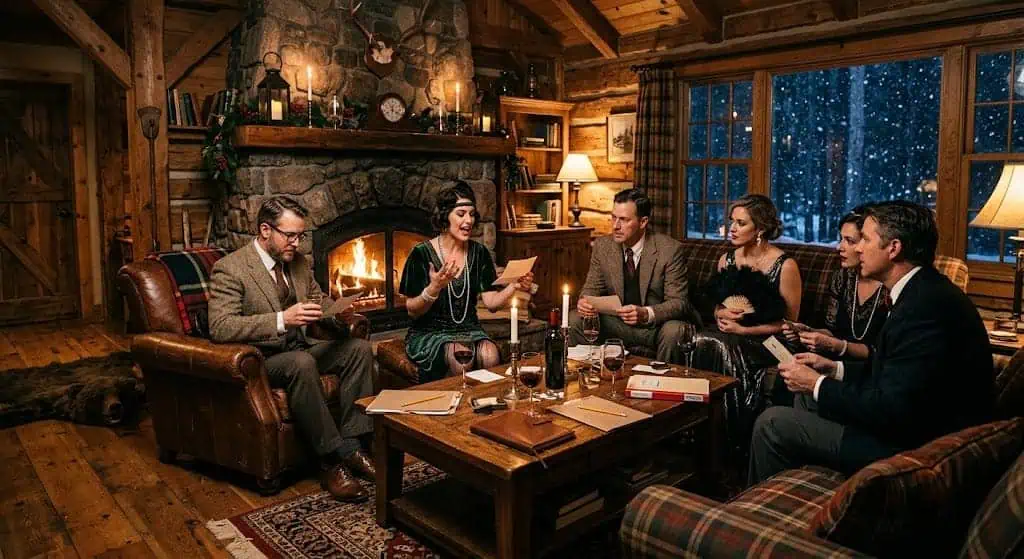
Quick answer: To host a murder mystery party, buy a kit sized to your group (printable kits run $10–$30, boxed kits $25–$45), assign characters by personality, send costume direction with the invite, and run the night on a set timeline. Most parties work best with 6–14 players and last about 2.5–3 hours from arrival to the final reveal.
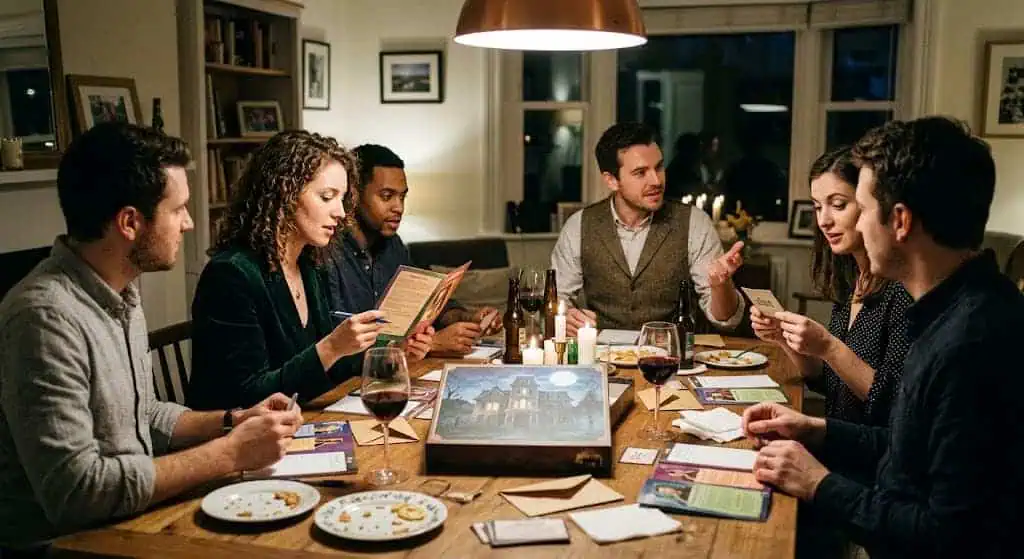
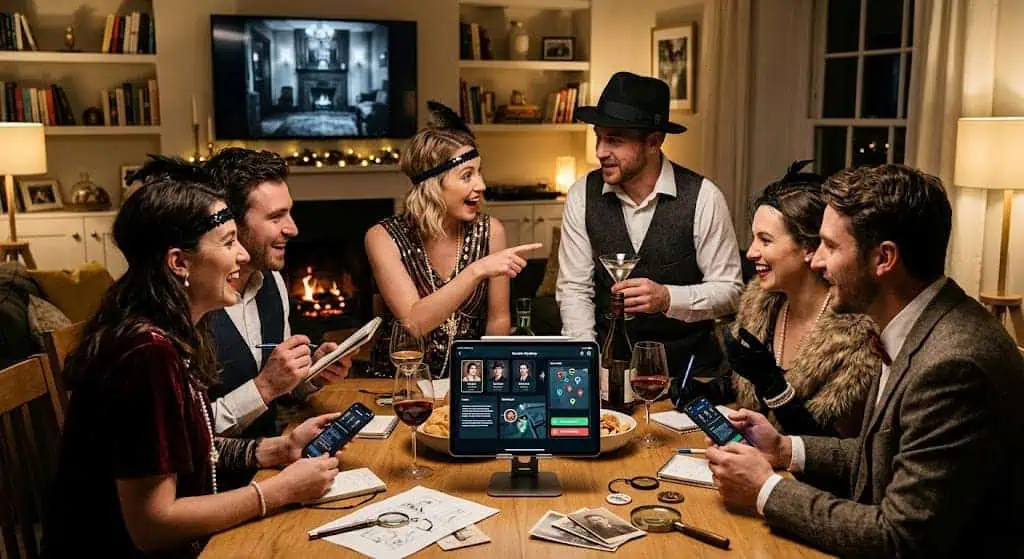
Picture this: fifteen of your friends crammed into your dining room, someone in a borrowed fedora is jabbing a finger at your neighbor and shouting “you were in the study at nine o’clock!” — and the “victim” is sprawled across your couch, refusing to break character even to grab another drink. That’s a murder mystery party. And honestly? It’s one of the best-value nights you can throw at home, because the entertainment isn’t something you buy — it’s something your guests generate the second they walk in.
If you’ve been hunting for murder mystery party ideas because you want a night that’s more interactive than everyone politely orbiting a charcuterie board, you’re in the right place. I’ve hosted enough of these to have opinions, and here’s the one I’ll die on: a great murder mystery party has almost nothing to do with fancy props or a big budget. It comes down to three things — picking the right format for your specific group, sending clear costume direction ahead of time, and running the evening with a steady hand so the mystery unfolds instead of collapsing in the first twenty minutes.
I’m going to walk you through all of it: the kit options and what each one really costs you (in dollars and hours), eight theme settings, how to hand out characters without terrifying your shy friends, and the exact timeline that keeps a room full of amateur detectives locked in for three hours.
What is a murder mystery party, exactly?
A murder mystery party is a hosted game where each guest plays a character with a secret, one of them is quietly the murderer, and everyone works through rounds of clues over dinner to figure out whodunit. It is a structured, script-guided evening. It isn’t improv theater — and this is the thing that talks nervous people off the ledge every time. Nobody has to be a good actor. The game does the heavy lifting. Your quietest friend can read a card that says “you owed the victim money” and boom, they’re a suspect. Your job as host is logistics and pacing, not performance.
Which murder mystery kit format should you use?
The decision that quietly determines how much you’ll enjoy your own party is how you’ll run the game — settle it before themes, before decor, before you’ve pinned a single flapper dress. There are four real routes, and every one trades money against your time.
1: Boxed physical kit
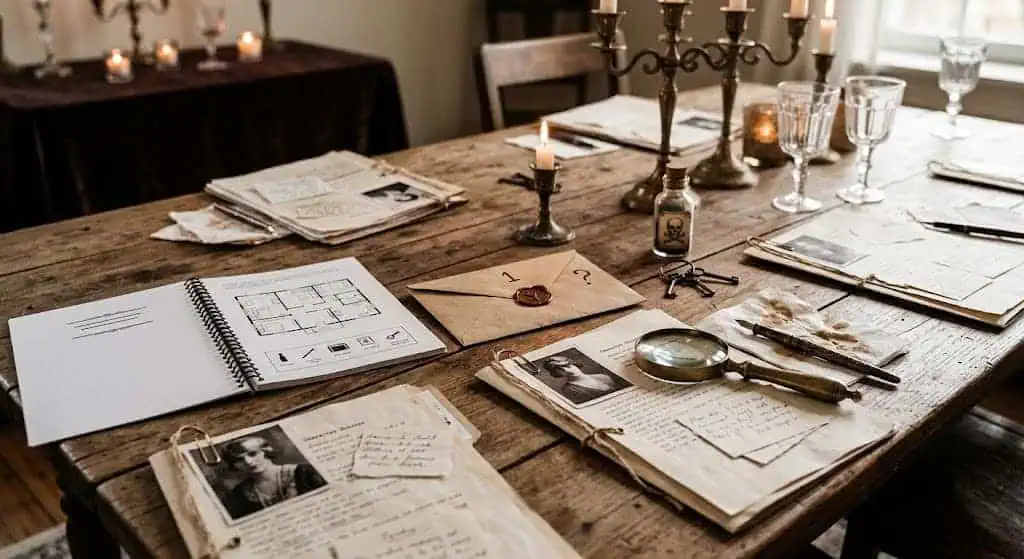
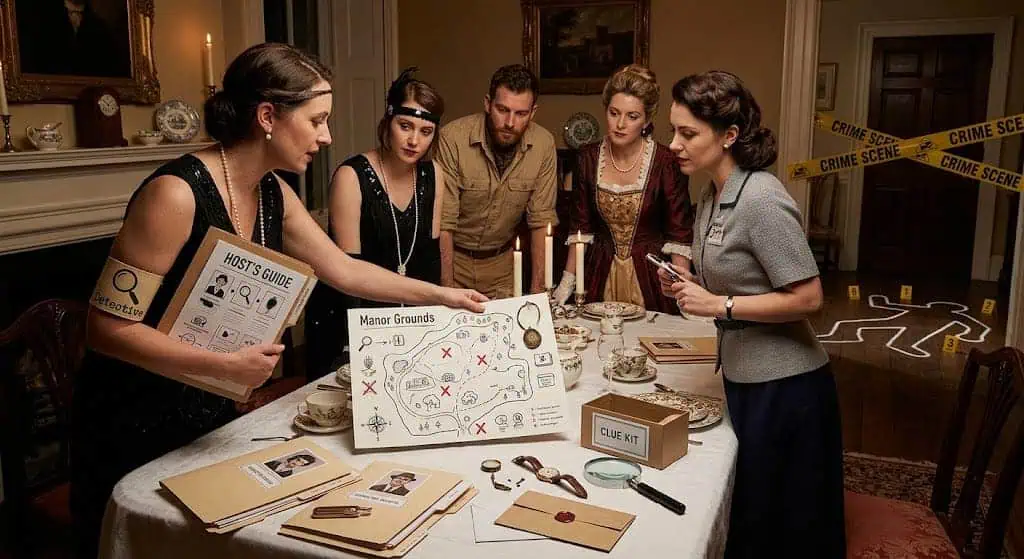
A boxed kit ships you pre-printed character booklets, invitations, name tags, and a host guide. Cost runs about $25–$45, and prep is maybe 30 minutes of actually reading the host instructions (please read them). This is what I steer every first-timer toward, no hesitation. Best for: nervous first-time hosts, groups of 6–8.
2: Printable / download kit
A printable kit is a PDF you buy and print at home. Cheaper on paper — around $10–$30 — but you’re paying with your evening instead of your wallet: budget 1–2 hours of printing, cutting, and stuffing envelopes. Done right, the flexibility is the payoff, since a lot of printables scale their character counts up and down. Done wrong, it’s you at 11pm the night before with a jammed printer and a paper cut. Best for: budget hosts and flexible guest counts.
3: DIY-your-own mystery
Writing your own is the black-diamond run. Materials cost almost nothing — $0–$15 for paper and a couple of props — but the real price is time: plan for 8–15 hours to build characters, motives, and a clue trail that actually holds together when your sharpest friend starts poking at it. I only send people down this path if they’ve hosted a few already and want total control, or their group is some odd size that no kit serves. Best for: repeat hosts and unusual group sizes.
4: App / streaming-based
App-guided games run the whole night from everyone’s phones — no printing, no cutting. Around $15–$30, and it’s the lowest-effort route by a mile. Great for casual crowds. My one honest caveat: dress-up-heavy groups sometimes miss the tactile booklets and name tags, because half the fun for those people is holding their character’s secret in their hands. Best for: casual groups and mixed tech comfort.
5: Kit format comparison
Kit type
Cost
Prep time
Player flexibility
Best for
Boxed physical
$25–$45
~30 min
Fixed count
First-timers, 6–8 players
Printable / PDF
$10–$30
1–2 hrs
Often scalable
Budget hosts, flexible counts
DIY-your-own
$0–$15
8–15 hrs
Fully custom
Repeat hosts, odd group sizes
App / streaming
$15–$30
Minimal
Varies by app
Casual, low-effort nights
Pro tip: Match the kit to your player count before you fall in love with a theme. Nine times out of ten, the party that goes sideways is the one where a host bought an 8-player kit, then had 12 people say yes and spent the week frantically inventing two extra suspects. Count your firm yeses first. Then shop.
8 murder mystery party themes worth stealing
The theme quietly does three jobs at once: it sets your dress code, your menu, and your playlist. Pick well and half your planning is done for you. Here are eight that consistently land, with rough decor budgets so you know what you’re signing up for.
6: 1920s speakeasy
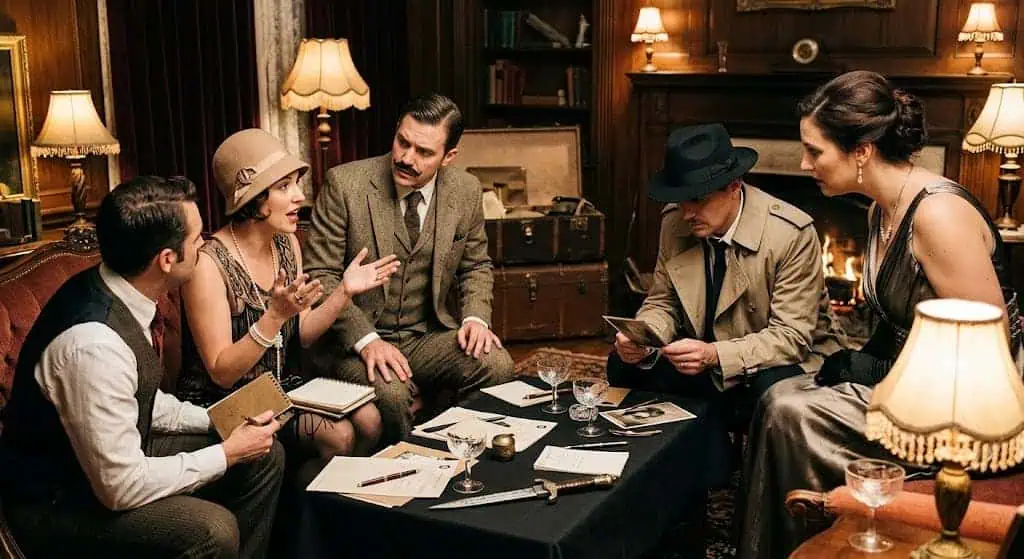
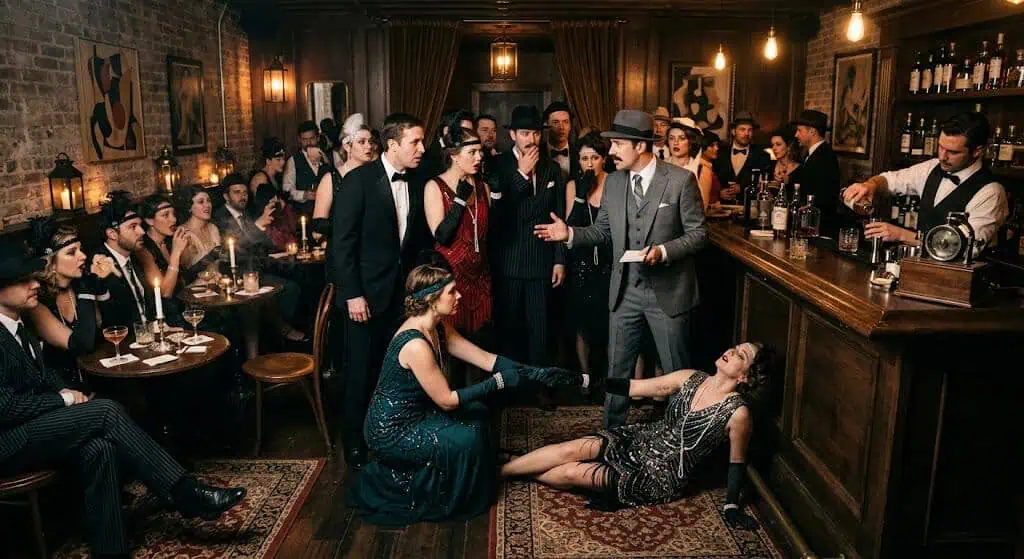
Flappers, suspenders, a low jazz playlist, and a “password at the door” bit that gets people in character before they’ve even taken their coats off. Decor runs $30–$60 — feather boas, faux pearls, string lights, and a hand-lettered “password required” sign. The most reliable crowd-pleaser on this list. Best for: adults who love an excuse to dress up.
7: Dinner train
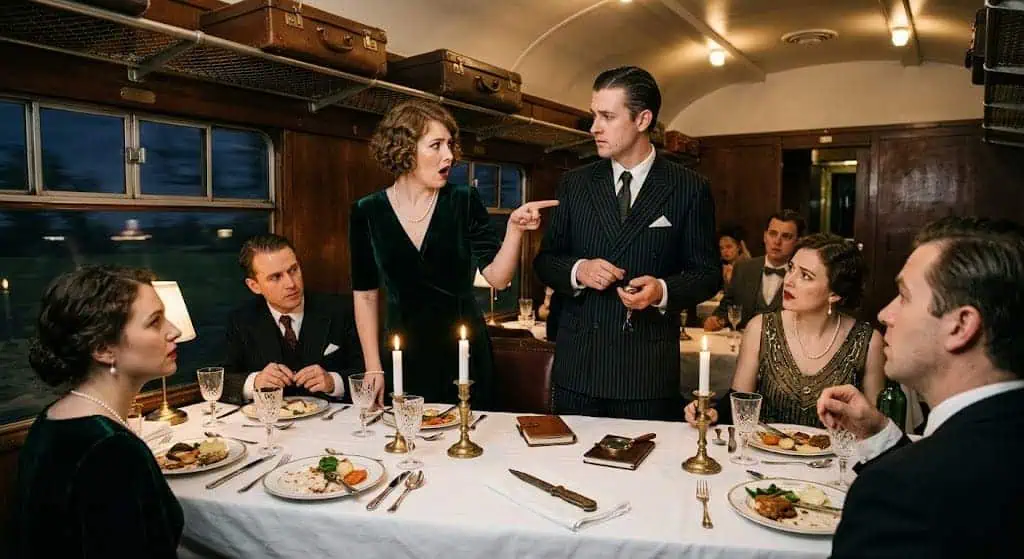
An elegant railcar, a coursed sit-down meal, and passengers who all have something to hide. Decor stays cheap ($25–$50) because the drama lives in the seating chart and the courses, not the props. Best for: 10–14 guests who actually want a real dinner.
8: Masquerade ball
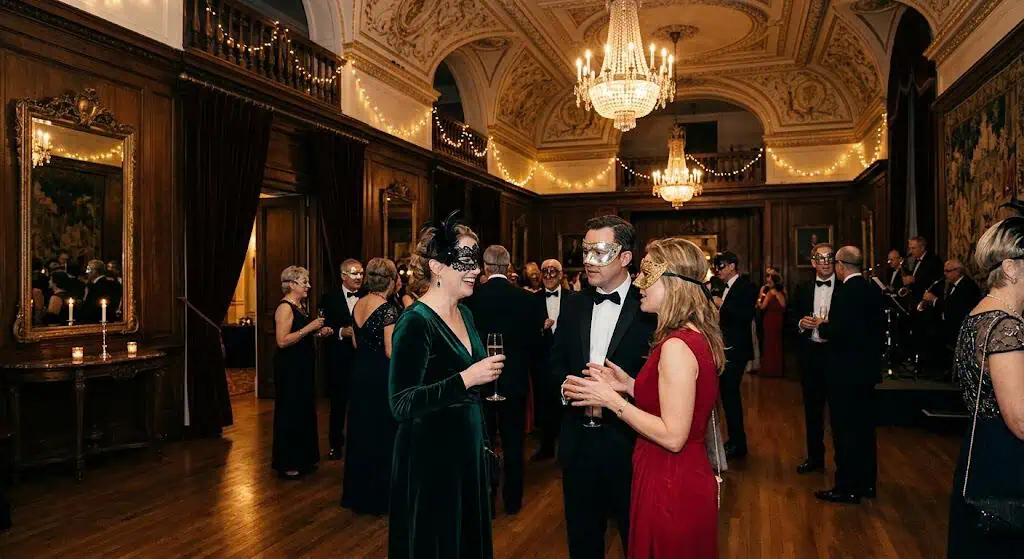
Masks hide identity and — this is the underrated part — make shy people dramatically braver. Decor ($20–$45) leans on masks, candles, and dark linens. Because the masks lower the social stakes, this format scales better than almost any other. Best for: large groups of 16+.
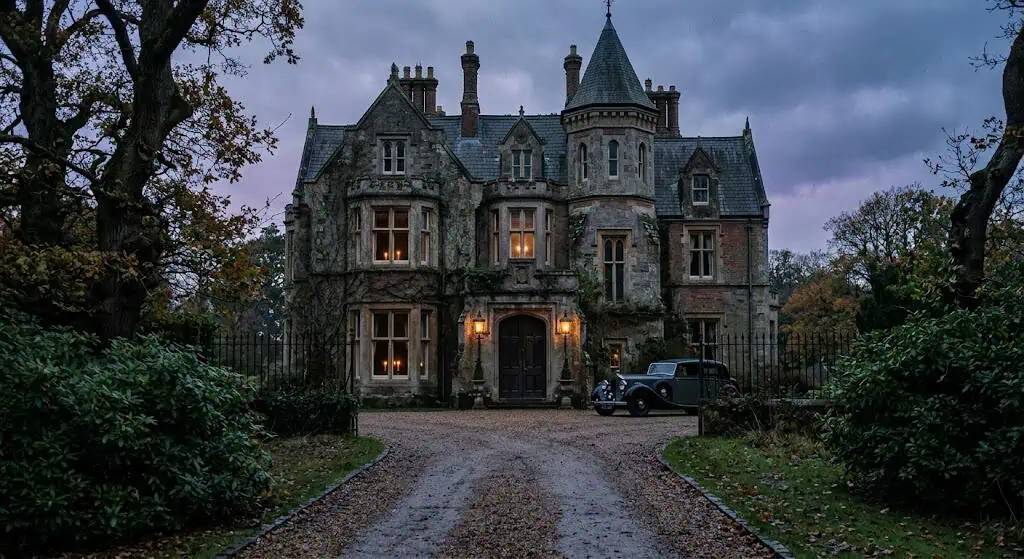
9: Haunted manor
A gothic “old money” family, candlelight, and a will reading that goes very wrong. Decor ($30–$55) is candles, dark drapery, and a dusty-elegant vibe. Best for: fall gatherings and Halloween-adjacent parties.
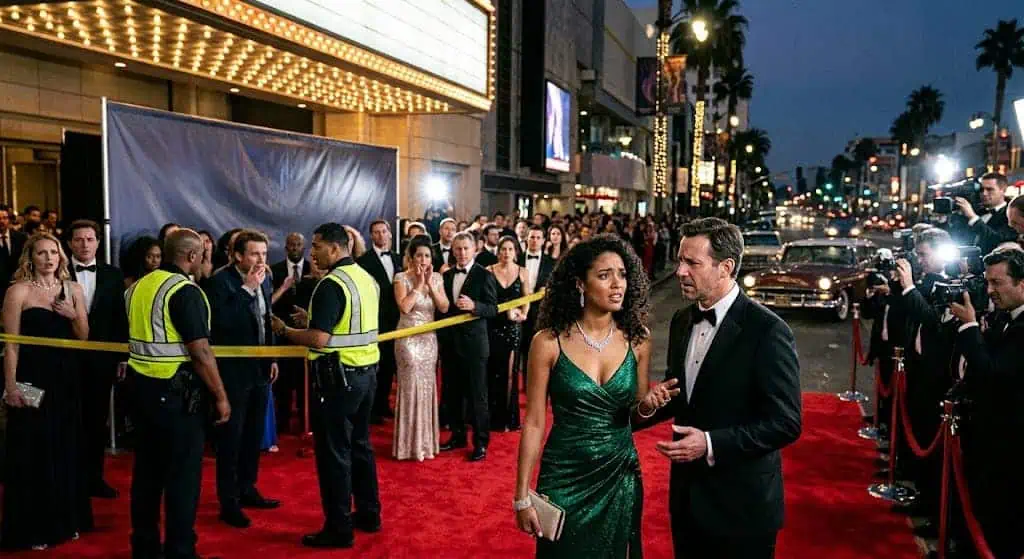
10: Hollywood premiere
Red carpet, awards-night glam, and a murdered “star.” Decor ($25–$50) is a red runner, gold accents, and “press” lanyards — which, bonus, doubles as a ready-made photo moment the second people walk in. Best for: mixed crowds who love a good photo.
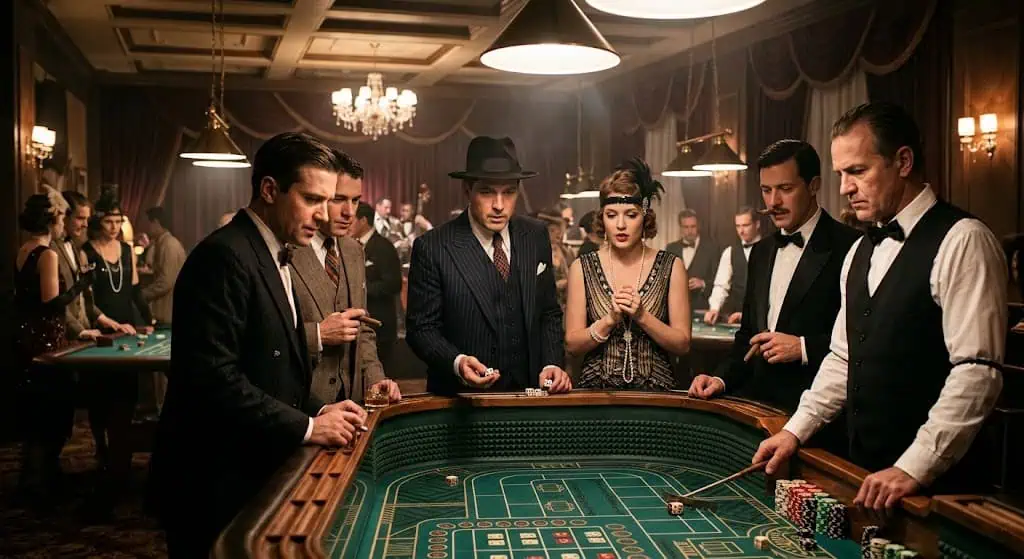
11: Roaring casino night
Card tables, cocktails, and a rigged game that turns deadly. Decor is the splurge of the bunch ($40–$70) with felt, chips, and moody green lighting. Best for: 12–16 guests.
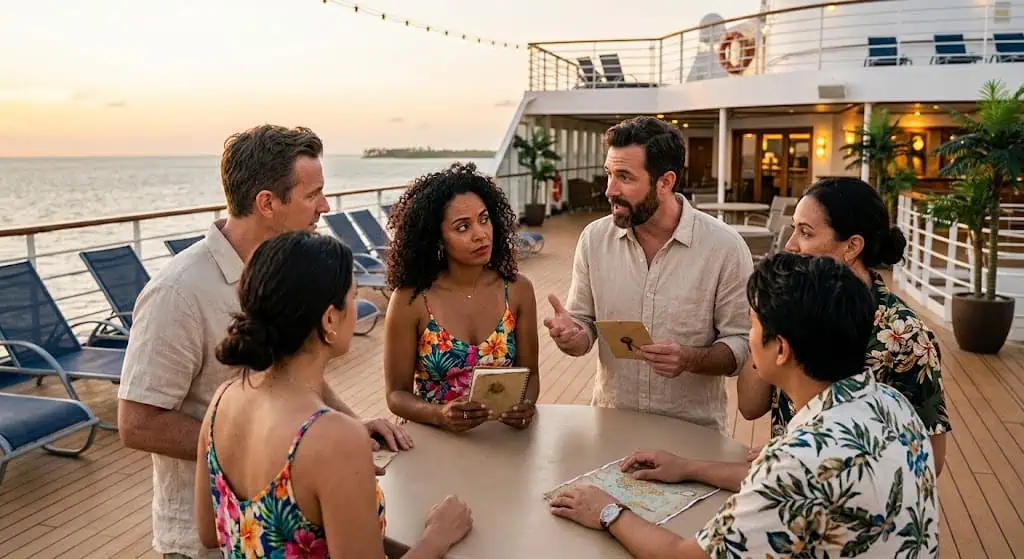
12: Tropical cruise
A vacation gone wrong — luau energy meets whodunit. Decor ($25–$45) is leis, tiki torches, and beachy lighting. Best for: summer parties and relaxed dress codes.
13: Winter lodge
Snowed in at a ski chalet, nobody can leave, and one guest won’t make it to morning. Decor ($20–$40) is all cozy — faux fur throws, a fireplace, warm lighting. Best for: winter and holiday gatherings.
How do you assign characters without stressing people out?
Assign characters by personality, never randomly — this is the single kindest thing you can do for your guests. Hand your quiet, reluctant friends the lighter roles: a character with one small secret and barely any required lines. Give the big theatrical personalities the scenery-chewing parts they’re secretly praying for. And when you send the invite, tell each person a bit about their character and the dress code so they can prep. Nobody should show up cold and be told “surprise, you’re the flirtatious lounge singer with three ex-lovers in the room.”
Here’s the move that quietly saves the whole night, though: as host, take a neutral or non-essential role for yourself — a detective, a narrator, a background character who is definitely not the murderer. Done right, you can steer the pace, answer the inevitable “wait, what do I do now?” questions, and rescue a stalled round without ever breaking the game. Done wrong — host casts themselves as the murderer, then has to run the evening while hiding it — and you’ll spend the night distracted instead of directing.
What’s the right timeline for a murder mystery dinner party?
Pacing is the whole ballgame — everything else is set dressing. Here’s the run-of-show I come back to every single time, which lands the night at about 2.5–3 hours total.
Phase
Time
What happens
Arrival & character intros
30 min
Guests arrive in costume, grab a drink, introduce their characters
Round 1 clues
20–30 min
First clue cards drop; people start side-eyeing each other
Dinner, course 1
30 min
Eat and talk in character — where the game actually lives
Round 2 clues & accusations
30 min
More reveals, alliances form, wild theories fly
Dinner, course 2 / dessert
30 min
Keep feeding the theories alongside the food
Final accusation round
20 min
Everyone names a suspect and makes their case
The reveal
15 min
The murderer confesses; cue the gasps
That 2.5–3 hour window is the sweet spot. Any shorter and it feels rushed; much longer and you can watch the energy leak out of the room in real time.
Common mistakes that kill the game
Two host mistakes ruin more murder mystery parties than everything else combined, so let me be blunt about both. First: revealing too fast. If the clues drop too quickly, the mystery’s solved before the main course and the whole table deflates like a sad balloon. Trust the pacing built into your kit. Resist the urge to “help.”
Second: dumping all the rules upfront. Nobody retains a ten-minute rules lecture delivered to a room of people who just want another glass of wine. Explain just enough to start round one, then feed instructions as you go. The other avoidable ones: a group size that doesn’t match the kit, forgetting to send costume direction in advance, and — I say this with real affection — pouring your energy into over-decorating while under-planning the actual flow. Here’s the honest truth about props: they’re wildly overrated. Your guests will remember the costumes and the accusation drama for years. Not one of them will remember your $40 of themed plastic goblets.
🎉 Quick Summary
✅ Best for: groups of 6–14 who want an interactive night
💰 Budget: $10–$45 for the game + $20–$70 decor (under $100 excluding food)
⏱ Time: 2.5–3 hours from arrival to reveal
🌟 Top pick: a boxed kit + a 1920s speakeasy theme for first-timers
📌 Don’t skip: send character assignments and dress code with the invite
Frequently asked questions
How do you host a murder mystery party?
Pick a kit format and theme that fit your group size, send invites with character assignments and a dress code ahead of time, set up a simple themed space, and run the evening on a clear timeline: character intros, clue rounds woven through dinner courses, a final accusation round, and the reveal. The host’s real job is pacing, not acting.
How many people do you need for a murder mystery party?
Most kits work best with 6–14 players, with 8–10 being the sweet spot. Masquerade and mingling-style formats scale comfortably to 16 or more, while a handful of games are built for small groups of 4–6. Always match the kit’s stated player count to your firm guest list.
How long does a murder mystery party last?
Plan for about 2.5 to 3 hours from arrival to reveal. That covers character intros, two or three clue rounds interspersed with dinner courses, a final accusation round, and the confession. Shorter tends to feel rushed; much longer and energy starts to sag.
Do you need a kit for a murder mystery party?
No, but a kit makes hosting dramatically easier. Boxed and printable kits hand you the characters, clues, and structure ready to go. Writing your own is possible, but it takes 8–15 hours, so most hosts — especially first-timers — are far happier starting with a kit.
What do you serve at a murder mystery dinner party?
Serve a coursed meal that matches your theme and can pause between clue rounds — a soup or salad first, a main, then dessert works cleanly. Buffet-style is fine too. Match the food to the setting: cocktail-era bites for a speakeasy, elegant plated courses for a dinner train, tiki snacks for a tropical cruise.
What should guests wear to a murder mystery party?
Guests dress to their character and the theme, both of which you send with the invite. A 1920s speakeasy calls for flapper dresses and suspenders, a masquerade needs masks, and a Hollywood premiere wants full awards-night glam. Sending direction early is what gets people to actually commit to the costume.
Can you do a murder mystery party with kids?
Yes — use age-appropriate kits built for younger players, which keep the mysteries light and skip any adult themes. These usually swap “murder” for something gentler like a stolen trophy or a missing pet, and they keep the character roles simple enough for kids to follow.
How much does a murder mystery party cost?
Expect roughly $10–$45 for the game itself (printable on the low end, boxed on the high end), plus $20–$70 in decor depending on theme, plus food. A budget-minded host can pull off a full night for well under $100 excluding the meal — a bargain for three hours of entertainment.
Can the host also play a character?
Yes, and it’s genuinely smart to give yourself a neutral or non-essential role — a narrator, detective, or background character who isn’t the murderer — so you can manage pacing and field questions without compromising the mystery. Casting yourself as the killer while also running the night is a recipe for a distracted host.
Are murder mystery parties good for large groups?
Very, as long as you pick a format built to scale. Masquerade and mingling-style games handle 16 or more comfortably, while seated dinner formats usually top out around 14 before the logistics get unwieldy. For big groups, prioritize a game that markets itself as large-group-friendly.
What’s the best murder mystery theme for beginners?
A 1920s speakeasy is the most beginner-friendly theme because the dress code is instantly recognizable, the decor is cheap and forgiving ($30–$60), and the jazz-and-cocktails atmosphere carries the mood on its own. Pair it with a boxed kit and you’ve removed almost every point of friction.
How do you make a DIY murder mystery game?
Start with a setting and a victim, then build one character per guest, each with a secret, a motive, and a relationship to the victim. Write a clue trail that surfaces over two or three rounds, hide the murderer among them, and prepare a reveal. Budget 8–15 hours — it’s rewarding but real work.
Can you do a murder mystery party with a small group of 4–6?
Yes, but choose a kit specifically written for small groups, since games built for 10+ fall apart when you strip out characters. Small-group kits keep every role essential so the clue trail still holds together with fewer players.
People also ask
Do murder mystery parties have to include dinner?
No. Dinner is a common and natural structure because it paces the clue rounds, but you can run a murder mystery with just appetizers and drinks, or as a cocktail-hour mingling game with no seated meal at all.
How far in advance should you send invitations?
Send invitations with character assignments 2–3 weeks ahead so guests have time to pull together a costume. Costume buy-in is a big part of the fun, and people need lead time to actually commit to it.
What happens if a guest cancels last minute?
Most kits flag which characters are “essential” versus droppable — check that list when you assign roles. If a non-essential character drops, you can usually cut them cleanly; if an essential one cancels, the host or another guest can double up.
Are murder mystery parties fun for people who hate acting?
Yes — this is the most common worry and the most misplaced. The game runs on reading clue cards and asking questions, not performing. Assign shy guests light roles and they can participate fully without ever “acting.”
Leah Meyer is a passionate event planner and creative writer behind Party & Beyond, where she helps hosts throw stunning celebrations on a real-world budget. From birthday parties and baby showers to backyard weddings and holiday gatherings, Leah personally tests every DIY idea she shares , proving that the wow factor lives in the details, not the price tag. When she's not planning the next party, you'll find her hunting for hidden treasures at dollar stores, inflating balloons (she owns three pumps!), or brainstorming with her dog, the official Chief Inspiration Officer of Party & Beyond.