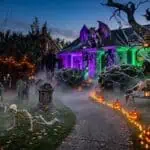
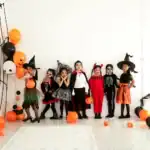
Quick answer: A Halloween movie night for 10–15 guests works at three setup tiers: $30 indoors (blanket fort, lamps off, concession tray), about $100 in the backyard (a $20 sheet screen, borrowed or budget projector, one speaker at the screen), or $250 for the full outdoor cinema (inflatable screen, 3,000-lumen projector, string-light path). Start after full dark, put the speaker by the screen, and run an early family show before the scarier late one.
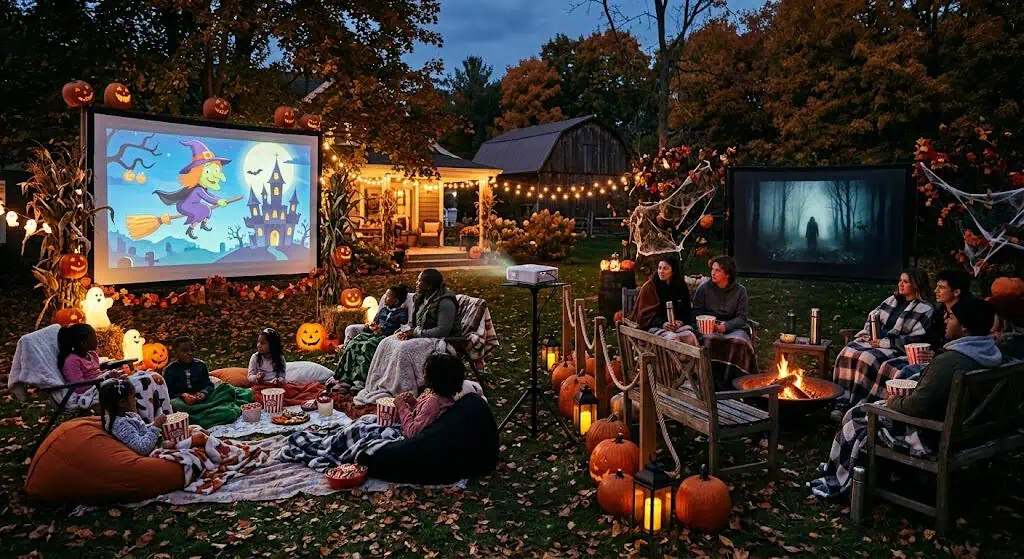
Picture this: fifteen people wrapped in blankets in your backyard, a hundred-inch glowing screen against the fence, popcorn boxes in every lap, and the opening music of something spooky rolling out into the October dark. Total cost? Less than dinner out for four — because a Halloween movie night is 90% setup and 10% spend, and the setup is exactly what most guides skip.
So that’s what this one is: the setup guide. These 19 Halloween movie night ideas cover indoor fort layouts, the backyard screen-and-projector math (with honest numbers on lumens and the $20-sheet-versus-$90-inflatable question), concession stands, seating math for 10–15 guests, intermission games, and the age-split scheduling that lets families and scare-seekers share one night. The movies themselves? Pick your own favorites — you already know what your crowd loves. I’ll handle everything around the screen.
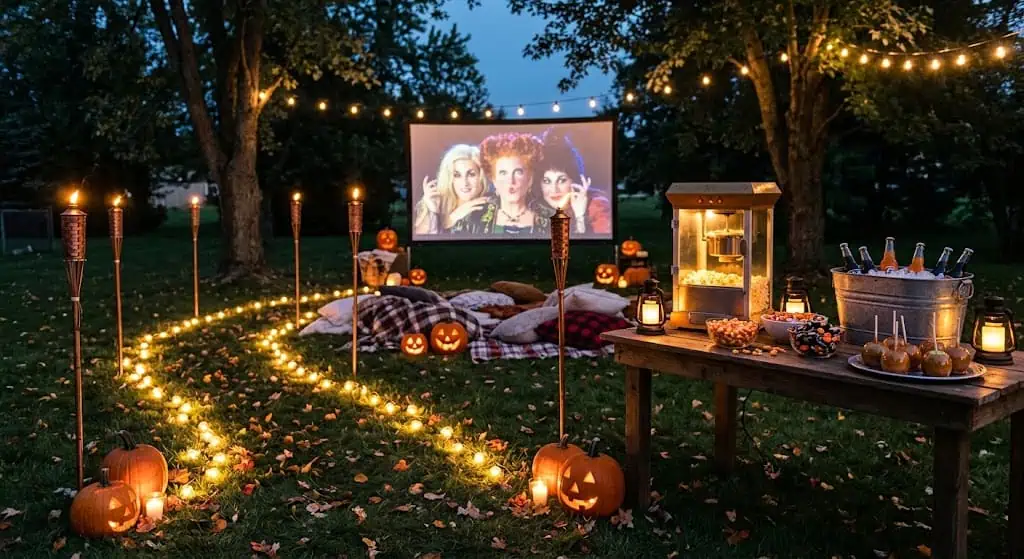
Four pieces: a screen (a taut white sheet or an inflatable), a projector of at least 2,500–3,000 lumens, one speaker placed at the base of the screen, and seating in three rows — blankets up front, low chairs in the middle, standard chairs in back. Start the movie only after full dark (projectors lose the fight against twilight), run the projector 10–13 feet from the screen for a 100-inch picture, and test the whole chain two nights before, not at 6:55 on party night. Trust me on this: the speaker-at-the-screen rule alone separates “backyard cinema” from “loud yard.”
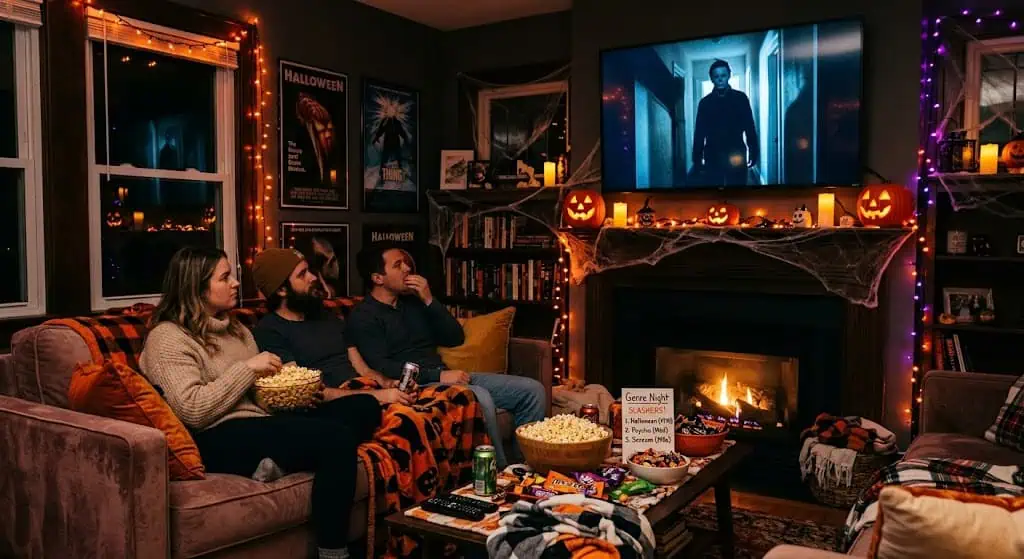
Indoor Setups
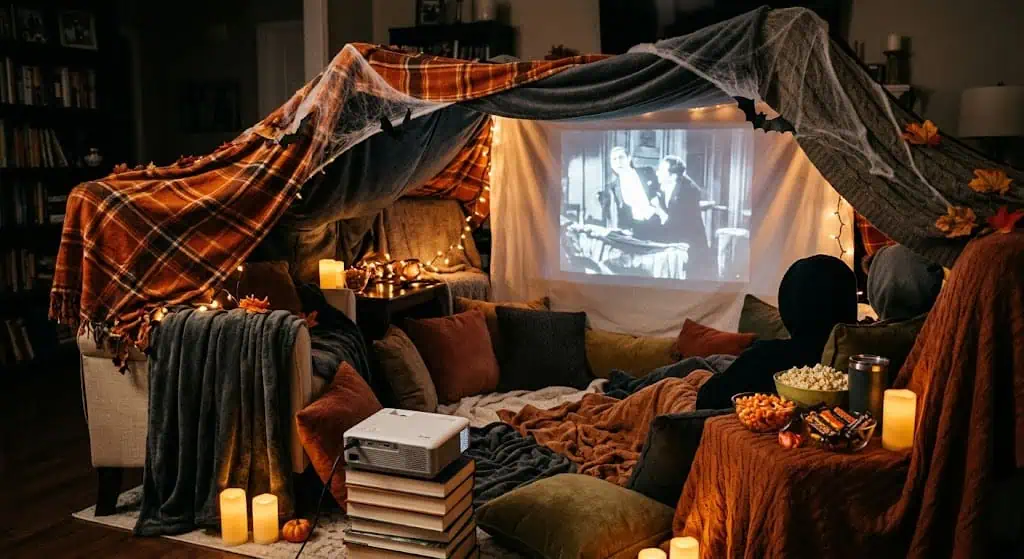
1. The Blanket Fort Cinema
Sheets clipped between furniture, string lights woven through the “ceiling,” cushions paving the floor, the TV as the screen. About $10 if you own sheets and lights, 45 minutes. Best for: kid-friendly nights — the fort is half the event before the movie even starts.
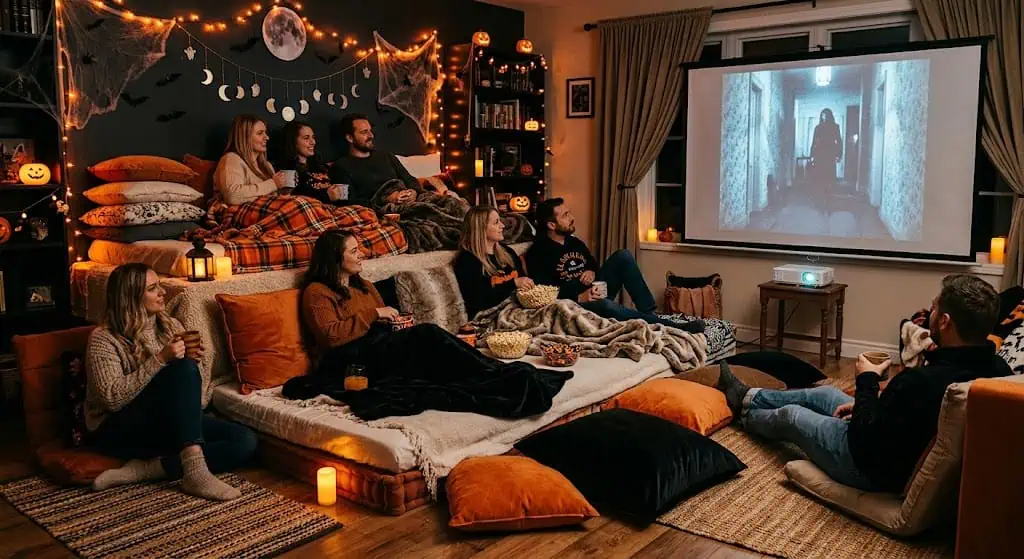
2. Tiered Floor Seating
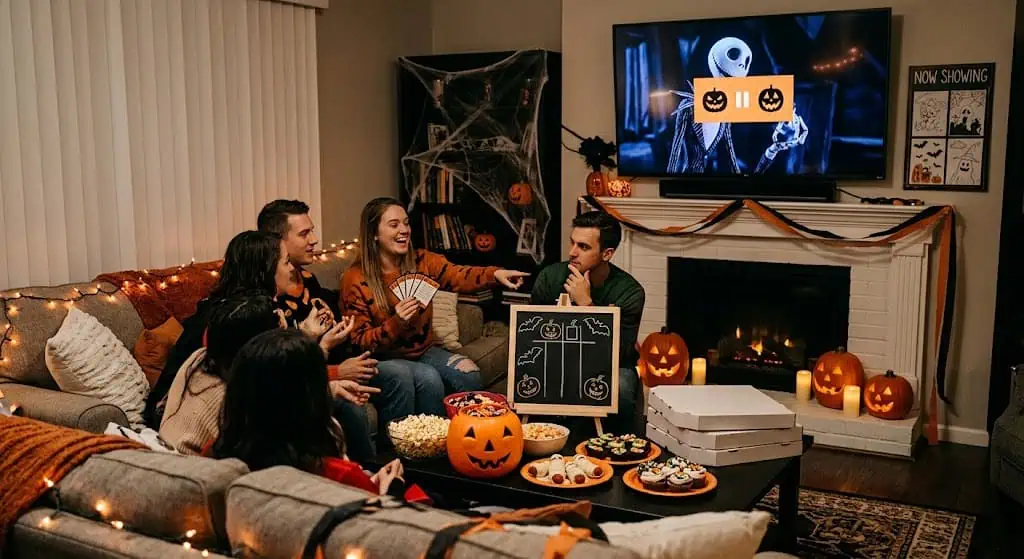
The seating math for small rooms: couch in back, dining chairs flanking, then a cushion-and-pillow floor tier up front — 12 comfortable seats in a room that “fits six.” Free, 20 minutes. Best for: indoor parties bigger than your furniture.
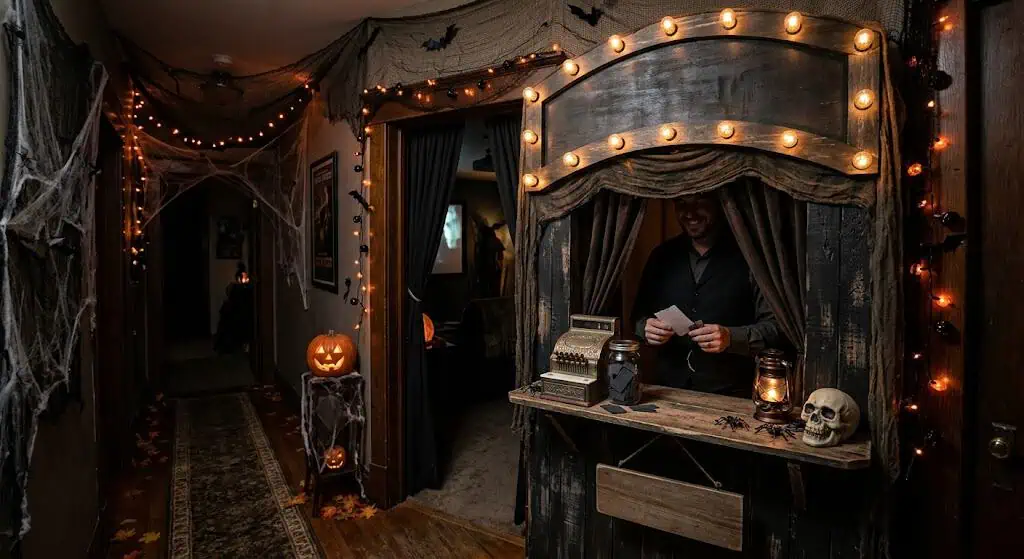
3. The Ticket-Booth Doorway
A curtain of black streamers over the living room door and printed “admit one” tickets handed out at arrival. About $5, 15 minutes. Best for: turning “come watch a movie” into an event — kids especially guard those tickets like treasure.
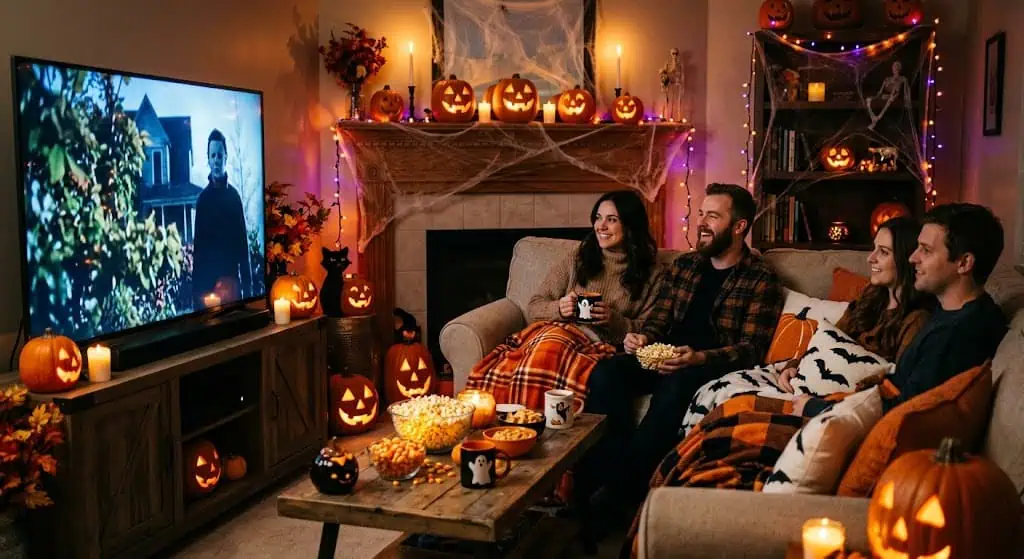
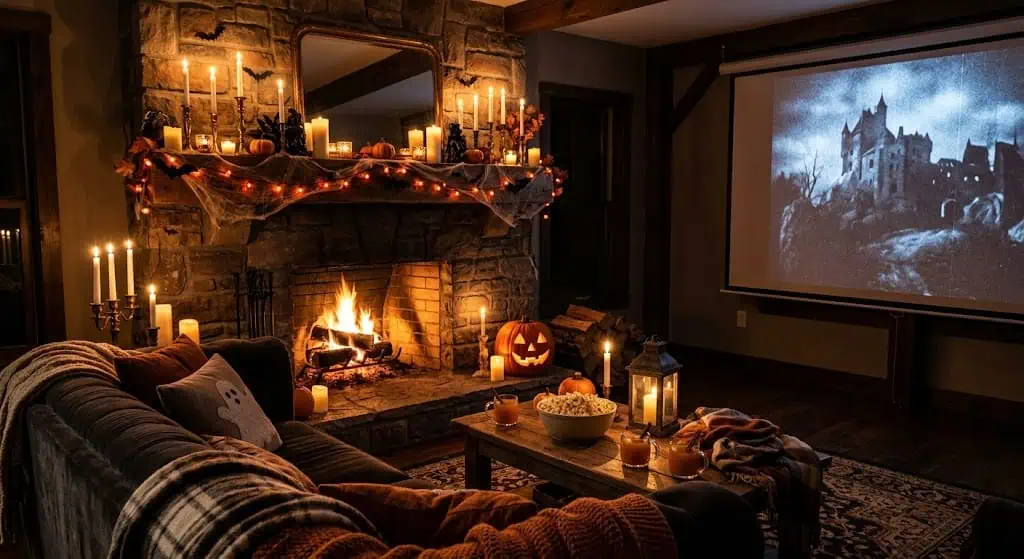
4. Fireplace-and-Candle Ambience
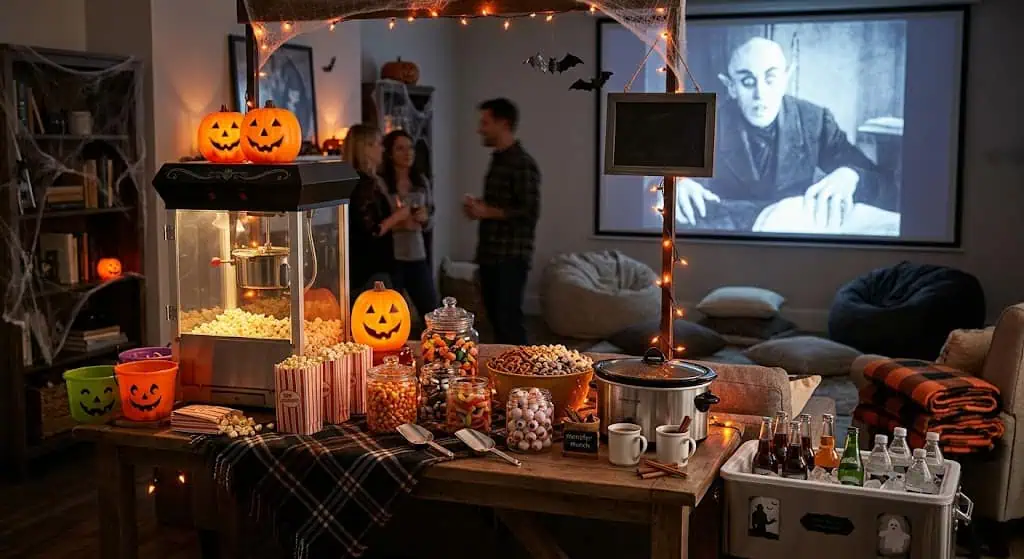
Lamps off, LED candles clustered on the mantel and windowsills, one amber lamp behind the couch so the room never goes fully black. About $8, 10 minutes. Best for: adult nights — flickering low light does more for a spooky movie than any decoration.
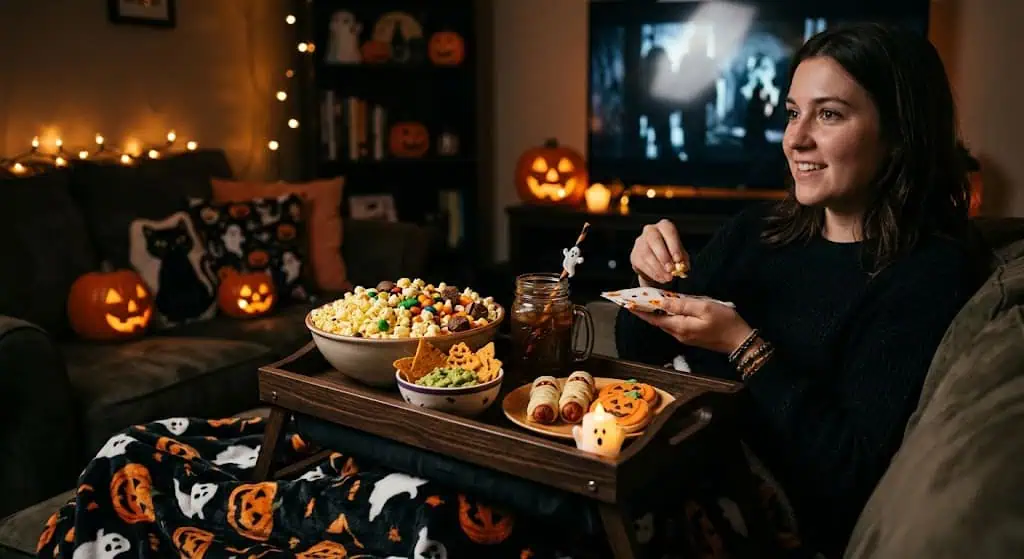
5. The Lap-Tray Snack System
A tray, cutting board, or cookie sheet per pair of guests, loaded at the concession table before seating. About $6 thrifted, or free from your kitchen. Best for: carpet owners; it ends the mid-movie balance act of bowls on knees.
Backyard Setups
6. The $20 Sheet Screen
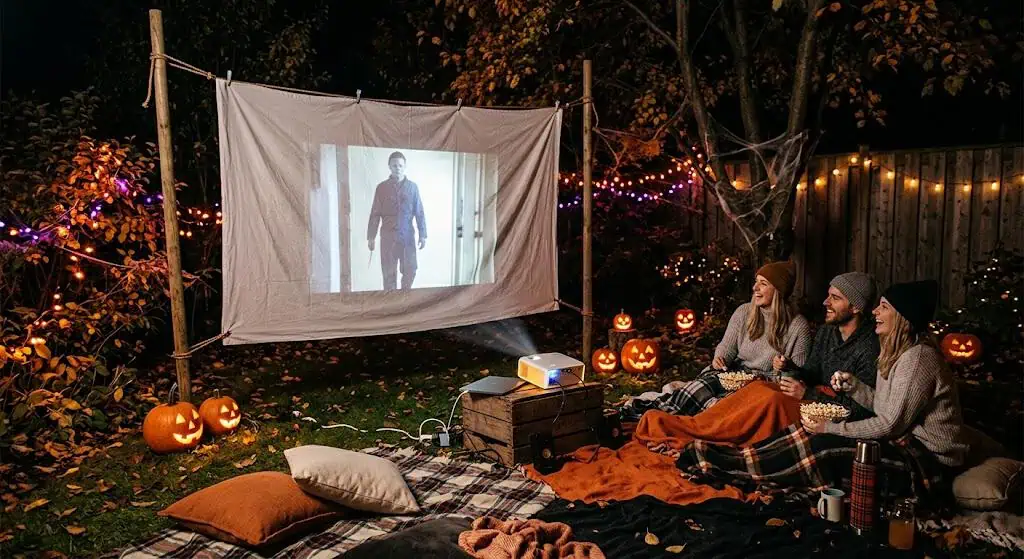
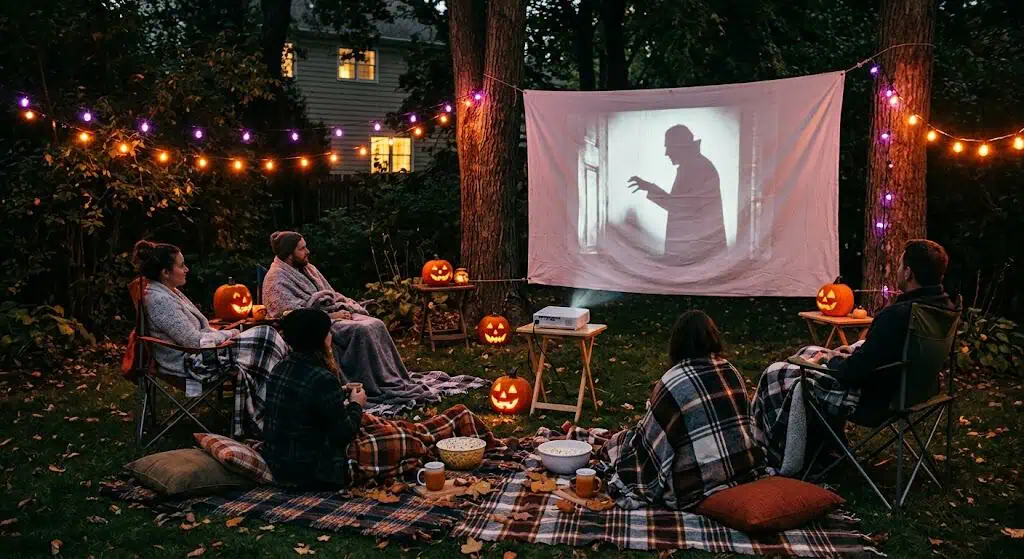
A white flat sheet (king size reads about 100 inches), pulled drum-taut with binder clips and bungee cords to a fence, garage wall, or a rope strung between two trees — tautness is everything, because wrinkles become waves on screen. $15–$20, 30 minutes. Best for: first-time backyard cinemas; it’s 85% of the inflatable’s picture for a fifth of the price.
7. The $90 Inflatable Screen
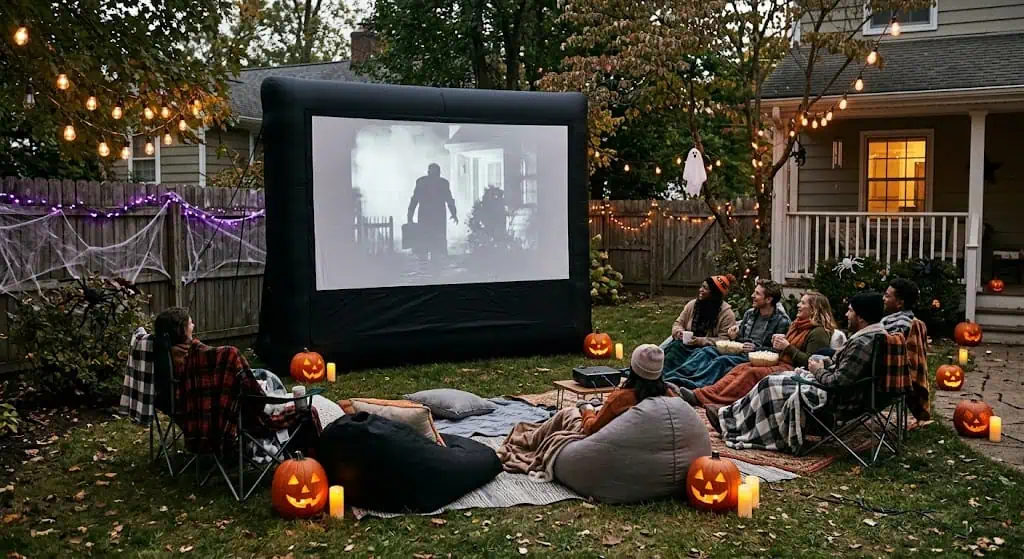
A 12-foot inflatable with its own blower: five-minute setup, perfectly flat surface, and a built-in wow when it rises out of the lawn. $80–$100. Best for: hosts planning two or more movie nights a year — it pays for itself in saved rigging time.
8. Projector Reality Check
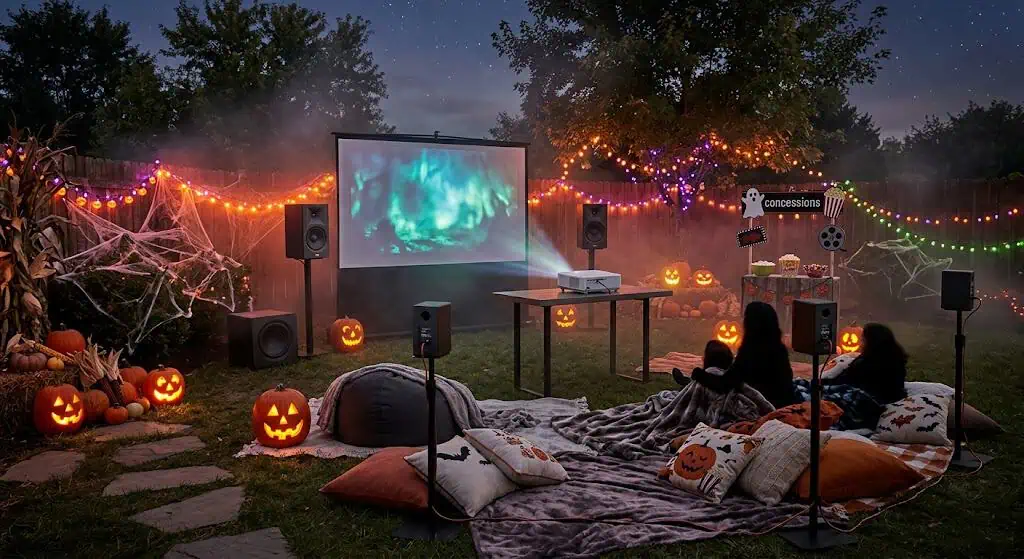
The honest numbers: 2,500–3,000+ lumens for a watchable picture after dusk, placed 10–13 feet back for a 100-inch image, with a streaming stick or laptop as the source. Budget projectors run $80–$150; borrowing one from work or a friend runs $0 and a thank-you pie. Best for: knowing what to buy or borrow before disappointment is projected six feet tall.
9. Speaker Placement (The Make-or-Break)
One decent Bluetooth speaker at the BASE of the screen, facing the seats — sound must come from where the picture is, or the whole illusion collapses. Check the speaker for audio delay against the projector; most pair cleanly with a streaming stick. $0 if you own one. Best for: every outdoor setup, no exceptions.
10. The Three-Row Seating Math
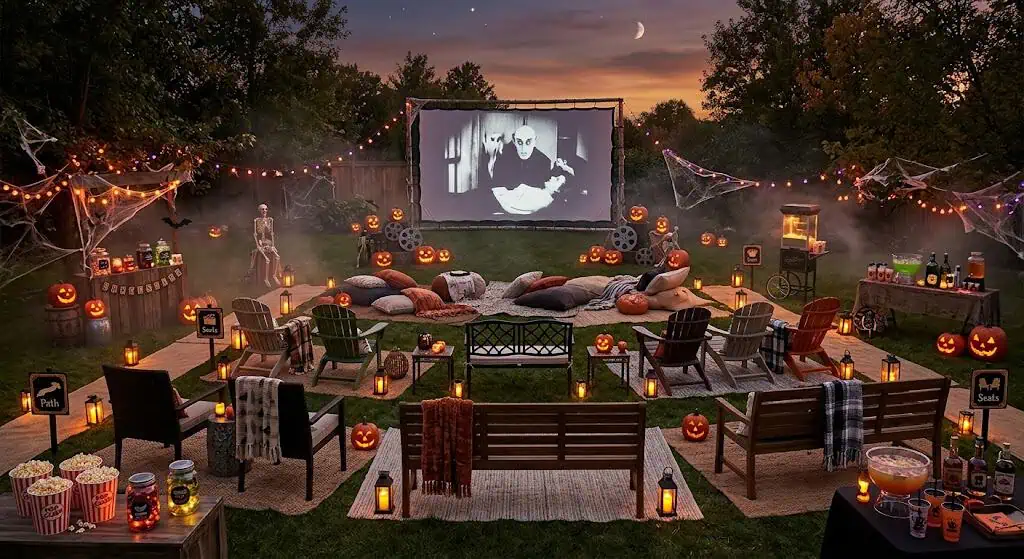
For 10–15 guests: a blanket-and-pillow row 8 feet from the screen (kids claim it instantly), low camp chairs and bean bags at 12 feet, standard chairs at 16 — every sightline clears the row ahead. Free with what you own, 20 minutes. Best for: backyard crowds; rows are the difference between a cinema and a cluster.
Pro tip: October backyard math includes temperature: one blanket per guest minimum (ask people to bring their own in the invite), a basket of $1 hand warmers, and the hot drink station from the concession table. A warm audience stays for the double feature; a cold one leaves at intermission.
Concessions and Atmosphere
11. The Concession Stand Table
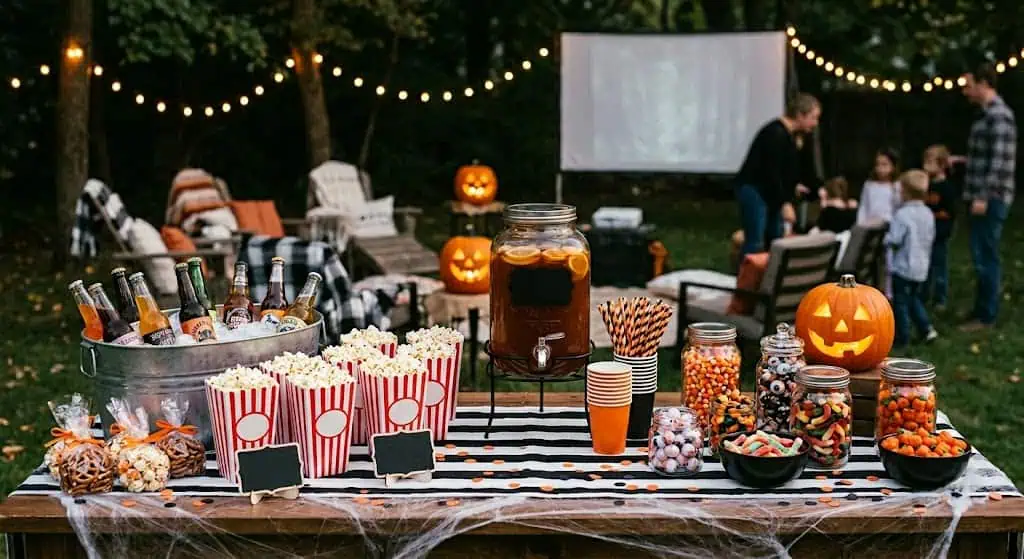
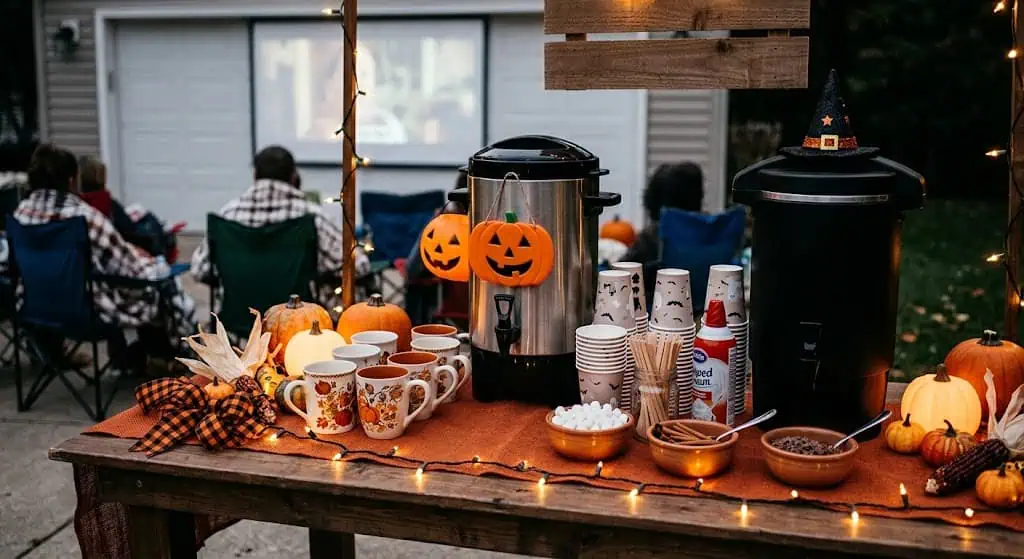
A “CONCESSIONS” sign, striped popcorn boxes ($4 per dozen), a popcorn bowl with three shake-on seasonings, theater-style candy, and a drink tub — self-serve before showtime. About $35 for 15 guests. Best for: every format; the boxes alone make it feel like a theater.
12. The Hot Drink Station
Two carafes — cider and hot chocolate — with a toppings tray, stationed at the concession table for intermission refills. About $15. Best for: backyard nights; it’s the most-thanked $15 of the whole event.
13. The String-Light Path and Bug Plan
Amber string lights or luminarias marking the route from door to seats, plus citronella candles at the perimeter (October bugs are real in warm states). About $15. Best for: safety and atmosphere in one — nobody trips, everything glows.
14. The Intermission Setup
A planned 15-minute break between features: lights up to half, concession refills, bathroom run, and one quick game (below). Free. Best for: double features — intermission is what keeps the second movie from playing to sleeping guests.
The Programming
15. The Double Feature With Intermission Games
Three 5-minute options for the break: spooky trivia (10 questions), “guess the sound” (play sound effects, teams guess), or a flash costume vote if guests dressed up. About $10 in small prizes. Best for: keeping the energy alive between films.
16. The Age-Split Showtimes
Two showings, one night: the family-friendly pick at 6:30 (kids and their parents, done by 8:15), then the scarier feature at 9:00 after the under-10 crowd heads home. Free — it’s pure scheduling. Best for: neighborhoods and mixed friend groups; one setup serves both audiences without a single argument about scare levels.
17. The Genre-Night Framing
Skip title debates by announcing an era or genre — classic monster night, 80s creature features, ghost stories, campy-not-scary — and let guests vote within it. The frame does the curating; your crowd’s favorites do the rest. Free. Best for: groups with wildly different scare tolerance.
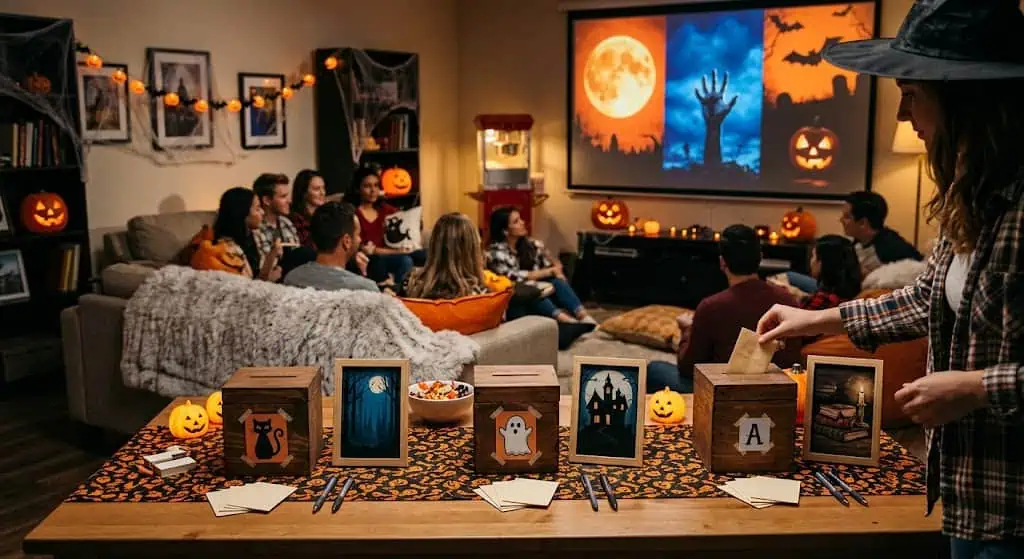
18. The Ballot System
Print a ballot of 6–8 options across intensity levels, vote at arrival, screen the top two as the double feature. About $2. Best for: democratic crowds — and it quietly protects the one guest who can’t handle the intense stuff from having to say so.
19. The Garage Plan B
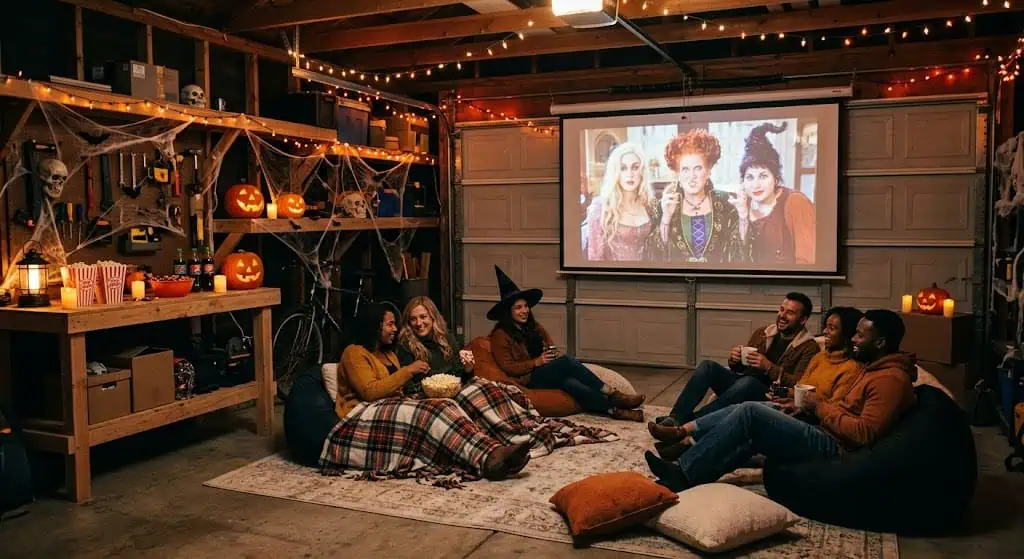
If rain rolls in: projector against the garage’s back wall (paint-white walls project shockingly well), cars out, seating rows in, concession table at the door, big door open or closed by temperature. Free, 30 minutes to convert. Best for: never canceling — announce “rain or shine” in the invite and mean it.
What Size Projector and Screen Do You Need?
For a backyard crowd of 10–15, target a 100–120 inch picture: that’s a king sheet or a 12-foot inflatable, fed by a projector of at least 2,500–3,000 lumens sitting 10–13 feet back (check your model’s throw ratio — it’s in the manual and on the box). Indoors, your TV beats a budget projector in every way except romance, so save the projector for the yard. The one spec that doesn’t matter much at this size: resolution — from 12 feet away on a sheet, 720p and 1080p tell the same ghost story.
How Much Does a Halloween Movie Night Cost?
Three honest tiers: $30 indoors (concessions, candles, tickets — the fort and seating are free), about $100 for the backyard starter (sheet screen $20, borrowed projector, concessions $35, lights and warmers $25, games $10), and $250 for the full cinema (inflatable screen $90, budget projector $100–$130 if you can’t borrow, plus the rest). The projector is the only real money on the list — and between coworkers, schools, and friends, it’s also the single most borrowable object in America.
Screen Option Comparison
Screen
Cost
Picture Quality
Effort
White sheet (taut)
$15–$20
Good — if drum-tight
30 min of rigging
Garage or house wall
$0
Good on light, smooth paint
5 min
Inflatable 12-foot
$80–$100
Very good, perfectly flat
5 min, needs power
Indoor TV
$0
Best picture, smallest scale
None
My honest take: start with the sheet or the garage wall this year. If the night becomes a tradition — and it will — the inflatable is next year’s easy upgrade.
Common Movie Night Mistakes
Starting before dark. A 6:45 start in early October means 30 washed-out minutes. Check sunset, add 20 minutes, schedule from there.
Speakers at the seats. Sound behind the audience breaks the picture-sound illusion instantly. Speaker at the screen base, always.
No blanket plan. October cold ends backyard nights early. One blanket per guest, hand warmers in a basket, hot drinks at intermission.
One movie for all ages. A compromise pick scares the 7-year-olds AND bores the teens. Run the age-split showtimes instead.
The untested chain. Projector, source, speaker, and cables get a full rehearsal two nights before — party night is for popcorn, not troubleshooting.
People Also Ask
What do you need for a backyard Halloween movie night?
A screen (taut white sheet, wall, or inflatable), a 2,500–3,000+ lumen projector with a streaming stick, one speaker placed at the screen, three rows of seating with blankets, and a concession table. The whole kit lands between $100 and $250 depending on what you borrow.
How do you hang a sheet for a projector screen?
Clip binder clips along all four edges, run bungee cords or rope from the clips to a fence, deck rail, or a line strung between trees, and tension until the surface is drum-tight — add a bottom weight (a board or pipe in the hem) to kill wind ripple. Wrinkles project as waves, so tautness is the entire job.
What time should an outdoor Halloween movie start?
Twenty minutes after full dark — in most of the US that’s 7:15–7:45 p.m. by late October. For the age-split plan, run the family showing at full dark and the scarier feature at 9:00, after the youngest viewers have gone home to bed.
How do you keep guests warm at an outdoor movie?
Blankets (one per guest, BYO requested on the invite), $1 hand warmers in a grab basket, hot cider and cocoa at intermission, and seating off the cold ground — cushions and camp chairs beat bare lawn by ten degrees of comfort. A fire pit off to the side is the luxury upgrade.
🎃 Quick Summary
✅ Best for: 10–15 guests, indoors or backyard, families and adults via the age split
💰 Budget: $30 indoor / $100 backyard starter / $250 full outdoor cinema
⏱ Time: 1–2 hours setup; test the tech two nights before
🌟 Top picks: the $20 taut-sheet screen, three-row seating math, age-split showtimes
📌 Don’t skip: the speaker at the screen base, the after-dark start, and one blanket per guest
Halloween Movie Night FAQ
How much does a backyard movie night cost?
About $100 if you borrow the projector: $20 sheet screen, $35 concessions, $25 of lights and hand warmers, $10 of intermission prizes, and change for tickets and tape. Buying a budget projector adds $80–$150 once, and the inflatable screen adds $90 — both reusable for years of movie nights.
How many lumens does the projector really need?
At least 2,500–3,000 for outdoor use after dark at 100 inches; more never hurts, less means a dim, washed picture. Beware listings quoting “lux” or inflated marketing numbers — look for ANSI lumens in reviews, and when in doubt, borrow before you buy.
What’s the seating plan for 15 people?
Three rows: a blanket-and-cushion row 8 feet from the screen (fits 5–6), low camp chairs and bean bags at 12 feet (5), standard chairs at 16 feet (4–5). Stagger chairs between the gaps of the row ahead, and leave a center aisle for concession runs.
What goes on the concession table?
Popcorn in striped boxes with three shake-on seasonings, theater candy, a drink tub, the hot cider and cocoa carafes, napkins, and a stack of lap trays — about $50 with the hot drinks for 15 guests. Set it at the entrance so everyone loads up before the lights drop.
How do I run the audio without delay or neighbors complaining?
Pair one good Bluetooth speaker to the streaming stick and park it at the screen base; if you hear lip-sync delay, most sticks and projectors have an audio-delay adjustment in settings. Keep volume at conversation-plus, aim the speaker at the seats not the fences, and end the late show by 11.
What’s the best date — can I do it on Halloween night?
The two weekends before October 31 are prime; the 31st itself works only as a late show after trick-or-treating winds down (9:00 start), which is honestly a great tradition for the candy-sorting crowd. Earlier in October also buys you warmer evenings.
How do I make it special for kids without scaring them?
Give them the blanket row, the tickets, and their own 6:30 showing of something friendly, plus a “concession allowance” of one box and two candies each. The fort version indoors works even better for under-8s — the building is the event and the movie is the encore.
What about permits, brightness, and neighbors?
A private backyard showing for friends needs no permit in typical neighborhoods — just aim the screen away from neighboring windows, keep audio reasonable, and wrap by 11. The friendly pro move: invite the adjacent neighbors; they were going to hear it anyway.
Can I do this with no projector at all?
Yes — roll the TV to a patio door facing out for a mini backyard show, or commit to the indoor fort cinema, which beats a bad projector experience every time. The projector makes it bigger, not necessarily better; atmosphere and concessions carry more weight than inches.
How long should the night run?
Three to three and a half hours covers arrival, concessions, the double feature, and intermission — 6:30 to 10:00 for the family version, 8:30 to midnight for the adult late show. Single-feature nights land at a tidy two hours, which is plenty for school nights.
What’s the rain plan if I have no garage?
Move the show indoors to the TV with the full concession table and lighting intact — the atmosphere travels even when the screen shrinks. Announce “rain or shine, location may shift” in the invite so the decision at 5 p.m. is logistics, not heartbreak.
Lights Down, October Up
A taut sheet, three thousand lumens, a speaker by the screen, and popcorn in striped boxes — that’s the whole machine. The movies were always going to be good; your crowd picked them. What turns a Tuesday viewing into the night everyone remembers is the setup around the screen, and now you have all of it.
Don’t stress about making everything perfect. Somebody’s going to fall asleep in the blanket row holding an empty popcorn box, and that photo will outlive every decoration you hung. Happy haunting, friend.
Leah Meyer is a passionate event planner and creative writer behind Party & Beyond, where she helps hosts throw stunning celebrations on a real-world budget. From birthday parties and baby showers to backyard weddings and holiday gatherings, Leah personally tests every DIY idea she shares , proving that the wow factor lives in the details, not the price tag. When she's not planning the next party, you'll find her hunting for hidden treasures at dollar stores, inflating balloons (she owns three pumps!), or brainstorming with her dog, the official Chief Inspiration Officer of Party & Beyond.