Quick answer: A Halloween scavenger hunt takes 20–40 minutes to set up, costs $10–$25 in prizes and supplies, and runs 20–30 minutes of play. The format depends on age: rhyming clue chains for ages 4–7, picture clues for pre-readers, a spot-it checklist for neighborhood walks, glow-stick hunts after dark, and harder riddle chains for teens — original, ready-to-use clues for all of them are below.
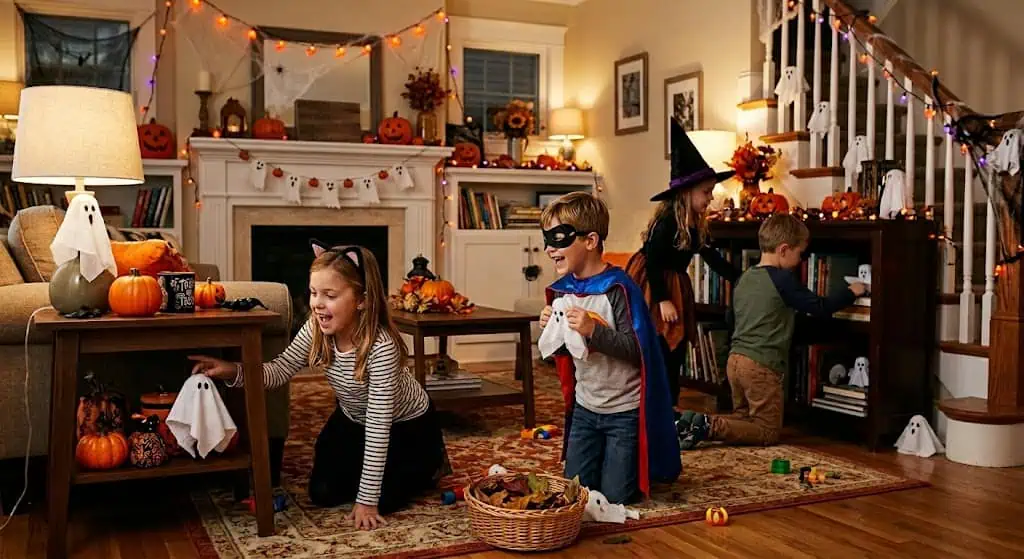
Picture this: four small ghosts thundering from the fridge to the bathtub to the bookshelf, clue clutched in one fist, shrieking the rhyme out loud to anyone who’ll listen — while you sip coffee, having spent exactly thirty minutes and eleven dollars on the whole production. That’s a scavenger hunt: the highest joy-per-dollar activity in the entire Halloween playbook.
These 17 Halloween scavenger hunt ideas cover every age and setting — indoor clue chains, neighborhood walks, after-dark glow hunts, and teen riddle gauntlets — with original clues and checklists written out right here so you can copy them tonight. (This is hunts only; our Halloween party games guides on the site cover everything else.) Every format includes the setup time, the cost, and who it’s actually for.
How Do You Make a Halloween Scavenger Hunt for Kids?
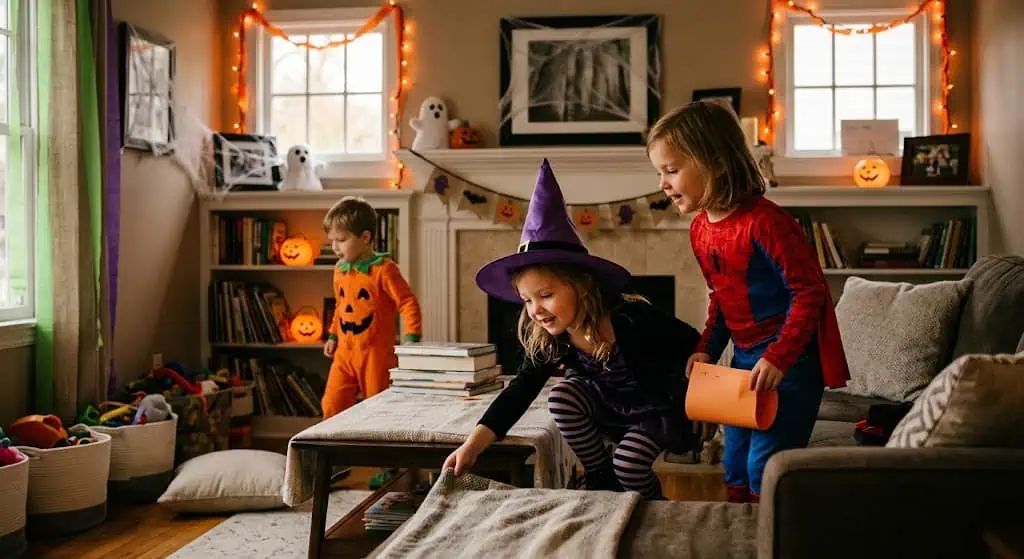
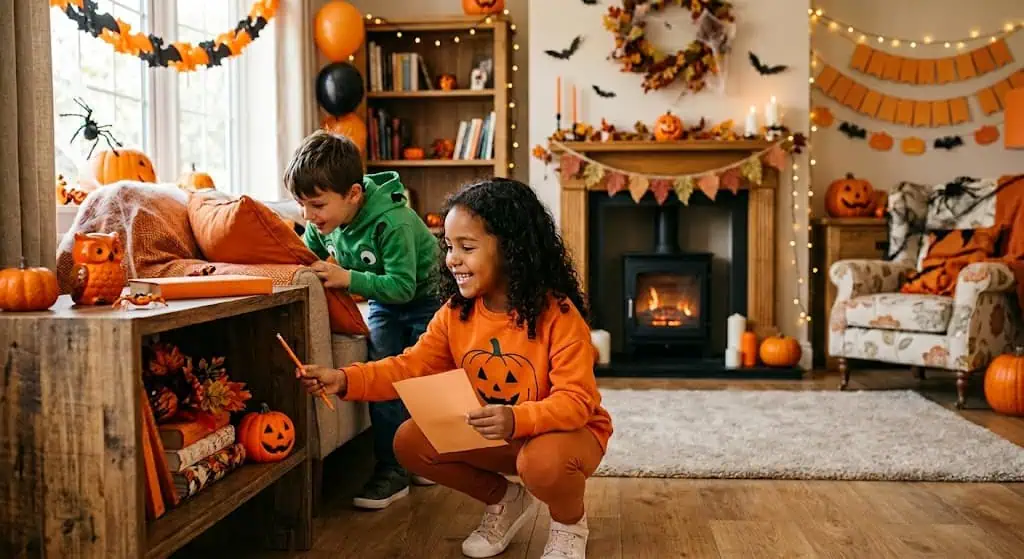
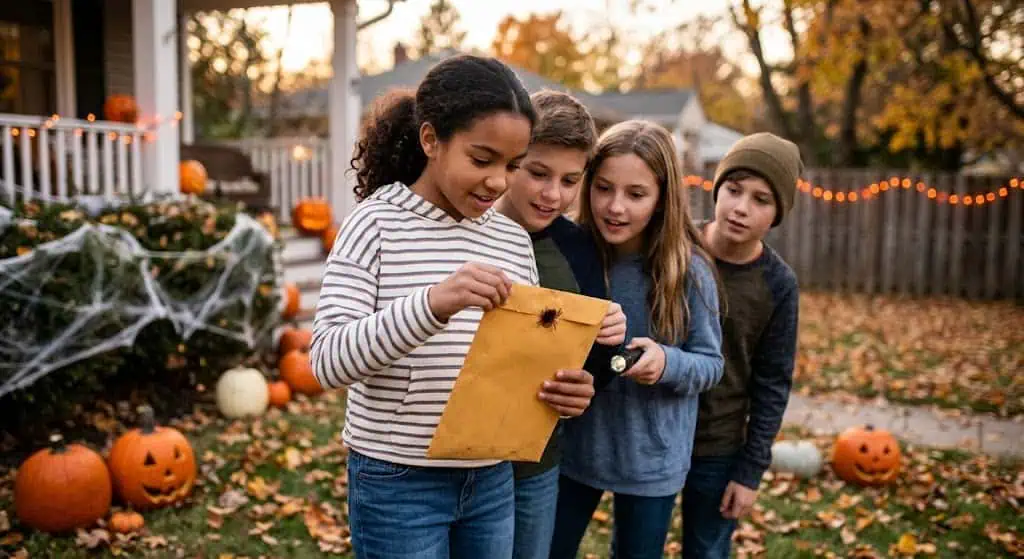
Build a chain: write 8–10 clues where each one leads to a location holding the NEXT clue, ending at the treasure — and write them backward, starting from the prize spot, so the chain never breaks. Hand kids clue #1, hide #2 at the location clue #1 describes, and so on. Setup runs 20–40 minutes, play runs 20–30, and the only rules worth announcing are “clues stay where you found them until everyone’s read them” and “walk inside the house” — the second one is aspirational, but say it anyway.
Indoor Hunts
1. The Rhyming Clue Hunt (Ages 4–7)
The classic chain with read-aloud rhymes — 9 original clues, ready to copy, each leading to where the next is hidden. Setup 30 minutes, $10–$15 prize, 2–8 players. Best for: the heart of any kids’ Halloween party. Here’s the full set:
“I keep your milk and juice so cold — open my door, a clue you’ll hold!” (refrigerator)
“I’m fluffy and soft, I cradle your head — your next clue is hiding right here on your bed!” (pillow)
“Scrub-a-dub ghost, splish and splash — find the spot where bubbles crash!” (bathtub)
“I have four legs but cannot walk; you sit on me to watch and talk.” (couch)
“Round and round your clothes all spin — open my door, your clue’s within!” (washing machine)
“I’m full of stories, tall and wide — between my pages clues can hide.” (bookshelf)
“By the front door I wait for feet; inside me hides something sweet!” (shoe)
“I get toasty hot to bake your treat — but I’m cool right now, so take a peek!” (oven — cool and supervised, with the clue taped to the door)
“You made it, little ghost, you’re done! Look where the coats hang — you’ve WON!” (coat closet: the treasure)
2. The Picture-Clue Hunt (Pre-Readers, Ages 3–5)
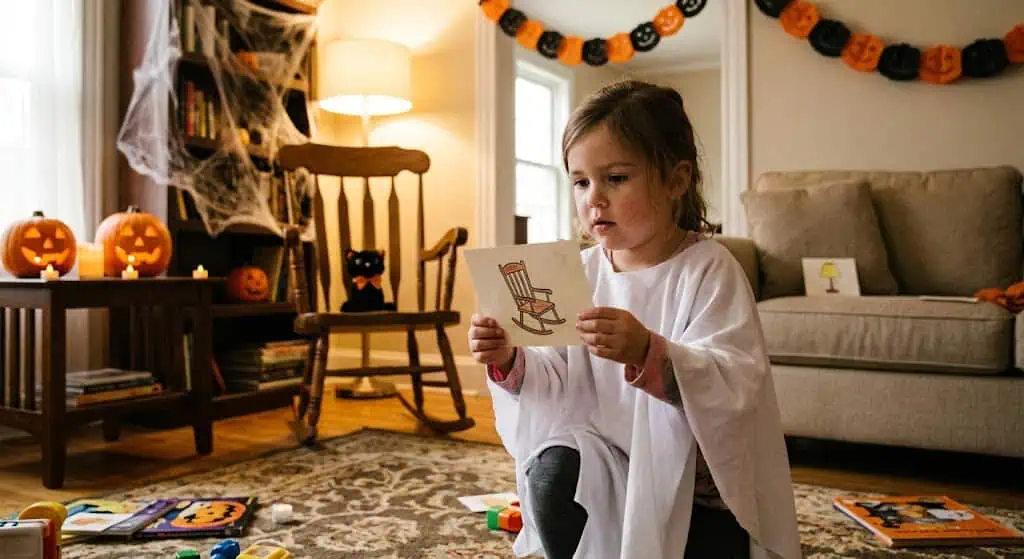
Same chain, but each clue is a printed photo of the next location — the couch, the dog bowl, the bathtub — so non-readers hunt fully on their own. Setup 25 minutes plus printing, about $3 in ink and a $10 prize. Best for: the littlest hunters; the independence is the whole gift.
3. The Orange Hunt
No clues at all: kids race to collect 10 orange things from around the house into their bucket, then return everything after the count. Free, setup 5 minutes. Best for: the spontaneous version when you have zero prep time and one restless afternoon.
4. The Hidden Ghost Count
Hide 12 paper or cotton-ball ghosts around one floor of the house; hunters work together to find all 12 (keep a master list of spots — you will forget the twelfth). About $3, setup 15 minutes. Best for: cooperative play with mixed ages and zero reading.
5. The Lights-Out Glow Hunt (Indoor)
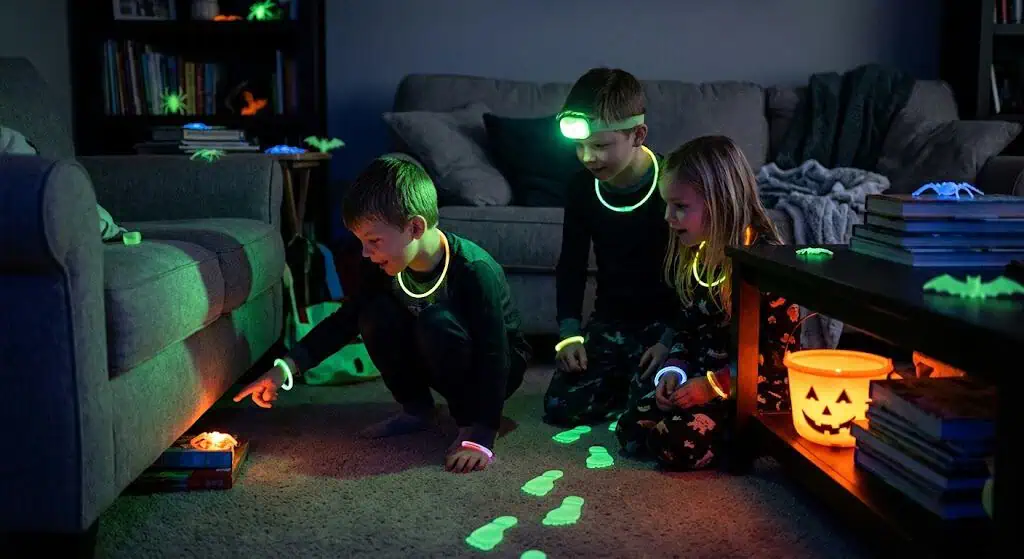
Crack 20 glow sticks, hide them around a darkened room or basement, and release the hunters with buckets — two minutes of pure shrieking joy, repeatable all night because kids will insist. About $6 per round, setup 5 minutes. Best for: the party finale; trade collected sticks for the prize.
Pro tip: Number every clue in the corner (1 of 9, 2 of 9) and keep a master list of hiding spots in your pocket. The moment a clue chain breaks — a sibling moved clue #5, the dog ate #7 — you can repair it in ten seconds instead of losing the room.
Outdoor and Neighborhood Hunts
6. The Neighborhood Spot-It Walk
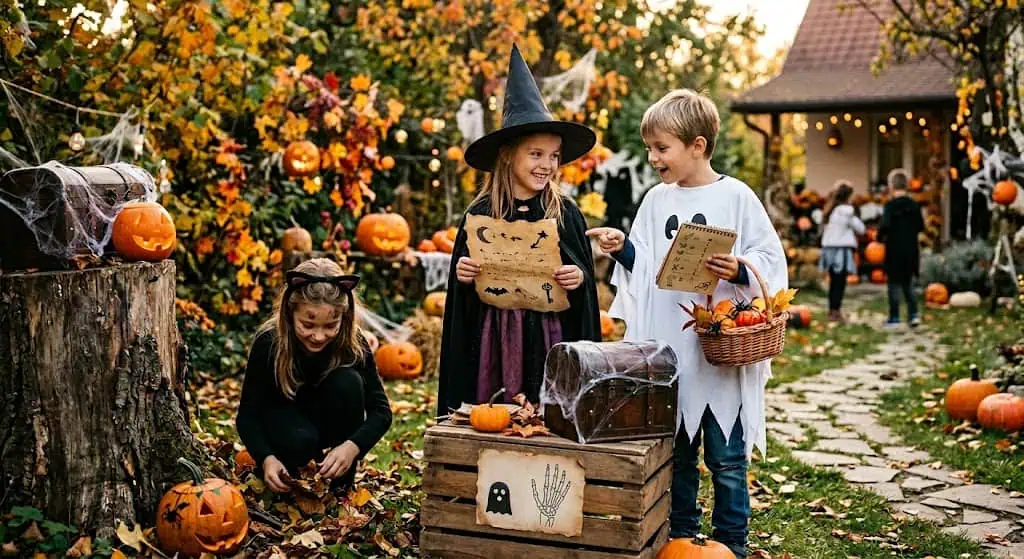
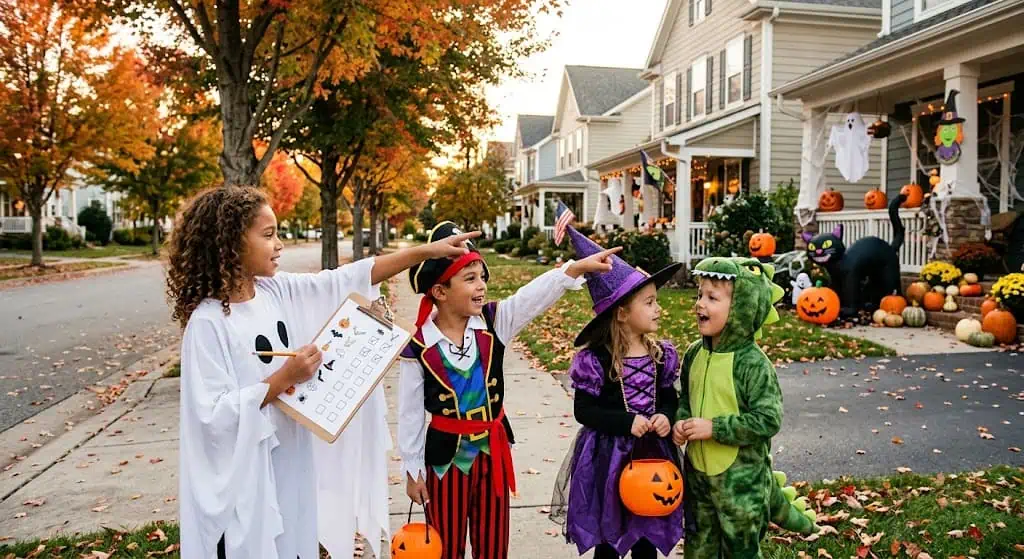
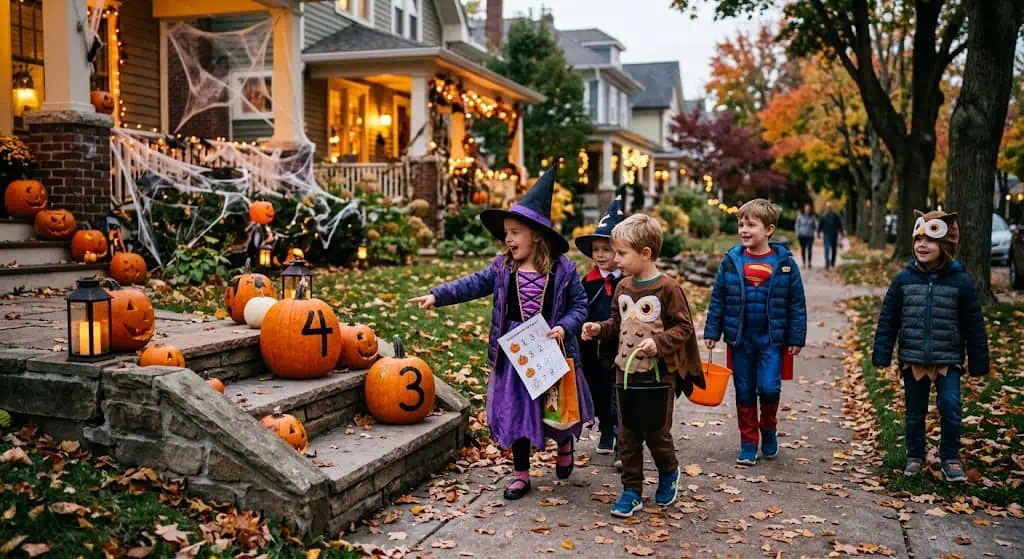
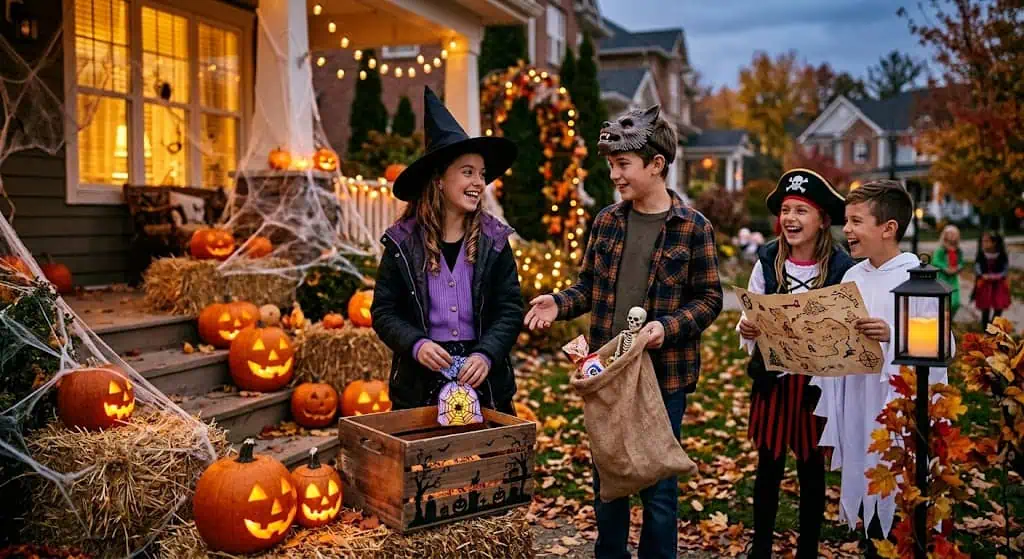
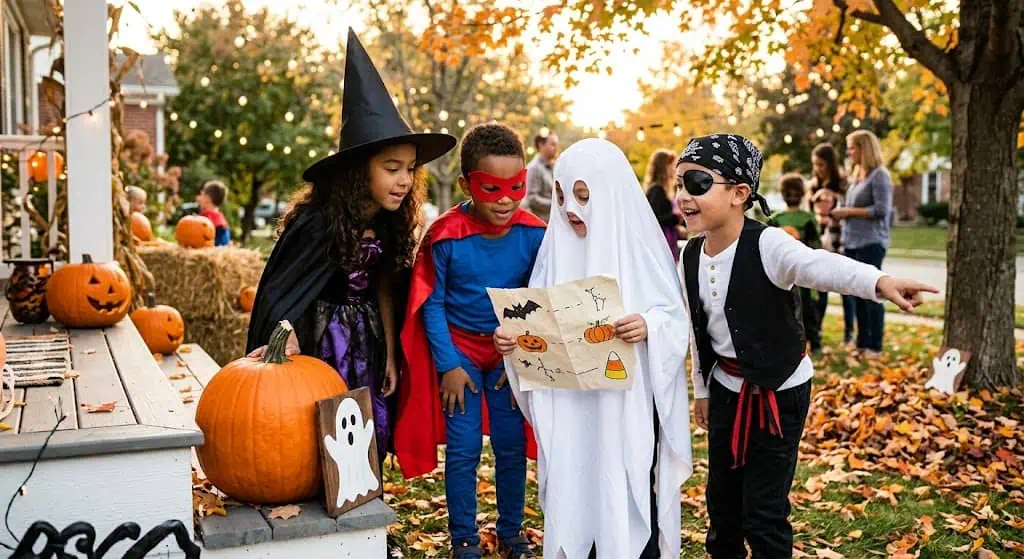
A checklist hunt on a 20–30 minute walk — no setup beyond printing, because the neighborhood already decorated for you. Free, all ages. Best for: the week before Halloween at dusk. Copy this 15-item checklist: a carved pumpkin, a skeleton, an inflatable decoration, a spider web, a black cat (decor counts, real cat is a bonus point), a witch, a ghost, purple lights, a gravestone, a scarecrow, a bat, a “BOO” sign, a hay bale, mum flowers, and a wreath on a door. First to 12 wins; everyone finishing gets a treat.
7. The Glow-Stick Night Yard Hunt
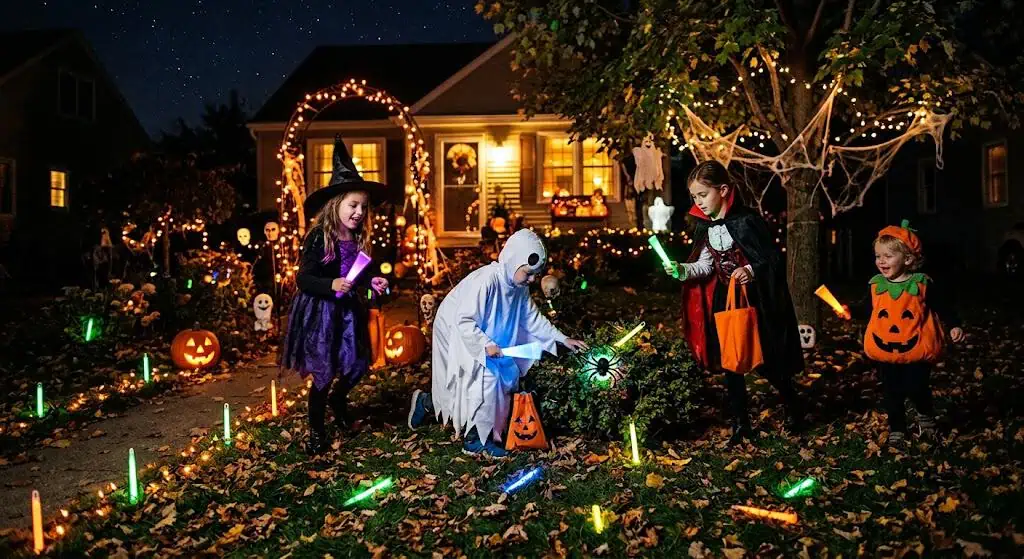
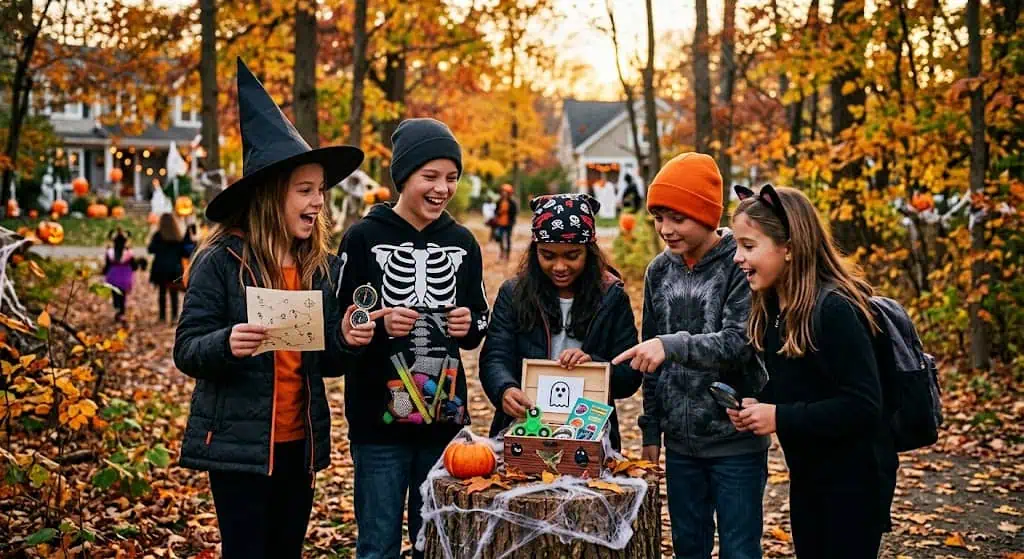
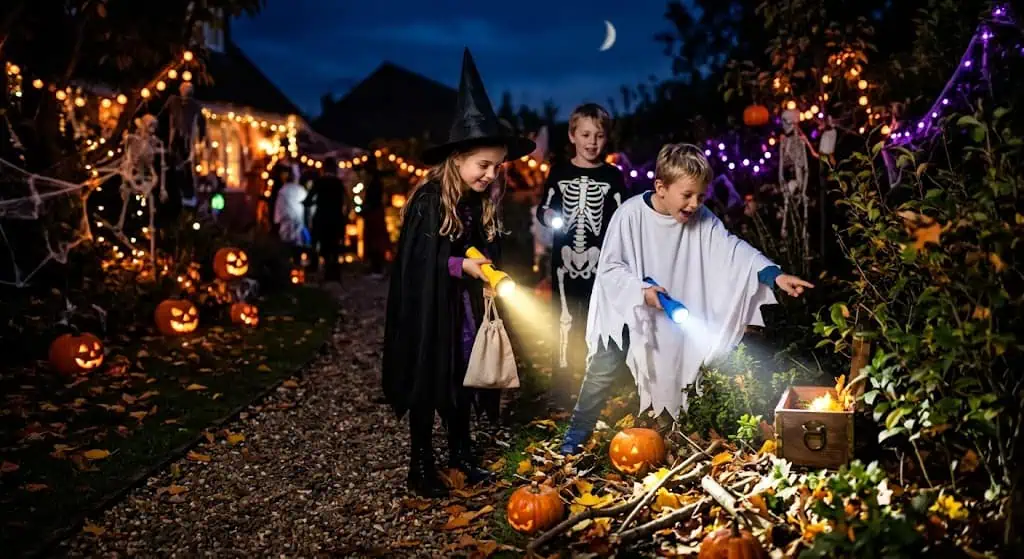
Thirty cracked glow sticks scattered across the dark backyard, hunters released with buckets, most sticks wins — the outdoor big sibling of #5. About $8, setup 10 minutes, ages 4–12. Best for: party nights; it reads magical from the porch and takes ten minutes to stage.
8. The Numbered Pumpkin Hunt
Ten mini pumpkins numbered with a marker, hidden around the yard; hunters must find them in order (1 first, then 2), which slows the fast kids and saves the hunt for everyone else. About $12, setup 15 minutes, ages 5–10. Best for: mixed-speed groups — the in-order rule is the great equalizer.
9. The Fall Nature Hunt
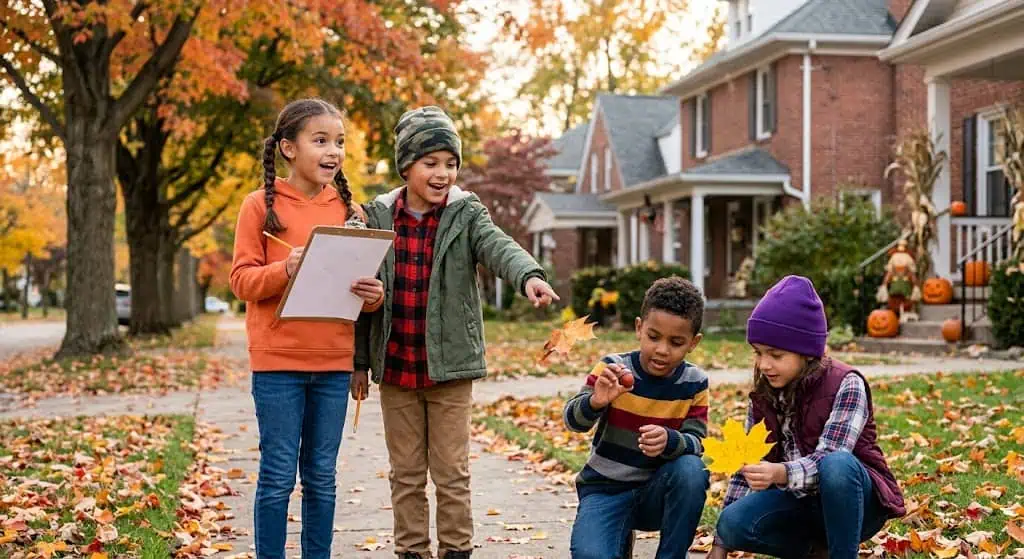
A checklist for the yard or park: an acorn, a red leaf, a yellow leaf, a pinecone, a smooth rock, a Y-shaped twig, something fuzzy, something that smells like fall. Free, ages 3–8. Best for: daytime energy burns; the haul becomes table decor for your Halloween dinner.
10. The Chalk Arrow Trail
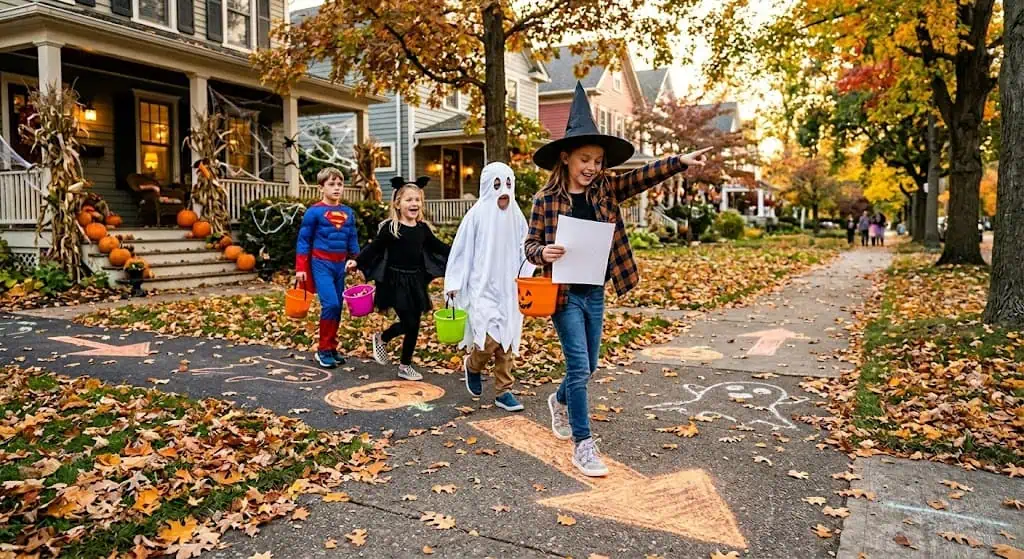
A chalk-drawn trail of arrows, ghosts, and “keep going!” messages winding through the yard or down the sidewalk to a treasure spot. $2 of chalk, setup 15 minutes, ages 3–7. Best for: the youngest hunters — following a trail is a full adventure at four years old.
Themed and Older-Kid Hunts
11. The Teen Riddle Hunt (Ages 12–17)
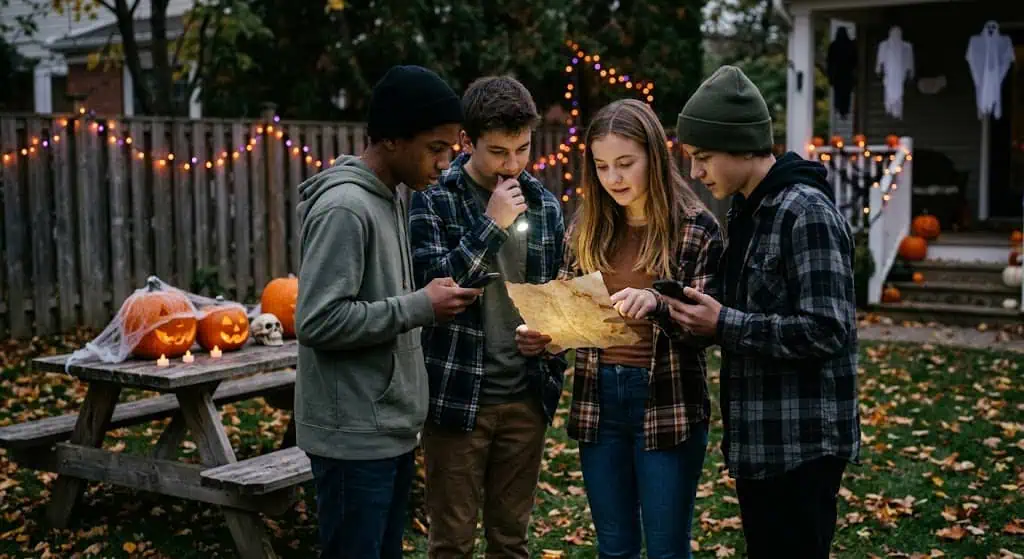
The clue chain, upgraded: five original riddles that make teens actually stop and think, each answer naming the next location. Setup 30 minutes, $15–$25 prize (gift card energy). Best for: proving hunts aren’t just for little kids. The set:
“I follow you all day beneath the sun, then vanish when the day is done. I cannot live where light won’t go — your next clue waits where I can’t follow.” (the darkest closet)
“I have a face but never frown, two hands that never put things down. I speak in ticks but never talk a walk — your clue hides under where I tock.” (the clock)
“You look at me, I look at you; you raise your left, I raise my right on cue.” (the mirror)
“I have teeth but never bite; I open doors without any might.” (the key hooks)
“I weep while I work and shrink as I shine — your prize is behind where I stand in a line.” (the candle row on the mantel)
12. The Mystery Envelope Hunt
Each hidden envelope holds the next clue PLUS one piece of a cut-up picture; the assembled picture at the end reveals the treasure location. About $4 plus prize, setup 35 minutes, ages 7–12. Best for: puzzle-loving kids — the final assembly is a second climax.
13. The Candy-Free Prize Hunt
Any format above, ending in non-candy treasure: glow bracelets, sticker packs, a small plush, novelty erasers, temporary tattoos, or one “movie night pick” voucher. Prizes $10–$15 for a group. Best for: allergy households and the late-October week when every child in America is 60% candy already.
14. The Kids-Hide-It Reverse Hunt
Flip the roles: kids write (or draw) five clues and hide the treasure for the grown-ups, who must hunt theatrically and badly. Free, ages 5–10 as the masterminds. Best for: round two, after the kids finish their own hunt and immediately demand more.
Party and Event Formats
15. The Team Relay Hunt
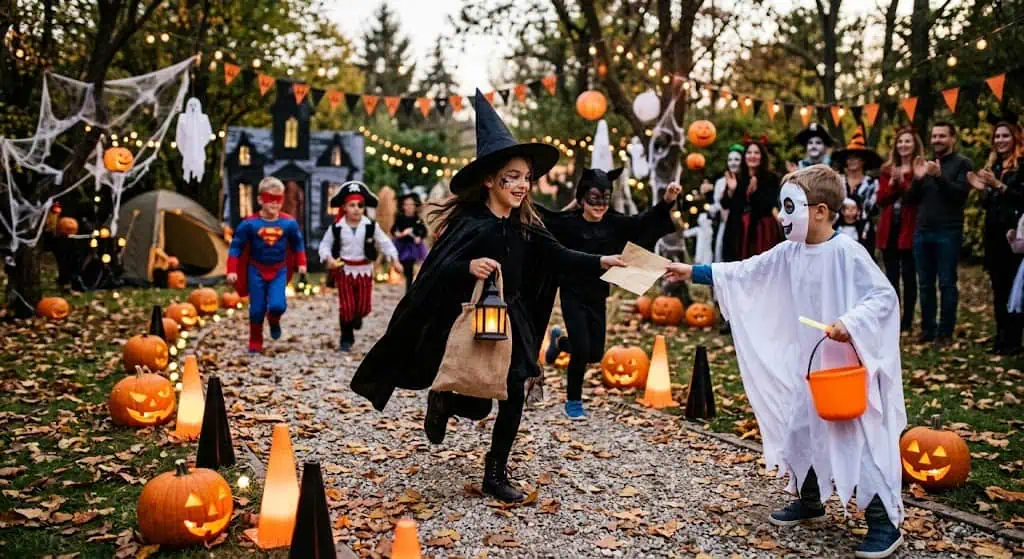
Two teams, two color-coded clue chains running mirrored routes through the same house, racing to their treasures. Double the clues, setup 40 minutes, $20 in prizes, 6–14 players ages 6–12. Best for: birthday and Halloween parties — the racing element triples the volume and the fun.
16. The Flashlight Hunt
Lights off, one flashlight per hunter, 15 small prizes hidden in a dark room or yard — the beam-sweeping is half the experience. About $12 with dollar-store flashlights, setup 10 minutes, ages 5–12. Best for: after-dark parties that want spooky without scary.
17. The Countdown Hunt
One clue per day for the final week of October, each leading to a tiny daily treat, building to the big Halloween-morning treasure. Setup 5 minutes nightly, about $15 total. Best for: families — it turns the longest week of a kid’s year into a ritual they’ll request annually. Trust me on this: you’ll be writing clue chains every October for a decade. Worth it.
What Are Good Halloween Scavenger Hunt Clues?
Good clues follow one formula: describe what the location DOES, then land the rhyme — “I keep your milk and juice so cold” works because every five-year-old knows the fridge by its job. For ages 4–7, keep rhymes to two lines and locations to one floor; for 8–11, add wordplay and a decoy line; for teens, write riddles where the answer is an object (“shadow,” “clock,” “key”) and the object’s home is the hiding spot. Write the whole chain backward from the treasure, number every clue, and read each one out loud once — if you stumble, a seven-year-old will too.
How Long Does Setup and Play Take?
Setup runs 20–40 minutes: about 20 for checklist and glow hunts, 30 for a 9-clue chain (writing is most of it — copying the clues above cuts that in half), and 40 for the team relay’s double chain. Play runs 20–30 minutes for chains and checklists, 5–10 explosive minutes for glow hunts — which is exactly why glow hunts get repeated three times. The golden ratio: a hunt should take kids at least half as long to solve as it took you to build, and the clue formulas above are how you get there.
Hunt Comparison
Hunt Type
Ages
Location
Setup Time
Rhyming clue chain
4–7
Indoor
30 min
Picture-clue hunt
3–5
Indoor
25 min
Spot-it neighborhood walk
All ages
Neighborhood
5 min (print)
Glow-stick night hunt
4–12
Yard or dark room
10 min
Teen riddle hunt
12–17
Indoor
30 min
Team relay hunt
6–12
Indoor, parties
40 min
My honest take: the rhyming chain is the keeper tradition, but the glow-stick hunt delivers the most joy per minute of setup in this entire article.
Common Scavenger Hunt Mistakes
Writing the chain forward. Start at the treasure and work backward, or clue #6 will point somewhere clue #7 isn’t.
Clues too clever for the audience. A stumped five-year-old quits in ninety seconds. When in doubt, easier — speed feels like winning.
No master list. You WILL forget where ghost #12 is hidden. Pocket list, every time.
One prize for a group. A shared treasure box with one pick per hunter beats a single winner and four sad faces.
Hiding spots that require height or strength. Every clue should be reachable by the shortest hunter — taped low, tucked visibly, never inside anything heavy.
People Also Ask
What do you hide in a Halloween scavenger hunt?
Clue cards along the chain, then a treasure at the end: a treat bag, a small toy bundle, glow gear, or the candy-free prize list above. For non-chain formats, the hidden things ARE the prizes — glow sticks, numbered pumpkins, or paper ghosts traded for a reward at the finish.
How many clues should a scavenger hunt have?
Eight to ten for ages 4–7, ten to twelve for 8–11, and five or six harder riddles for teens — fewer but tougher. Under six clues feels over before it starts; past twelve, the youngest hunters fade before the treasure.
Can you do a Halloween scavenger hunt at night?
Yes — the glow-stick yard hunt and the flashlight hunt are built for dark, and they’re routinely the night’s favorite event. Keep the boundary clear (backyard only, porch light as home base) and put an adult at the property line for the under-8 crowd.
What’s a good scavenger hunt for a big group?
The team relay with color-coded chains for parties of 6–14, or the spot-it walk for any size crowd since the neighborhood scales infinitely. For 15+ kids at one event, run the glow hunt in two waves by age so the little ones get a fair sweep.
🎃 Quick Summary
✅ Best for: ages 3–17, indoors, backyards, and neighborhood walks
💰 Budget: $10–$25 including prizes; several formats are free
⏱ Time: 20–40 minutes setup, 20–30 minutes of play
🌟 Top picks: the 9-clue rhyming chain, the glow-stick night hunt, the teen riddle gauntlet
📌 Don’t skip: writing the chain backward, numbering every clue, and the pocket master list
Halloween Scavenger Hunt FAQ
How much does a Halloween scavenger hunt cost?
$10–$25 covers most formats: index cards and tape are pocket change, glow sticks run $6–$8 per round, numbered pumpkins about $12, and prizes $10–$15 for a group treasure box. The spot-it walk, nature hunt, and orange hunt are genuinely free.
Can I use the clues in this article as-is?
That’s exactly what they’re for — copy the 9-clue rhyming chain and the 5 teen riddles word for word, or swap any location line to match your house (no washing machine on the main floor? trade it for “I hold your snacks behind one door — the pantry’s where you’ll find one more!”).
How do I run a hunt for mixed ages at one party?
Pair every reader with a pre-reader as a hunting buddy, use the in-order numbered pumpkin rule to slow the big kids, and make the treasure a shared box with one pick each. For wide gaps, run the glow hunt in two waves — under-7s sweep first, big kids get the re-hide.
What’s the best hunt for a school or classroom party?
The hidden ghost count (12 paper ghosts around the classroom, found cooperatively) or the picture-clue hunt with classroom locations — both run in 15 minutes, need no outdoor access, and end candy-free if the prize is stickers and bragging rights.
How do I keep the fast kid from finding everything?
Three governors: the in-order rule (must find #1 before #2 counts), per-hunter limits on glow hunts (“everyone collects exactly five”), and buddy pairs where the younger partner must physically grab the find. Fast kids become guides instead of vacuums.
What goes in a candy-free treasure box?
Glow bracelets, sticker sheets, temporary tattoos, novelty erasers, mini notebooks, bouncy balls bigger than a fist, and one “kid picks movie night” voucher per hunter — about $1.50 per child from the dollar store, assembled in ten minutes.
How do I adapt the rhyming hunt for a small apartment?
Use the same chain with apartment-scale spots — fridge, pillow, couch, bookshelf, shoe, coat closet — and double up rooms by hiding clues at different heights. Six clues is plenty when the territory is small; the kids’ excitement doesn’t measure square footage.
What time should an outdoor night hunt start?
Twenty minutes after full dark — around 7:15–7:45 p.m. in late October — so glow sticks read bright and flashlight beams feel dramatic. End by 8:30 for the under-10 crowd; the hunt is the warm-up to bedtime negotiations, not the replacement.
How do I make the teen version actually challenging?
Use object riddles (shadow, clock, mirror, key, candle) instead of location rhymes, add one red-herring line per riddle, set a timer with a visible countdown, and make the prize worth the effort — a $15–$25 gift card moves teens in ways stickers cannot.
Can the countdown hunt work with multiple kids?
Beautifully — alternate which child finds and reads each night’s clue, and make the daily treats identical (two of everything). The Halloween-morning treasure is shared: one box, equal picks, and a note from “the Ghost of October” thanking them for their excellent hunting.
What’s the rain plan for outdoor hunts?
Every outdoor format converts indoors in ten minutes: the glow hunt moves to a dark basement, the numbered pumpkins hide around the living room, and the spot-it walk becomes a window checklist from the car on a slow neighborhood drive — which, honestly, kids adore.
Ready, Set, Hunt
Copy the clue chain, hide the cards backward, stash the treasure, and pocket your master list — thirty minutes of setup for the loudest twenty minutes of your October. The hunts scale from a rainy Tuesday to a fifteen-kid party, and the clues are already written.
Don’t stress about making everything perfect. The clue the dog ate, the rhyme you fumbled, the kid who found #7 before #4 — that’s the stuff they’ll retell at Thanksgiving, and here’s the magic: the retelling is the real prize. Happy haunting, friend.
Leah Meyer is a passionate event planner and creative writer behind Party & Beyond, where she helps hosts throw stunning celebrations on a real-world budget. From birthday parties and baby showers to backyard weddings and holiday gatherings, Leah personally tests every DIY idea she shares , proving that the wow factor lives in the details, not the price tag. When she's not planning the next party, you'll find her hunting for hidden treasures at dollar stores, inflating balloons (she owns three pumps!), or brainstorming with her dog, the official Chief Inspiration Officer of Party & Beyond.